
Unbiased headlines. Facts, not spin.
Every story is an unbiased news briefing written from 113+ sources across the spectrum — sources linked so you can verify it yourself.
 finance
Notable (6/10)
October 3, 2026 at 08:36 AM
finance
Notable (6/10)
October 3, 2026 at 08:36 AM
India's UPI Transactions Hit 145 Billion in H1 FY27, New Merchant Fee Arrives October 15
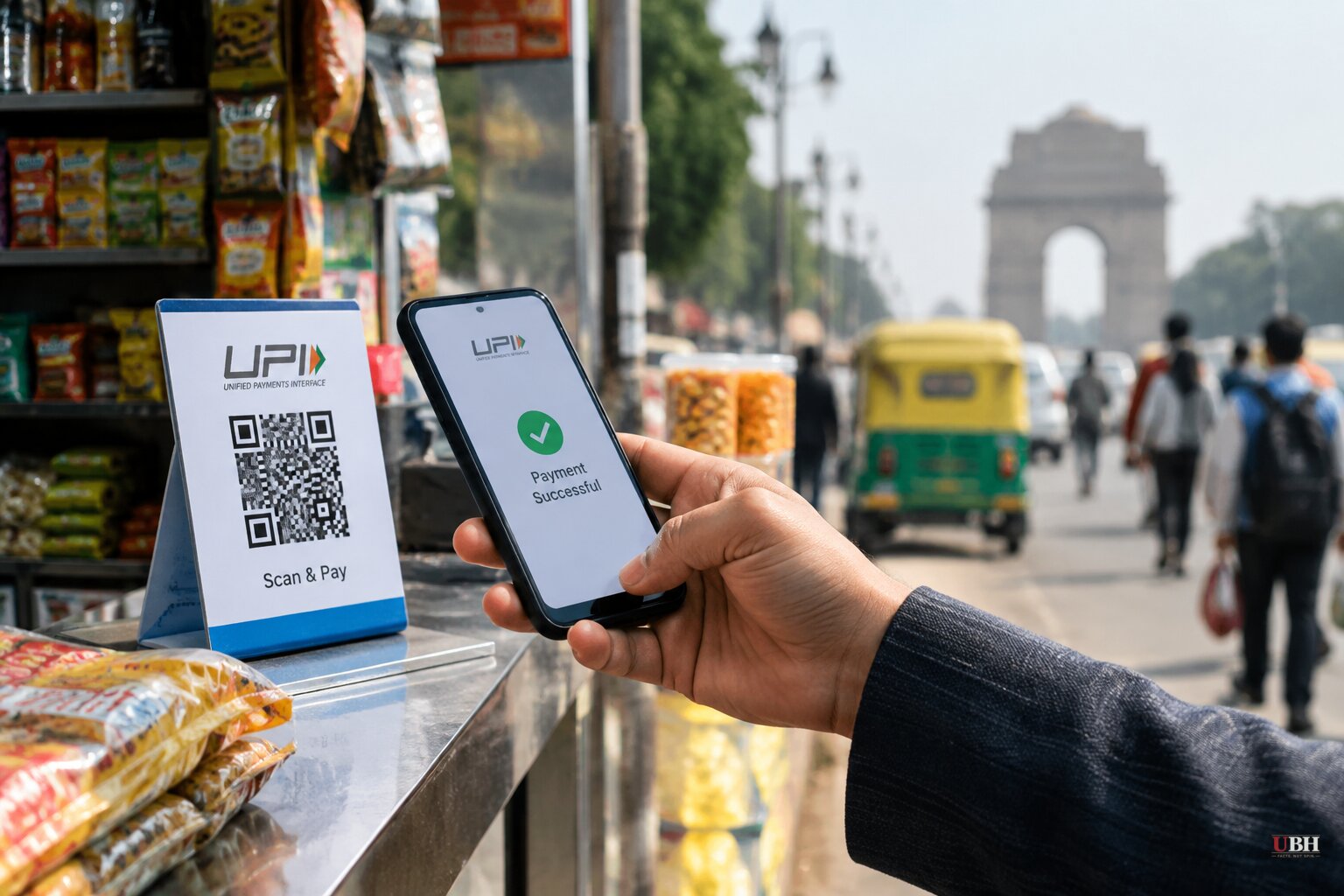
India's digital payment boom isn't slowing down. The Unified Payments Interface processed roughly 145 billion transactions between April and September, up 27% from 114 billion in the same stretch last year, according to data from the National Payments Corporation of India reported by PTI and carried by the Economic Times, Rediff Money and The Hans India.
The money moving through the system grew too, just not as fast. Transaction value climbed 20% to Rs 177 lakh crore, up from Rs 148 lakh crore a year earlier. Volume growing faster than value means Indians are using UPI more often for smaller, everyday purchases, not just big-ticket transfers.
September itself was a slight step back. Volume dipped 1.7% to 24.07 billion transactions from 24.5 billion in August, and value fell 1.5% to Rs 29.37 lakh crore from Rs 29.82 lakh crore, per NPCI figures cited across Times of India, Times Now and Economic Times. But September has 30 days, August has 31. Daily averages actually rose, hitting 802 million transactions per day versus 791 million in August.
A New Fee, Set by Committee, Not the Market
Starting October 15, merchants will pay a 0.4% merchant discount rate on UPI transactions above Rs 2,000, according to all seven outlets reviewed, each citing the same NPCI framework. Person-to-person transfers stay free no matter the amount, and Rediff Money specifically notes small merchants are also carved out of the new charge.
The fee is capped at Rs 300 for transactions of Rs 75,000 or more. And it's merchants footing the bill, not customers directly, according to the Times of India and PTI reporting.
PTI reports the MDR revenue splits four ways: 40% to the customer's bank, 30% to the payment gateway, 20% to the UPI app, and 10% to the sponsoring bank behind that app. This is a revenue-sharing formula set by NPCI, a body jointly run by the Reserve Bank of India and the Indian Banks' Association.
UPI has been free for most users and merchants for years, subsidized in part by government policy aimed at driving adoption. Now that it's the dominant payment rail in the country, with 145 billion transactions in six months, officials are moving to make it self-sustaining. Infrastructure isn't free. But a state-linked monopoly is setting its own pricing and distribution, not market competition.
A reasonable critic would ask: if small merchants and P2P transfers are exempt, and the fee is capped and paid by merchants, why worry? The answer is that merchants facing a new cost on transactions above Rs 2,000 have an obvious incentive to pass that cost along through higher prices, minimum purchase amounts for UPI, or steering customers toward cash. None of the sources reviewed address whether NPCI or the RBI plans to monitor or restrict that kind of pass-through.
The Global Angle Some Outlets Skipped
Newsbytes and Rediff Money both flagged a detail that Times of India, Economic Times, Times Now and The Hans India left out entirely: UPI is now accepted in 11 countries, with Uzbekistan the latest addition. That's a meaningful expansion of India's payment infrastructure beyond its borders.
The open question going into mid-October is simple. Will the 0.4% MDR actually stay contained to merchants, as the rule states, or will it show up in consumer prices within a few months? NPCI hasn't announced any monitoring mechanism for that, and none of the current reporting addresses it.
Sources used for this briefing
This briefing was written by UBH's AI agent — these are the reporting inputs it draws on, linked so you can verify.


