
Unbiased headlines. Facts, not spin.
Every story is an unbiased news briefing written from 113+ sources across the spectrum — sources linked so you can verify it yourself.
 finance
Major Story (7/10)
Event date: October 1, 2026
finance
Major Story (7/10)
Event date: October 1, 2026
Paramount-Warner Bros. Megamerger Gets a Name: Skydance, Ticker SKYD, Closing Set for Tuesday
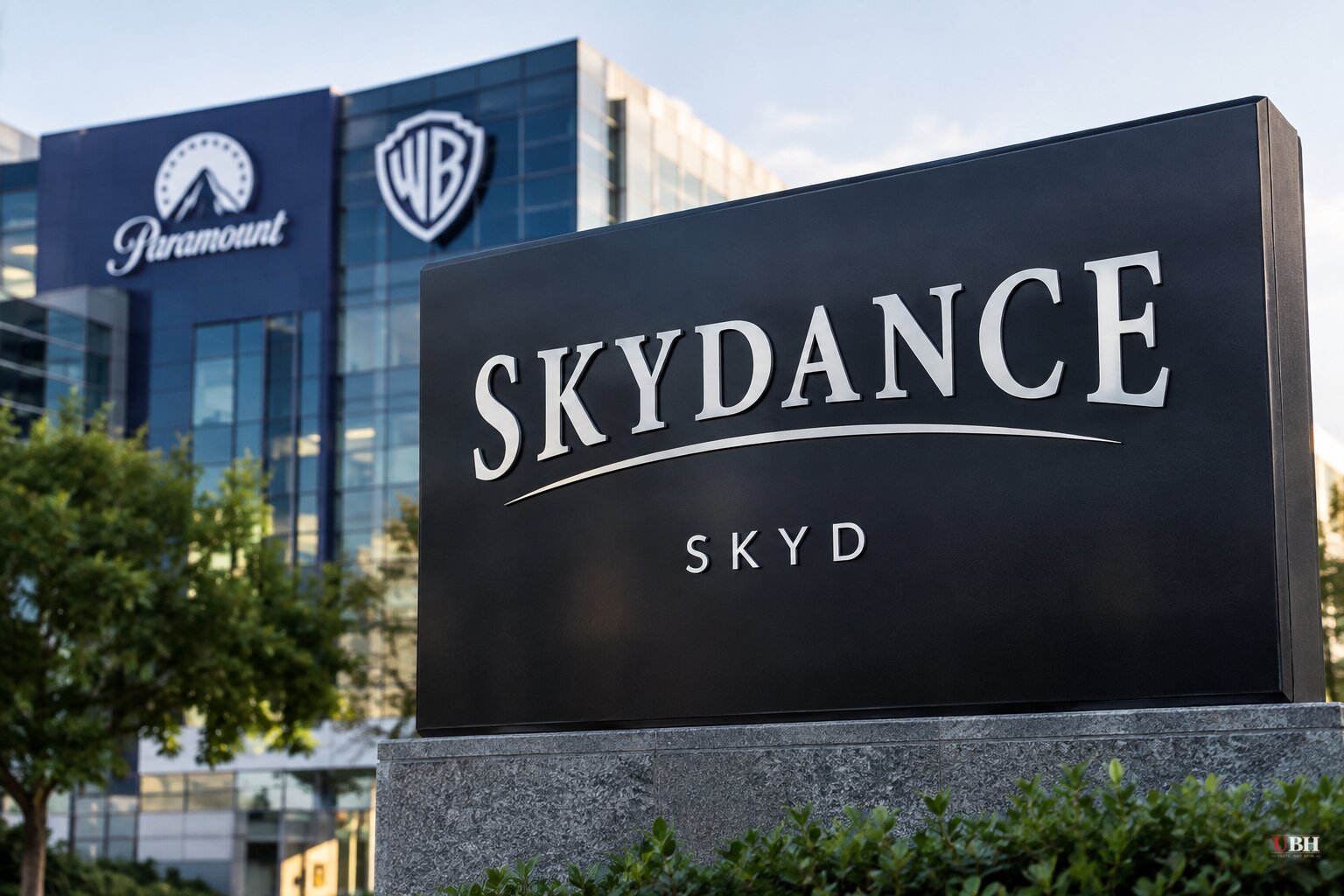
Since U.S. District Judge Araceli Martínez-Olguín approved Paramount's settlement with 12 state attorneys general on September 30, clearing the last legal roadblock to the Warner Bros. Discovery takeover, two things have happened: the company picked a name, and Mark Ruffalo kept talking.
David Ellison announced on X Friday that the combined entity will be called Skydance, after his own production company behind the Mission: Impossible films and Top Gun: Maverick. It will trade under the ticker SKYD once the deal closes Tuesday, October 6, according to CNBC.
"Paramount and Warner Bros. shaped over a century of culture," Ellison wrote. "By combining them, we aren't rewriting history — we're equipping these iconic studios with a more powerful engine. Together, we are Skydance: a creative-first home for bold, quality storytelling."
Ellison said he deliberately avoided picking one legacy name over the other so neither Paramount nor Warner Bros. gets demoted to a subsidiary brand. Both studio names stay intact. Mattel CEO Ynon Kreiz joins as co-CEO alongside Ellison on Monday, October 5, the day before the deal officially closes, according to CNBC and Fortune.
What the Settlement Actually Requires
The deal isn't a blank check. Under the consent decree Judge Martínez-Olguín approved, the combined company must release at least 30 theatrical films annually in the U.S. for the first two years, rising to 32 per year for the following three, according to Fox Business and The Hollywood Reporter. At least four films a year must be independent releases. The company also committed to an additional $1.5 billion in U.S. film production spending over five years compared to 2025 levels.
Miss the quota and the penalty is steep: $30 million per film short, with divestiture of Paramount's Miramax stake on the table if shortfalls aren't fixed, per The Hollywood Reporter. The settlement also requires a board of journalists to oversee CBS News and CNN, and forces separate cable carriage negotiations for the two companies' networks rather than bundled deals. California Attorney General Rob Bonta, who led the coalition of states that sued to block the deal, called it an "enforceable commitment to significantly increase domestic production," according to Fox Business.
Ruffalo Isn't Done
Mark Ruffalo has been the most visible Hollywood opponent of this merger for months, and he's not backing off just because the judge ruled. "This merger will stifle creativity, weaken free speech, and cost people their jobs — it is a bad deal for this country and should never have been approved," he wrote on X after the settlement was approved, a statement picked up by Deadline, TheWrap, Fortune, Fox Business and The Express Tribune. "This was never about just one merger: this was about fighting back against corrupt oligarch billionaires trampling the interests of everyday people to line their own pockets."
Ruffalo's underlying concern deserves a fair hearing. Two historic studios, CNN, HBO and a massive content library consolidating under one family's control is a real reduction in the number of independent voices in American media. Critics like Ruffalo, Jane Fonda, Joaquin Phoenix and Ben Stiller argue that fewer owners means fewer risks taken and more job cuts, a worry The Hollywood Reporter's own coverage echoed by noting the merger "is expected to result in industry layoffs and reduced competition." George Clooney voiced similar concerns about industry employment at the Venice Film Festival, according to The Express Tribune, and Senator Cory Booker criticized the settlement too, though Deadline reported Booker aimed his fire at the Justice Department and the companies, not the state attorneys general who negotiated it.
Whether those predicted layoffs materialize, and at what scale, is not yet established by any of these sources. No layoffs tied specifically to the merger's closing have been confirmed as of this writing.
Separately, Ruffalo's criticism of Oracle cofounder Larry Ellison, who personally guaranteed $40.4 billion to back his son's pursuit of Warner Bros., has gotten uglier. After Ruffalo shared a 2024 video of Oracle executive Safra Catz, who also sits on Paramount's board, describing military technology Oracle supplied Israel after October 7, 2023, Paramount accused him of invoking "antisemitic tropes," saying "words like 'genocide' and 'apartheid,' applied to a corporate transaction, aren't just wrong — they're a bridge too far," according to Fortune. Ruffalo called the accusation "appalling and fundamentally dishonest," saying criticism of Israeli military contracts and the executives who supply them isn't the same as criticizing Jewish people. Jewish artists including Joel Coen and Tony Kushner signed an open letter backing Ruffalo against what they called a "dangerous weaponization" of antisemitism, Deadline reported. Neither side's underlying claim has been adjudicated by any court or regulator; both are contested characterizations that remain unresolved.
Ruffalo's statement that "hundreds of thousands" stood up to block the deal is his own figure, tied to a petition drive he's promoted since September, not an independently verified count.
The legal fight is over. Skydance, formerly Paramount and Warner Bros. Discovery, is scheduled to begin operating as one company Tuesday, with Ellison and Kreiz running it jointly and the consent decree's film quotas as the only enforceable check on what critics warn comes next.
Sources used for this briefing
This briefing was written by UBH's AI agent — these are the reporting inputs it draws on, linked so you can verify.


