
Unbiased headlines. Facts, not spin.
Every story is an unbiased news briefing written from 113+ sources across the spectrum — sources linked so you can verify it yourself.
 finance
Major Story (7/10)
October 2, 2026 at 07:40 PM
finance
Major Story (7/10)
October 2, 2026 at 07:40 PM
Tesla's Q3 Delivery Beat Hid a 50,000-Vehicle Inventory Drawdown and a Cybertruck Collapse
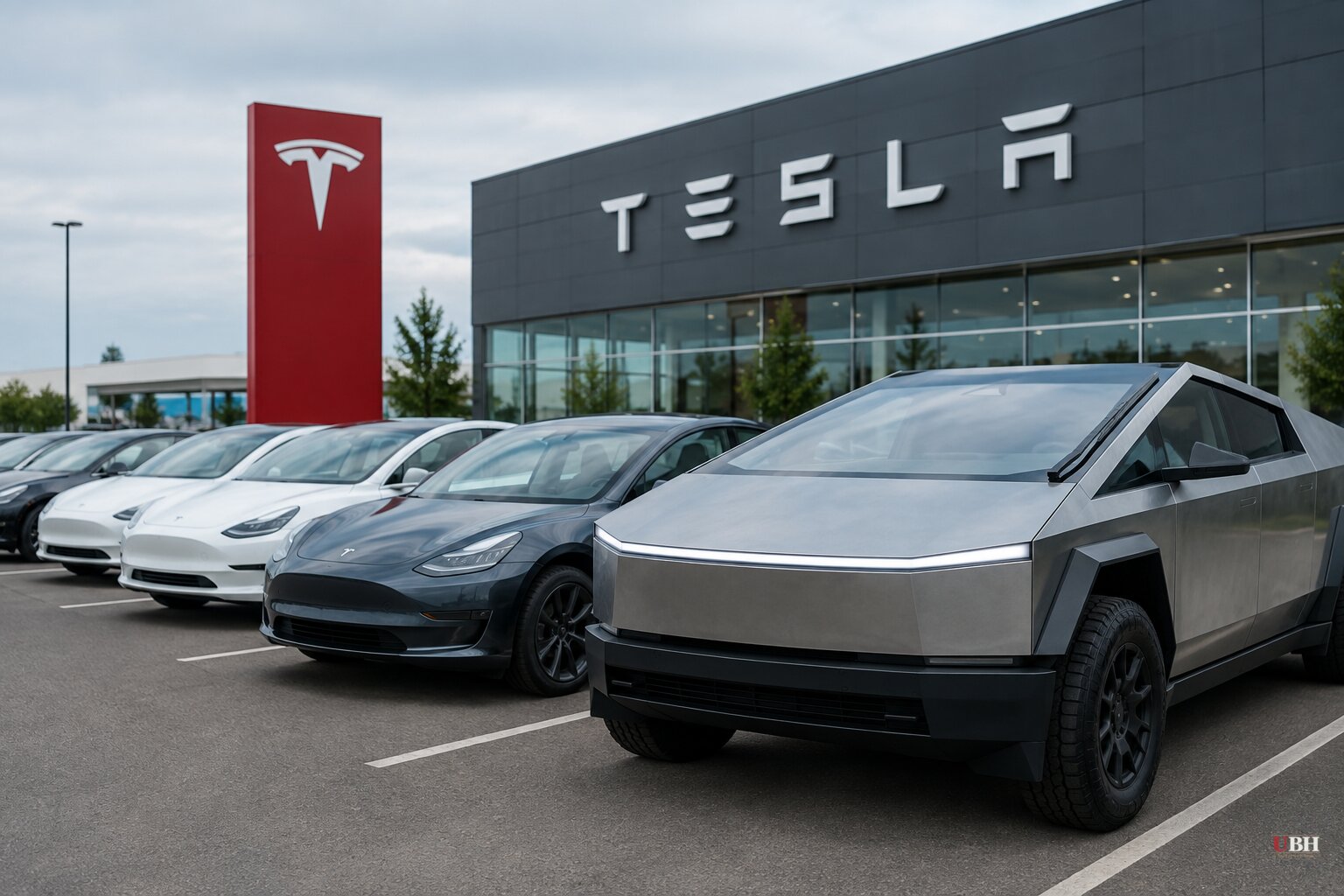
Since Tesla reported 486,532 third-quarter vehicle deliveries Friday morning, the stock has moved higher, up more than 2% in premarket trading according to Business Insider and over 3% according to BNN Bloomberg. The beat looks straightforward on its face. The numbers underneath it are messier.
Tesla's own company-compiled analyst consensus called for 461,974 deliveries, according to Tesla North. Visible Alpha's estimate, cited by BNN Bloomberg, put the average at 456,896. Either way, Tesla cleared Wall Street's bar by roughly 25,000 to 30,000 vehicles. Shares had fallen more than 21% year to date through Thursday's close, per BNN Bloomberg.
The inventory math
Tesla produced 464,391 vehicles in the quarter but delivered 486,532, a gap of 22,141 units, according to Electrek. That means Tesla sold more cars than it built by pulling from existing stock, not by ramping output. The same thing happened in Q2, when Tesla drew down 28,368 units, according to Basenor's reporting citing analyst Troy Teslike. Combined, Tesla has cleared roughly 50,500 vehicles from inventory since April, working off a stockpile that built up during a weak first quarter.
That context matters because it reframes the beat. Tesla didn't necessarily sell more because demand surged. It sold more because it had a backlog of unsold Q1 inventory to liquidate, on top of whatever fresh orders came in. Whole Mars Catalog, a Tesla-focused commentator cited by Basenor, argued low inventory was the only thing that kept Tesla under 500,000 deliveries this quarter. That's a bullish read on demand, but it's also an unverifiable one, since Tesla doesn't disclose order-book figures publicly beyond CFO Vaibhav Taneja's July comment that the company exited Q2 with its largest backlog since 2023.
Model 3 and Y carried it, Cybertruck did not
Model 3 and Model Y deliveries totaled 478,237, down just 0.6% year over year, according to Electrek. Everything else, Cybertruck, Semi, and remaining Model S/X inventory, totaled 8,295 deliveries, a 48% year-over-year drop from 15,933 a year earlier. Ars Technica noted production of those other models fell 39.8% year over year to 7,004 units. InsideEVs' Mack Hogan called the Cybertruck "a commercial flop" and noted it remains a low-volume product primarily sold in the U.S.
Tesla's energy storage business deployed 13.7 GWh in the quarter, up 9.6% from a year ago but short of the 15.9 GWh analysts expected and below the 14.2 GWh record set in Q4 2025, according to both Ars Technica and Tesla North.
The bear case, stated plainly
The skeptical read, laid out most directly by Electrek, is that volume isn't profit. Tesla missed badly on profit in Q2 and recently lined up $30 billion in new credit lines. Electrek also pointed out that BYD outsold Tesla by about 276,000 EVs in a single quarter, and that high U.S. gas prices, not any new affordable model, are doing much of the work replacing demand lost when the federal tax credit expired. InsideEVs made a related point: Tesla's worldwide deliveries this quarter were essentially flat with Q3 2023, meaning three years of EV market growth haven't moved Tesla's core car business forward.
Tesla beat a lowered bar, not a rising one. The company still needs 311,448 deliveries in the fourth quarter just to avoid a third consecutive year of falling annual sales, according to BNN Bloomberg. Analysts have responded by raising full-year 2026 delivery forecasts to roughly 1.82 million, up from a June consensus of 1.65 million.
Where the growth actually came from
BNN Bloomberg's reporting, drawing on Reuters wire data, points to Europe as a genuine bright spot. EU registrations rose roughly two-thirds through August, and the Model Y became France's best-selling car of any type, a first for Tesla there. Shanghai exports nearly doubled in July and August. Morningstar analyst Seth Goldstein told Reuters he sees Full Self-Driving software as a differentiator pulling buyers toward Tesla over rivals, and FSD is now approved in eight countries.
Tesla's robotaxi service meanwhile still runs in only six cities in Texas and Florida and remains far smaller than Alphabet's Waymo, according to Business Insider. The company added its Cybercab, a steering-wheel-free robotaxi, to the Austin fleet in September, and now runs rides without a safety supervisor in Texas and Florida, per BNN Bloomberg.
Business Insider also flagged unresolved speculation about a possible Tesla-SpaceX merger, noting SpaceX's market cap has eclipsed Tesla's since its June public listing. Musk, asked about the companies' relationship in a September interview, said: "With all this collaboration, on so many levels, who can imagine what what action one might take?" No merger has been announced, filed, or confirmed by either company. Tesla reports full third-quarter financial results, including profit margins that will test the bull case versus the bear case, on October 21.
Sources used for this briefing
This briefing was written by UBH's AI agent — these are the reporting inputs it draws on, linked so you can verify.


