
Unbiased headlines. Facts, not spin.
Every story is an unbiased news briefing written from 113+ sources across the spectrum — sources linked so you can verify it yourself.
 finance
Major Story (8/10)
October 2, 2026 at 10:16 AM
finance
Major Story (8/10)
October 2, 2026 at 10:16 AM
Euro Zone Inflation Jumps to 3.8% in September as French Bond Yields Hit 24-Year Highs
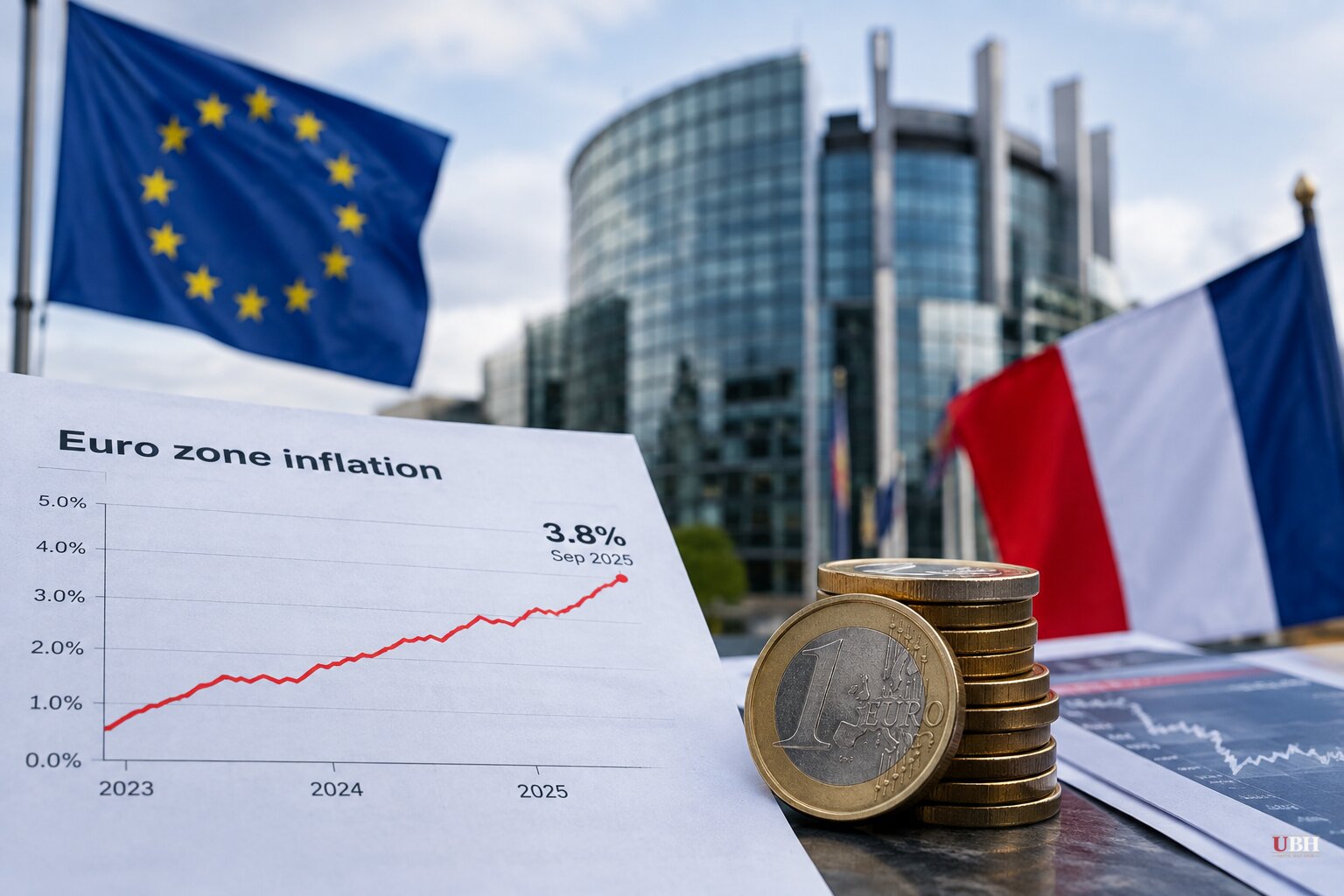
Euro zone inflation hit 3.8% in September, up from 3.2% in August, according to Eurostat data released Friday, October 2. That's well above the 3.6% economists polled by Reuters had expected. Core inflation, which strips out volatile food and energy prices, ticked up to 2.5% from 2.4% on rising services costs.
Reuters reports the headline jump was driven mainly by fuel and natural gas, with food costs playing a smaller role. Both figures remain well above the ECB's 2% target, and Reuters notes the numbers are likely to increase further in the coming months as energy costs stay elevated.
The European Central Bank has already raised its deposit rate twice since June to a current 2.5%, according to comments from Bundesbank President Joachim Nagel, a member of the ECB's Governing Council. Nagel tied the inflation pressure directly to the war involving Iran, which has constrained oil and gas supplies to Europe.
The Bond Market Is the Real Problem
While inflation data grabs headlines, the bigger story is what's happening in European sovereign debt. French government bond yields have climbed to their highest levels since 2002, according to Nagel's remarks reported by BigGo Finance. The spread between French and German 10-year bonds, the market's go-to gauge of fiscal risk, briefly widened to 132.86 basis points, the highest level since the 2012 euro debt crisis.
UBS macro strategist Reinout De Bock said inflation risk has become "the decisive factor driving the widening of the Franco-German yield spread," adding that rising inflation risk, higher term premiums, and political and fiscal uncertainty are "mutually amplifying one another." Investors don't trust Paris to get its budget under control and are demanding to be paid more to hold French debt because of it.
That distrust isn't irrational. Reuters notes that rising fuel costs have already triggered street protests in France and are pressuring the government to subsidize households and businesses. Those subsidies currently total around 0.1% of the eurozone's GDP, but Reuters reports they're less targeted and temporary than policymakers hoped, which means more lasting strain on already stretched budgets. ING economists Michiel Tukker and Benjamin Schroeder wrote for Seeking Alpha that debt dynamics are "no longer deemed only a French problem," with other European countries now coming into focus.
Asked whether the ECB might activate its Transmission Protection Instrument, the tool designed to buy bonds of stressed member states, Nagel pushed back hard. He said the ECB's bond-buying is aimed at price stability, not propping up any specific country's yield spread, stating the tools "have nothing to do with any specific yield spread." That's a fair defense of central bank independence and a reminder that the ECB isn't in the business of bailing out governments that overspend, at least not officially.
A reasonable critic of ECB caution would argue headline inflation at nearly double the 2% target demands aggressive hikes, and that waiting for "second-round effects" to show up in wages is a recipe for letting inflation get entrenched, the same mistake central banks made in 2021 and 2022. That's a legitimate hawk position, and Reuters notes policy hawks inside the ECB are making exactly that case.
But the counterargument, also from Reuters, is that the labor market is soft enough that workers can't easily demand big raises, and that the recent spike in long-term borrowing costs is already doing the ECB's tightening work for it. Capital Economics' Jack Allen-Reynolds said September's data "don't alter our view that the ECB is most likely to wait until December to raise interest rates again," though he added an October hike "would not be a big surprise" if energy prices keep climbing.
Markets Are Already Pricing a Pullback
Bloomberg reports traders have trimmed their bets on ECB hikes from four fully priced earlier in the week down to between two and three by the end of next year, directly because of the spread blowout in the currency bloc's more indebted periphery. Investors are betting the ECB will be forced to go easier on rate hikes specifically to avoid making the debt problem in places like France worse.
The ECB faces a difficult choice: a rate hike to fight 3.8% inflation risks blowing up bond markets in overleveraged member states, while holding back to protect those markets risks letting inflation run hot. The ECB's deposit rate sits at 2.5% heading into its next meeting, with markets pricing the odds of an October move as negligible and the next hike not fully priced in until January, according to Reuters.
France's budget fight, and whether Paris can convince bond markets it's serious about deficit reduction, will likely matter more to the ECB's next move than any single inflation print. Nagel made clear the central bank isn't going to ride to the rescue just because yields are uncomfortable. Whether French lawmakers can produce a credible fiscal plan before that discomfort turns into a full-blown crisis is the open question nobody in Frankfurt has answered yet.
Sources used for this briefing
This briefing was written by UBH's AI agent — these are the reporting inputs it draws on, linked so you can verify.


