
Unbiased headlines. Facts, not spin.
Every story is an unbiased news briefing written from 113+ sources across the spectrum — sources linked so you can verify it yourself.
 finance
Notable (6/10)
Event date: September 28, 2026
finance
Notable (6/10)
Event date: September 28, 2026
Kalshi Wins Illinois Ruling, Loses Ohio and Tennessee as Federal Courts Split on Sports Prediction Contracts
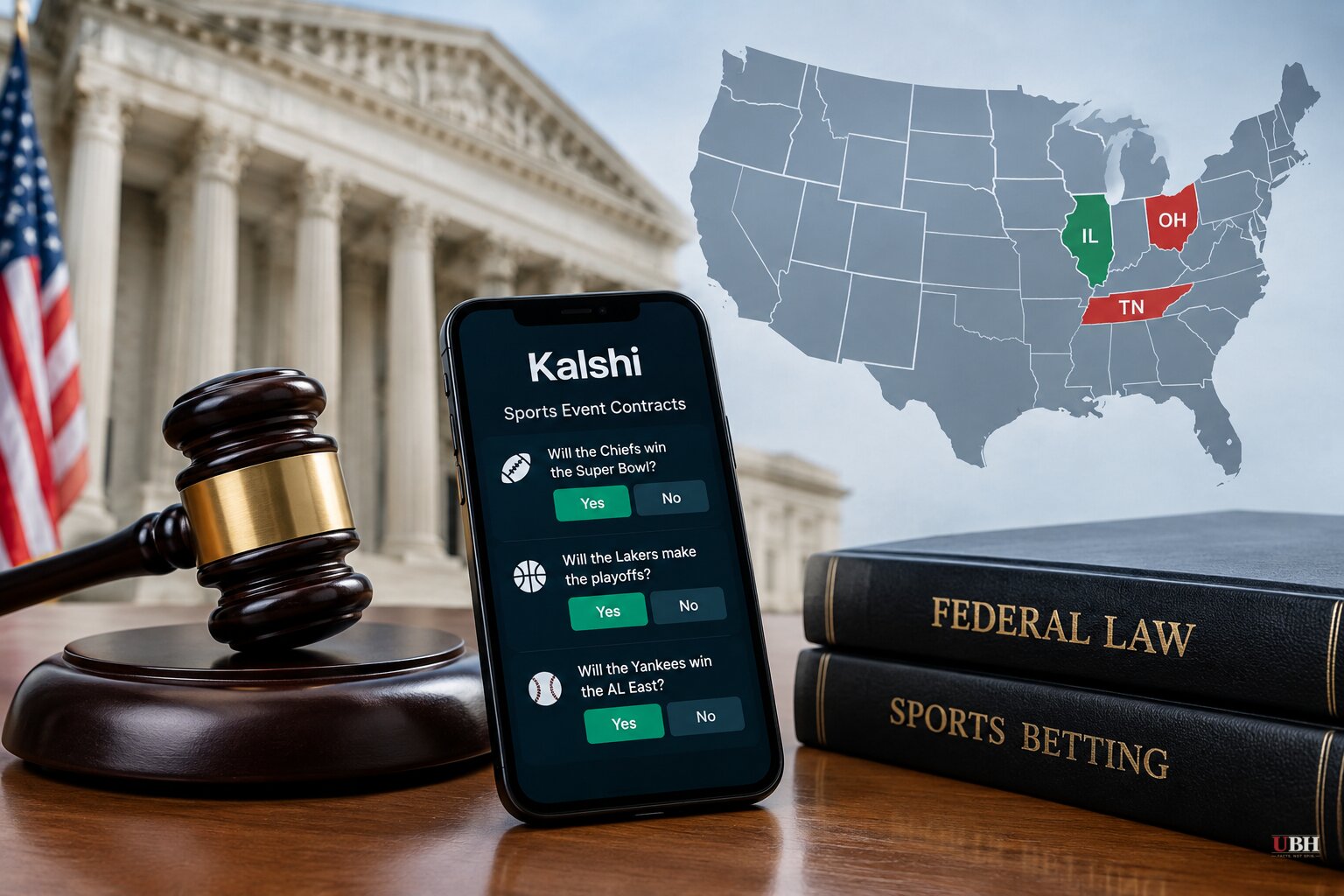
Since Kalshi started listing sports event contracts in January 2025, the legal fight over who regulates them has turned into a genuine mess. Federal courts in different states are now reaching opposite conclusions on the same basic question, and the split is only getting wider.
On October 2, US District Judge Martha M. Pacold in Illinois handed Kalshi, Coinbase, and the Commodity Futures Trading Commission a partial win. She found that Illinois' licensing requirements, including provisions under 230 ILCS 45, likely conflict with the federal Commodity Exchange Act, according to DefiRate. Pacold used a contract tied to whether the Chicago Cubs would win the 2026 World Series as her example, writing that championship outcomes carry real financial consequences for broadcasters, arenas, and sponsors, and that those effects likely bring the contracts inside the CEA's definition of swaps. "Swaps are swaps whether they are used to gamble," she wrote, per DefiRate.
But Pacold didn't hand Kalshi a clean sweep. She left Illinois' transaction fee rules, including new prediction-market fees, pending further briefing, and ordered both sides to propose specific injunction terms, according to Crypto Briefing and The Defiant.
A Different Answer in Ohio and Tennessee
Just a week before that, on September 25, the Sixth Circuit Court of Appeals reached the opposite conclusion. A unanimous three-judge panel, Circuit Judge Julia Smith Gibbons writing, joined by Judges Eric L. Clay and Rachel S. Bloomekatz, ruled that Kalshi had not shown its sports contracts qualify as swaps under the CEA, according to Cryptopolitan and sportshandle. The panel went further, holding that even if the contracts were swaps, federal commodities law would not override Ohio's or Tennessee's gambling statutes.
That reversed a Tennessee district court win for Kalshi and left an Ohio ruling against the company standing. Tennessee Attorney General Jonathan Skrmetti was blunt about it. "Kalshi attempted an end run around Tennessee law to avoid any of the rules or taxes associated with sports gambling. They failed," Skrmetti said, according to Cryptopolitan. He added that sports wagering "can do a lot of harm," and said the ruling protected Tennessee bettors.
States license gambling operators, set age limits, and fund addiction treatment programs through wagering taxes. Ohio's regulator accused Kalshi of a "flagrant disregard" of the state's 21-and-over gambling age by offering sports contracts without a license, citing Ohio Revised Code Section 3775.99, according to Cryptopolitan. If sports event contracts function like betting slips, treating them as untouchable federal products would let an exchange sidestep every consumer protection a state built into its gambling law.
The Sixth Circuit also rejected Kalshi's argument that complying state-by-state is incompatible with its duties as a federally designated exchange. The judges pointed to geofencing, the same geographic-blocking tech other platforms already use to satisfy both federal exchange rules and state gaming law, according to CryptoSlate. Kalshi told the court that segmenting by geography would be "technically difficult, time-consuming, and expensive." The judges' answer: expensive isn't the same as impossible.
Eilers & Krejcik Gaming's July model estimated 69% of Kalshi's retail sports demand comes from states without legal online sportsbooks, with California and Texas alone accounting for 44%, according to CryptoSlate. The Sixth Circuit's ruling now governs federal courts in Ohio, Tennessee, Michigan, and Kentucky. In Michigan, a September 1 state-court injunction already requires Kalshi to block covered sports contracts for users verified as being inside the state, with penalties up to $500,000 a day for violations.
Circuits Now Disagree With Each Other
The Illinois and Sixth Circuit rulings directly contradict each other, and both now sit alongside a July decision out of Wisconsin that denied the CFTC similar relief, a case currently on appeal to the Seventh Circuit, according to DefiRate. Gaming attorney Daniel Wallach flagged the split publicly, noting the Illinois ruling creates an intra-circuit conflict with the Wisconsin case sitting one level up in the same federal appeals circuit.
That kind of conflict between circuits is usually what pushes the US Supreme Court to step in. Nothing has been scheduled yet, but with Illinois, Wisconsin, the Sixth Circuit, Kentucky's separate state suit, and Michigan's state-court track all running at once, the pressure for a nationwide answer is building.
Kalshi Also Wants to Let Users Borrow to Bet
Separately, Kalshi filed a proposal with the CFTC on September 22 asking to let some users trade sports and event contracts on margin, meaning with borrowed funds, through its internal clearinghouse Kalshi Klear, according to the Epoch Times. The company said leverage would draw more institutional money into longer-dated markets and described the plan as moving "eligible event contracts from a blanket 'fund the maximum possible loss' model to a more traditional institutional derivatives framework." Kalshi says it will not offer leverage on culture, sports, or "mention" markets, and will limit margin trading near contract expiration to users with direct Kalshi Klear relationships who meet capital requirements.
Polymarket has pursued similar margin licensing this past summer. Global prediction-market volume has climbed to roughly $24 billion a month, up from under $5 billion a year earlier, according to Pew Research Center data cited by the Epoch Times, with some industry forecasts putting the market at $1 trillion by 2030.
The legal question remains open in every sense that matters. Kalshi and Illinois officials must submit proposed injunction terms to Judge Pacold, the Seventh Circuit has not yet ruled on the Wisconsin case, and the Ohio and Tennessee cases head back to their district courts under the Sixth Circuit's instructions. No single ruling settles what Kalshi can offer, or where, until one of these cases reaches the Supreme Court or Congress writes a clearer rule.
Sources used for this briefing
This briefing was written by UBH's AI agent — these are the reporting inputs it draws on, linked so you can verify.


