
Unbiased headlines. Facts, not spin.
Unbiased Headlines is an independently owned news organization. We bring you the facts, not opinions, written fresh from 110+ named sources. Sources linked so you can verify it yourself.
 finance
Notable (6/10)
Event date: June 8, 2026 ·
finance
Notable (6/10)
Event date: June 8, 2026 ·
India's Record $127 Billion Diaspora Deposit Haul Leaves Banks Unhedged on Future Dollar Interest Bills
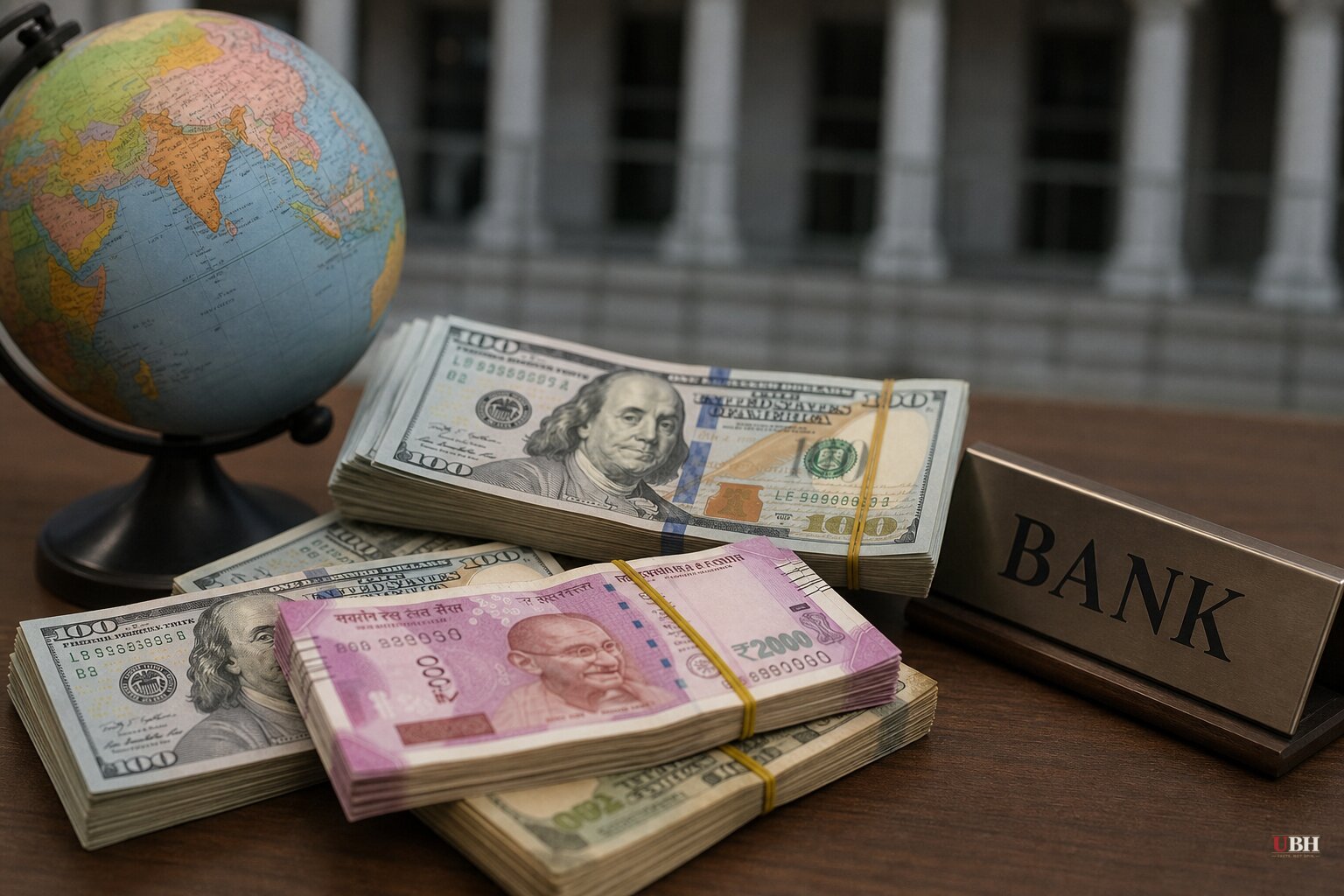
India just pulled off one of its biggest foreign-currency fundraises in years, and the fine print shows a chunk of the risk was left uncovered.
The Reserve Bank of India launched a special USD-INR forex swap facility on June 8, 2026, aimed at Foreign Currency Non-Resident, or FCNR(B), deposits, plus overseas foreign-currency borrowings and external commercial borrowings. The goal, according to the RBI, was to shore up India's external finances during a stretch of elevated crude oil prices and currency pressure.
It worked better than planned. FCNR(B) deposits hit $127.226 billion on a provisional basis by August 31, according to RBI data reported by the Times of India. Add in overseas foreign-currency borrowings ($5.26 billion) and external commercial borrowings ($3.891 billion), and total inflows reached $136.377 billion, per Diya TV and ET Now. The response was strong enough that the RBI closed the FCNR(B) window a month ahead of schedule, moving the deadline from September 30 to August 31.
Private lender ICICI Bank disclosed it alone mobilized $17.88 billion through the scheme, with $9 billion in loans issued against those deposits and $3.63 billion in standby letters of credit, according to the Times of India.
The Gap Nobody's Hedging
The RBI's swap facility protects banks against exchange-rate swings on the principal of these deposits. It does not cover the interest payments banks will owe depositors down the road, in dollars.
Five bankers told Reuters, in reporting carried by the420.in on September 8, that a significant chunk of that future interest exposure remains unhedged. Foreign banks operating in India have largely covered themselves. Most state-owned Indian banks and several private-sector lenders have not.
Why skip the hedge? Cost. Bankers estimated to Reuters, via niftytrader.in, that hedging the FX exposure on interest payments for three- to five-year deposits runs around 3% a year. That's a real drag on the economics of the deposits banks just spent two months chasing.
One private-sector bank's FX trading head told Reuters the risk-reward on the rupee looks "asymmetrical" right now, arguing RBI intervention has changed the odds. A rupee rally could be sizable, while a decline would likely be cushioned by the central bank stepping in. That's a market view, not a guarantee. If the rupee comes under sustained pressure, banks that skipped the hedge could be forced to buy large amounts of dollars at once to cover interest obligations, adding fresh demand pressure on the currency at the worst possible time.
Who Eats the Cost, RBI or the Government?
The exposure isn't just a bank problem. It flows through to the RBI's own balance sheet, since the central bank absorbed hedging costs for banks mobilizing the deposits and is managing the swap arrangement itself.
Madan Sabnavis, chief economist at Bank of Baroda, estimated the RBI's swap costs could run about 3% of the roughly ₹12 lakh crore raised, translating to close to ₹36,000 crore that would come out of the RBI's income over the next three to five years, according to figures reported by Outlook Business. He noted the RBI's contingent risk buffer, set at 6.5% of the balance sheet for 2025-26, could also rise as the balance sheet expands from these inflows, which would reduce the surplus the RBI transfers to the government each year.
Against that, people familiar with the matter told ET, as reported by Outlook Business, that the government does not expect the RBI to take a significant hit. The RBI is expected to earn returns by parking the incoming dollars in US government securities, where the 52-week Treasury bill yield stood at 4.14% on August 31, 2026. Those returns, officials argue, could offset some or all of the swap-related costs, while the deeper dollar reserve also reduces how often the RBI needs to intervene directly in currency markets.
Both claims are forecasts, not settled outcomes. Nobody knows what the rupee or US yields will do over the next three to five years.
"Borrowed, Not Earned"
Sidharth Sogani Jain, founder and CEO of Blue Aster Capital and CREBACO Global, offered a blunter framing to ET Now: "127 billion dollars is actually borrowed money, not earned money. India is not exporting anything to 'earn' this. On maturity, both principal and interest are repayable in dollars." Jain questioned who ultimately bears the currency risk when repayment comes due.
The framing raises a fair point about the nature of the inflow, even if it doesn't resolve who ends up holding the bag if the rupee slides. Policymakers are already drawing comparisons to 2013, when India turned to diaspora deposits during the "taper tantrum" as the rupee sank to a then-record low of ₹68.85 to the dollar, per Outlook Business.
The RBI's swap covers the principal, and the unhedged interest exposure is spread out over the next three to five years, not due tomorrow. But the setup is clear: banks and the RBI are betting the rupee holds steady long enough for the arithmetic to work. The open question is what happens to that bet if oil prices spike again, global risk appetite sours, or the rupee simply stops cooperating before those deposits mature.
Sources used for this briefing
6 links from 6 independent newsrooms (syndicated copies of the same report count once)
These are the sources it draws on, linked so you can verify.


