
Unbiased headlines. Facts, not spin.
Unbiased Headlines is an independently owned news organization. We bring you the facts, not opinions, written fresh from 110+ named sources. Sources linked so you can verify it yourself.
 finance
Major Story (7/10)
Event date: August 26, 2026 ·
finance
Major Story (7/10)
Event date: August 26, 2026 ·
Treasury Doubles Bond Buybacks to Fight Surging Yields as $138 Billion in Buyout Debt Heads for Credit Markets
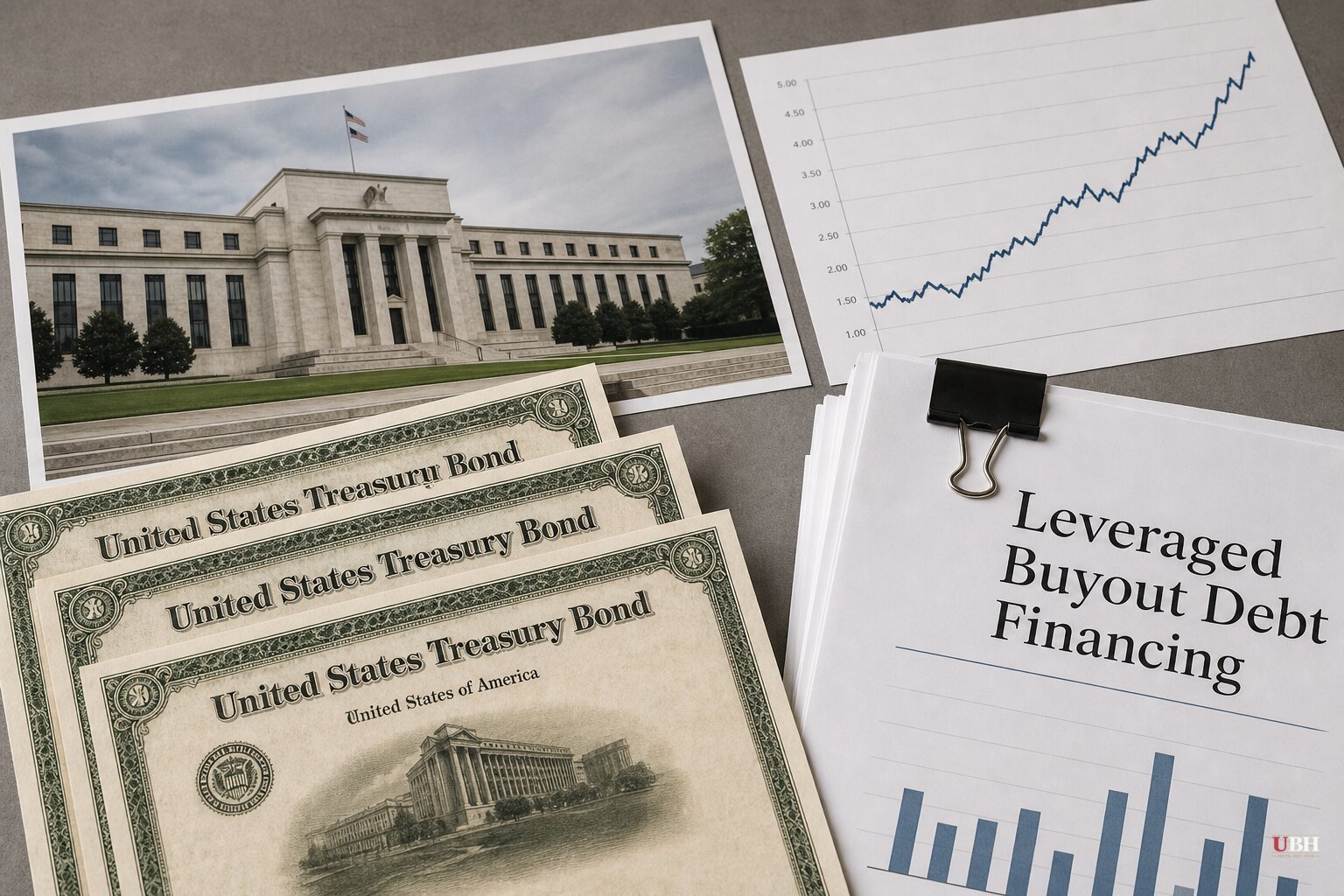
The federal government and private equity are about to compete for the same buyers in the bond market, and neither side is bringing good news about supply.
Bankers are preparing to offload more than $138 billion in buyout debt over the coming months, according to Bloomberg, citing data from JPMorgan Chase. In the U.S., that volume is the highest since 2007, right before the financial crisis. In Europe, it's the biggest since the pandemic hit in 2021. Some deals are already launching early to beat the rush, but JPMorgan says the bulk is set to land before November's midterm elections.
At the same time, the Treasury Department is trying to manage its own supply problem. On Aug. 20, Secretary Scott Bessent announced Treasury would more than double the size of its debt buyback operations, according to CNBC. The maximum size per operation jumps from $2 billion to at least $4 billion, targeting the 10-to-20-year and 20-to-30-year portions of the curve that have seen what CNBC described as a "buyers' strike since late June." The expanded buybacks are set to begin Wednesday, Sept. 9, and run through Nov. 4, 2026, covering the exact window before the midterms.
Bessent told CNBC the number could go even higher than $4 billion, saying Treasury has a "big toolkit" and will "analyze" conditions before deciding. He framed the move as an effort to "get people to focus on the fundamentals and not trade the headlines during a quiet period in a thin market."
Yields Whipsawed, Then Reaccelerated
The announcement worked, briefly. The 10-year Treasury yield fell 5.7 basis points to 4.647% and the 30-year dropped 9 basis points to 5.196% right after the news broke, according to CNBC. President Trump, asked if Americans should worry about the bond market, said, "No, I don't think so."
The relief didn't last. By Thursday, yields had reaccelerated, according to the Epoch Times. The 30-year climbed to 5.31%, its highest since June 2007. The 10-year hit a 14-month high of 4.77%. The 2-year, which tracks Fed policy expectations, held around 4.19%.
Lawrence Gillum, chief fixed income strategist at LPL Financial, told the Epoch Times the move higher is "real" but not alarming. "The backup in long-end government yields is real, but we think this is a necessary normalization, not a crisis," Gillum said, pointing out that Japanese, German, French and British government bonds are repricing the same way. He called it "a global term premium story, not a verdict on U.S. creditworthiness."
UBS strategists took a more skeptical line in an Aug. 19 note cited by the Epoch Times, arguing the buybacks "may discourage aggressive curve-steepening trades and reduce near-term market stress" but "do not address the forces supporting higher term premia, including persistent deficits, elevated capital demand, and a shift in Treasury ownership toward more price-sensitive private investors."
Krishna Guha of Evercore ISI, quoted by CNBC, said the bigger buyback "can help crowd in potential buyers" and force short-covering, but "changes almost nothing in terms of the fundamentals," specifically the need to finance "the tidal wave of hyperscaler debt in addition to very large government deficits."
Joe Brusuelas, chief economist at RSM, told CNBC that "Bessent is a political actor" whose "interest is purely short term and is organized around the upcoming election and not a return to price stability." Brusuelas offered no evidence Treasury manipulated data or broke any rule. Buybacks of this kind are a standard debt-management tool available to any Treasury secretary, and Bessent's own public rationale, easing illiquidity in the 30-year, is the same one Gillum and other market strategists gave independently. Whether the timing is coincidental or calculated is something the sources don't resolve either way.
The Bigger Number Behind All of It
All of this is happening against a debt backdrop that Fox News laid out bluntly: the national debt has already surpassed $40 trillion and could hit $50 trillion by 2030 if deficits keep running $2 trillion to $2.5 trillion a year. The Congressional Budget Office projects a $1.9 trillion deficit for 2026 alone and more than $23 trillion in cumulative deficits from 2026 through 2035. Net interest costs are projected to climb from 3.3% of GDP in 2026 to 4.6% by 2036.
Fox News also flagged the trust fund dates that make this more than an abstract math problem. Social Security's Old-Age and Survivors Insurance Trust Fund is projected to exhaust its reserves in 2032, after which incoming revenue would cover only about 78% of scheduled benefits. Medicare's Hospital Insurance Trust Fund faces exhaustion in 2033.
Treasury's expanded buyback window closes Nov. 4, 2026, the same stretch when $138 billion in fresh corporate buyout debt is expected to compete for the same pool of buyers. Whether long-end yields stay calm once government support ends, or whether the debt supply from both directions pushes them back toward 5.3%, is the question bond markets will be pricing in real time.
Sources used for this briefing
5 links from 5 independent newsrooms (syndicated copies of the same report count once)
These are the sources it draws on, linked so you can verify.


