
Unbiased headlines. Facts, not spin.
Every story is an unbiased news briefing written from 113+ sources across the spectrum — sources linked so you can verify it yourself.
 finance
Notable (6/10)
October 5, 2026 at 07:03 AM
finance
Notable (6/10)
October 5, 2026 at 07:03 AM
India's Parliament Panel Wants Price Caps and Foreign Investment Limits After $10 Billion Private Equity Hospital Buying Spree
India's hospital sector has become one of the world's hottest private equity plays, and now a parliamentary standing committee wants to slam the brakes on it.
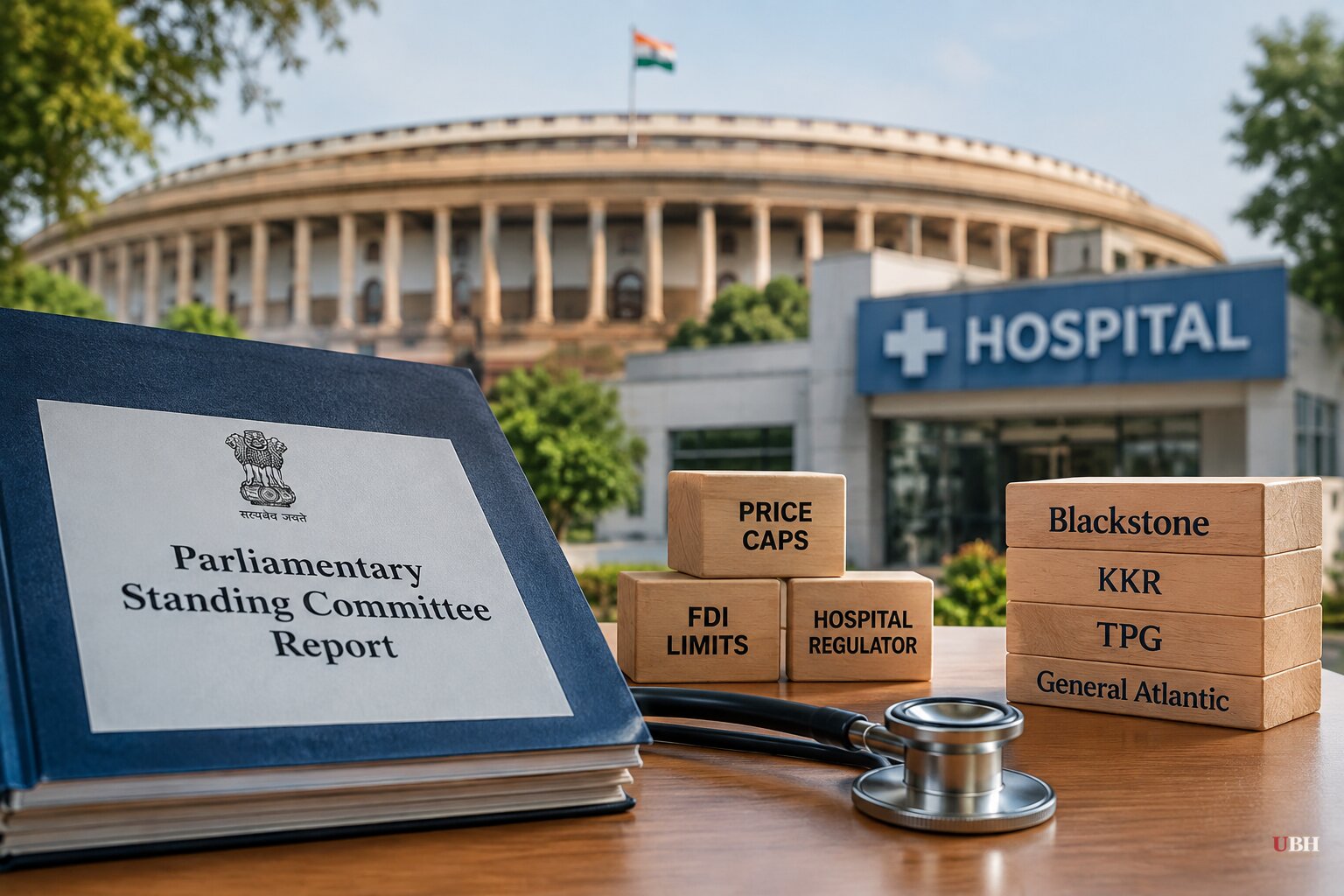
The committee's report, which landed in August 2026, calls on the Union government to immediately restrict foreign direct investment in private hospitals. It recommends price caps on tariffs, a new hospital regulator, and mandatory reserved beds at subsidized rates, according to Gujarat Samachar.
The numbers behind the panel's alarm are substantial. Blackstone, KKR, TPG, General Atlantic and other global investors have spent roughly $10 billion buying stakes in Indian hospital chains over the past five years, according to data compiled by EY and reported by Business Standard, Inkl and The Hindu Business Line. Between 2022 and 2024 alone, Indian healthcare and pharma companies recorded nearly 600 mergers, acquisitions and private equity transactions worth more than $30 billion, with 40% of that money flowing into hospitals, according to Grant Thornton data cited by the BBC. An additional $20 billion has flowed into the sector in the last two years, the BBC reported, also citing Grant Thornton.
PE-backed hospitals still account for less than 5% of India's hospital beds, according to Business Standard, but they dominate high-margin specialties like cardiac surgery and cancer care. In early August, Manipal Health raised nearly $1 billion in what became India's second-largest IPO of the year, the BBC reported.
The Committee's Case
The parliamentary panel's core complaint is that foreign capital is being used to buy up existing, affordable mid-sized hospitals rather than build new ones in underserved areas. "The growing presence of foreign capital in private hospital chains is facilitating the acquisition of cost-effective, mid-sized hospitals by larger corporate entities," the committee wrote, according to Gujarat Samachar.
A separate government panel report found that treatment in private hospitals runs five to ten times costlier than in government facilities, with the gap widening further for cancer, heart disease and kidney failure, according to the BBC. That report blamed "rampant commercialisation" for inflated billing and said it was "directly pushing vulnerable households into catastrophic debt and distress, causing asset sales." The comparison measures private hospitals broadly against government facilities, not PE-owned chains specifically against other private hospitals, a distinction the committee's public messaging tends to blur.
That's a legitimate concern from patients and lawmakers who've watched local hospitals get absorbed into national chains and seen their bills climb. India has only about 1.3 hospital beds per 1,000 people, according to Business Standard, far below developed-world levels, and a family facing a cardiac emergency has no real leverage to shop around when the nearest affordable option just got bought out and repriced.
What the Panel Leaves Out
The committee's framing, which Gujarat Samachar's coverage reproduces almost uncritically, overlooks that foreign capital didn't just buy existing hospitals. It financed new facilities, expensive technology and genuine capacity expansion in a country desperately short of beds, as the BBC, Business Standard and The Hindu Business Line all note. The BBC's own reporting from Miraj, a town in Maharashtra, found more than 50 new multi-specialty hospitals and clinics built in just five years.
Joseph Benaven, managing director of Kanate Hospitals in Kerala and a former president of the Indian Medical Association's state unit, put the shift plainly: "The biggest change in Indian healthcare hasn't happened in the operating theater, it's happened in the boardroom. Increasingly, hospitals are judged by return on capital and revenue per occupied bed," he told Business Standard.
Insurers and hospitals are also pointing fingers at each other. Insurers say PE-backed chains are inflating bills and pushing patients toward unnecessary high-cost procedures. Hospital operators counter that insurers delay payments and underpay reimbursements, squeezing their margins, according to Business Standard.
The American Preview
The U.S. offers a cautionary case study the Indian debate hasn't fully reckoned with. More than one in ten American hospitals is now owned by private equity firms trying to double their money in as little as seven years, according to The Epoch Times. In Kentucky that's one in six hospitals; in New Mexico, more than one in three. Four in ten emergency room doctors nationally work for staffing companies owned by private investors rather than the hospital itself.
The leveraged buyout model is the mechanism driving the concern. PE firms typically put in 10% to 40% of a deal's financing and borrow the rest, but the hospital or physician practice itself carries the debt, not the investors. Kelly Arduino, an executive at Wipfli with 25 years in healthcare management, told The Epoch Times that private equity has driven real gains in health technology investment. But the same debt-loading model has also left some facilities "bereft of real assets, loaded with debt, and struggling to maintain quality care," per studies cited by the outlet.
India's government hasn't announced any FDI rule changes, price caps, or a new regulator yet. These remain committee recommendations, not enacted policy. Capping prices and choking off foreign capital in a country that needs more hospital beds, not fewer, risks solving the wrong problem. A debt-and-disclosure rule aimed at leveraged buyout structures, the actual mechanism squeezing patients, would target the real issue without strangling the investment that's building capacity in the first place. Whether New Delhi goes that route or reaches for blunt price controls is the open question now sitting with the Union government.
Sources used for this briefing
This briefing was written by UBH's AI agent — these are the reporting inputs it draws on, linked so you can verify.


