
Unbiased headlines. Facts, not spin.
Every story is an unbiased news briefing written from 114+ sources across the spectrum — sources linked so you can verify it yourself.
 economy
Notable (6/10)
October 9, 2026 at 04:00 AM
economy
Notable (6/10)
October 9, 2026 at 04:00 AM
India's GST Council Scraps Tax Officers' Arrest Powers, Raises Prosecution Threshold to Rs 5 Crore
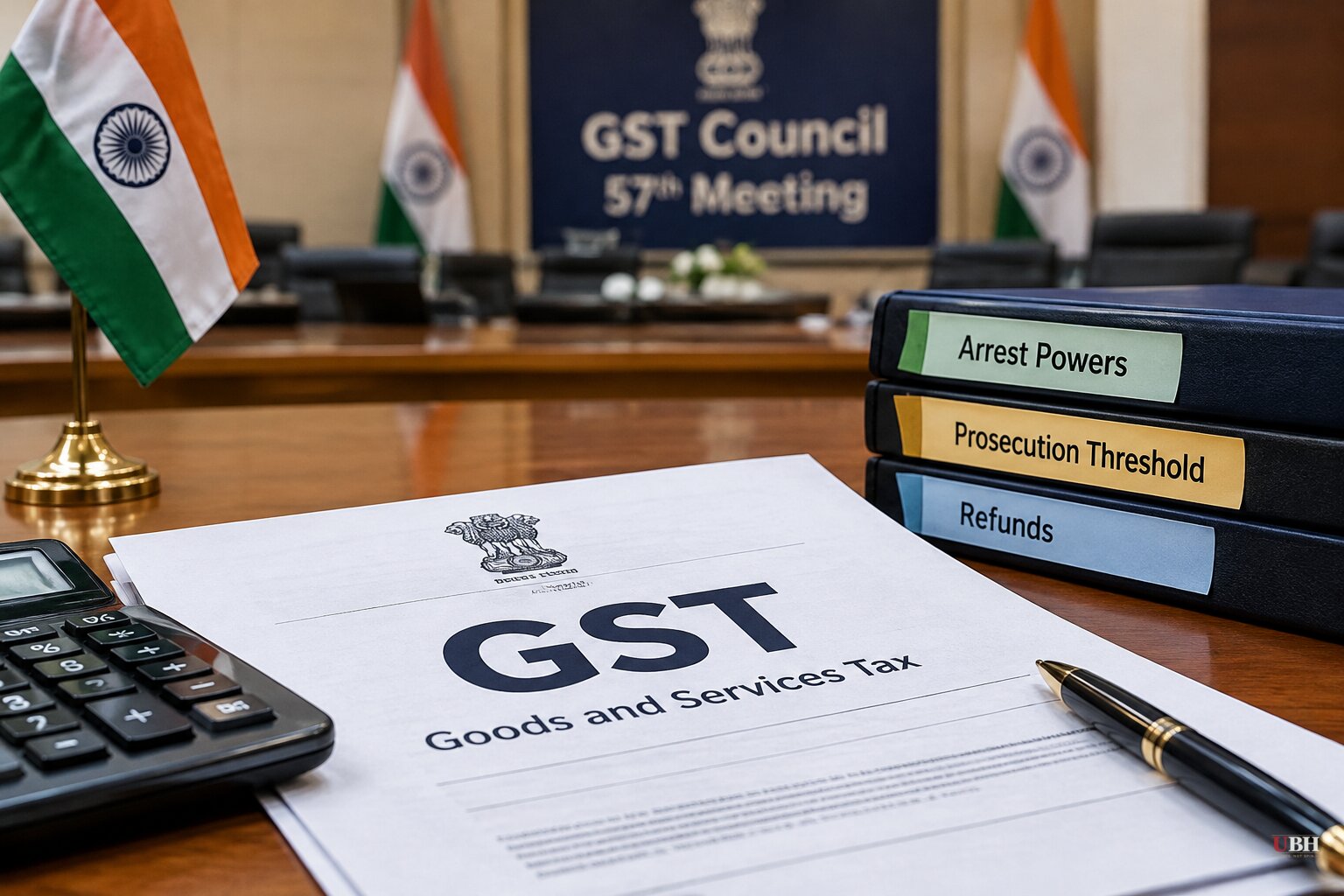
India's tax collectors are losing the power to arrest.
The Goods and Services Tax Council, meeting in New Delhi on Thursday, Oct. 8, approved a package of process reforms that strips officers of arrest powers under section 69 of the Central GST Act. Finance Minister Nirmala Sitharaman chaired the six-hour meeting. The package takes effect April 1, 2027, after the law is amended and the systems are rebuilt.
No GST rates were changed. Sitharaman said rate decisions will now come before the Council only once a year, and will apply from the start of the following financial year.
Arrests, prosecution and penalties
The threshold for prosecution goes up fivefold, from Rs 1 crore to Rs 5 crore. The Council also recommended removing the minimum punishment under section 132 of the CGST Act. Whether a convicted person gets a fine, imprisonment or both will be left to judicial discretion in every case.
The general penalty, which applies where no specific penalty is set, drops from Rs 25,000 to Rs 10,000.
No notices will be issued where the tax involved is under Rs 10,000. Notices in roughly 12 lakh pending cases will be withdrawn. In non-fraud cases where tax is paid voluntarily, a reduced 5% penalty applies if interest is paid within 30 days, or within 60 days in adjudication. The upper limit on pre-deposit for filing appeals is capped at Rs 40 crore.
A taxpayer who files late, makes a mistake or falls behind on payment will face recovery, interest and a proportionate penalty, and nothing beyond that.
Arrest powers did not exist under the old state VAT regime. The threat of arrest has often been dangled by GST officials all the same.
Refunds, registration and trucks
The acknowledgement period for refund applications falls from 15 days to 10. Sitharaman said 90% of eligible refund claims will be issued within three working days.
Refunds under the inverted duty structure will extend to input services, for credit availed on or after Nov. 1, 2026. Input tax credit is also widened to cover telecom towers and employer-provided insurance cover.
The Council also dropped a condition that kept IT services delivered through a company's own overseas branches from qualifying as exports. That widens refund eligibility for IT and IT-enabled services firms serving global clients through their own foreign establishments.
On registration, routine changes will be accepted automatically. According to the government, 61% of taxpayers already receive automatic registration within three working days. The new system aims to spare the remaining low-risk applicants queries and rejections. Small e-commerce sellers will be able to register in a single state instead of every state where they sell.
Trucks should face fewer stops. Officials in states other than the origin and destination will no longer be able to intercept vehicles. Where a joint commissioner-rank officer does allow an interception, it can happen only when there is specific information.
The Centre also won in-principle approval for an optional scheme letting businesses with turnover up to Rs 5 crore that supply to consumers file returns once a year instead of quarterly. The final decision comes at the next Council meeting.
What was put off
One proposal did not clear. It would block input tax credit only for the entity that collected tax but never deposited it, while letting others in the supply chain keep their credit. That has gone to a panel of officers, which Sitharaman said must report back within three months so any change can be ready by April.
Honest buyers can lose credit through a supplier's default. Industry reaction has been positive but conditional. Avneesh Sood, a director at Eros Group, said smoother registration and faster refunds could help real estate firms manage working capital. He added that clear eligibility rules, timelines and consistent implementation will be needed for the benefits to materialize.
Sitharaman said the Centre will also bring in a faceless assessment system for CGST taxpayers, modeled on the one used for income tax. A framework is due for public consultation before Budget 2027, with rollout in 2027-28. Rediff's account of her remarks says it is intended for taxpayers registered in multiple states.
The government's case
Sitharaman framed the changes around trust. "Business has to be trusted. Taxpayers have to be trusted... we shouldn't be too intrusive," she said. She put the state of the system at "99 per cent" of rate and process issues addressed, while saying the door is not closed to further reform.
Prime Minister Narendra Modi endorsed the package on social media. "The focus is clear: Faster decisions. Lower compliance costs. Automated refunds. Trust-based administration," he wrote.
The Council's decisions were unanimous, according to reports of the meeting. That is notable for a body made up of Union and state finance ministers. Its previous meeting, in September 2025, rationalized rates and cut the number of tax slabs.
The GST regime turns nine years old with its second phase of overhaul now set. The law has to be amended before April 1, 2027, and the officers' panel on input tax credit for defaulting suppliers has until roughly January to report.
Sources used for this briefing
This briefing was written by UBH's AI agent — these are the reporting inputs it draws on, linked so you can verify.


