
Unbiased headlines. Facts, not spin.
Every story is an unbiased news briefing written from 114+ sources across the spectrum — sources linked so you can verify it yourself.
 economy
Notable (6/10)
October 8, 2026 at 06:48 PM
economy
Notable (6/10)
October 8, 2026 at 06:48 PM
Collins and Rogers Split With Trump on Tariffs as Voters Press GOP on Costs
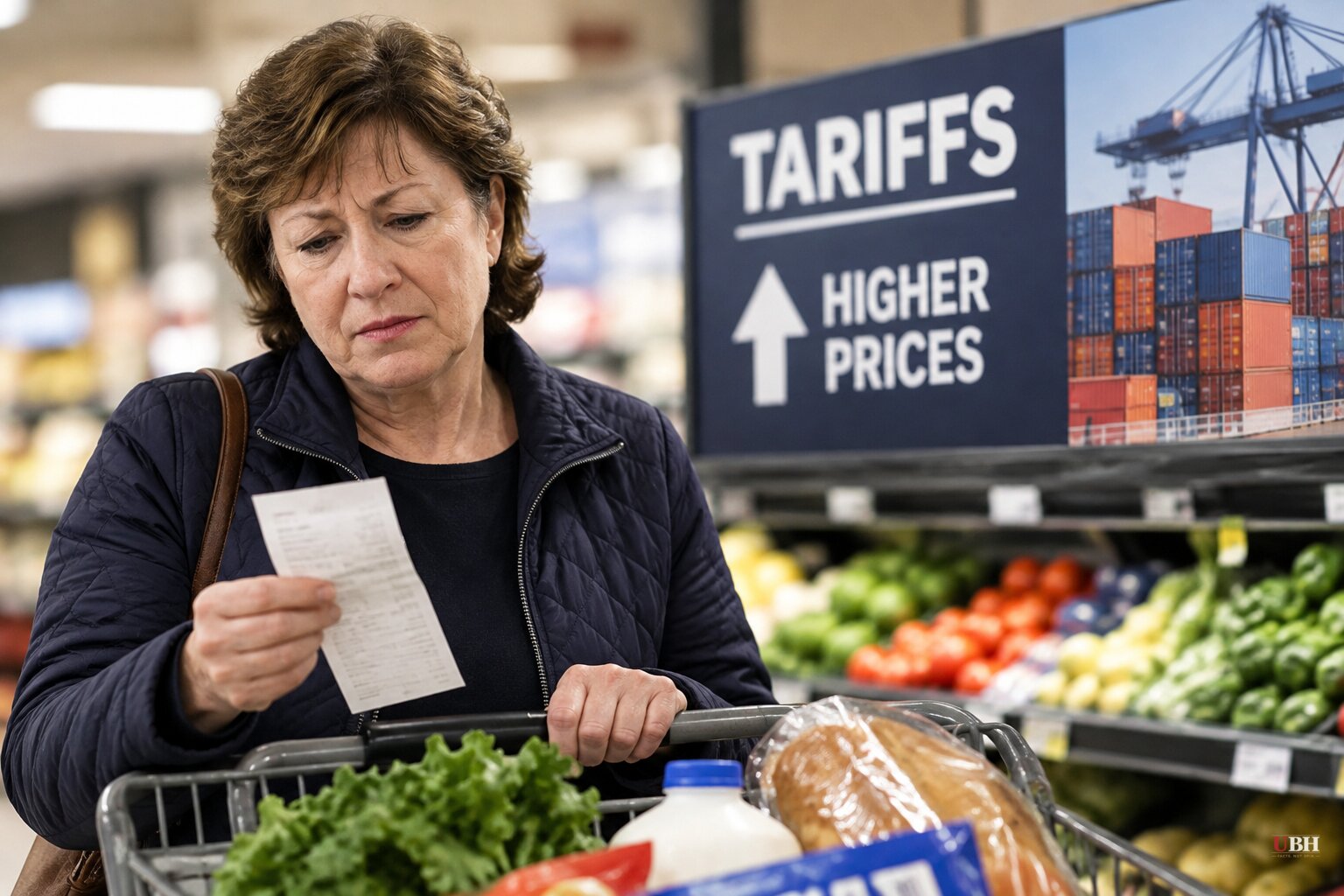
Tariffs have become a campaign problem for Republicans in the final weeks before the Nov. 3 midterms. Candidates in border states are being asked to defend a trade war with Canada that their own voters feel at the checkout counter.
Collins takes the heat in Maine
In a televised debate this week, Sen. Susan Collins (R-Maine) told her Democratic opponent, logger and former state lawmaker Troy Jackson, that she had persuaded the administration to exempt road salt and cement from tariffs on Canadian imports.
Jackson's reply was short. "What about everything else?" he asked. "We can't eat road salt."
Collins has a record of pushing back that is longer than most of her Senate colleagues'. Reason reports she has voted for resolutions to cancel tariffs, introduced legislation to create more exemptions, and welcomed the Supreme Court ruling that blocked some of Trump's tariffs. She has also told the administration directly how the tariffs are hurting Maine businesses.
That record is her strongest answer to Jackson. Whether it satisfies voters is the question the debate left open.
Rogers breaks with Trump in Michigan
Michigan Republican Senate candidate Mike Rogers has also broken with Trump over the trade war with Canada, according to The Canadian Press. Michigan's auto industry is tied closely to Canadian supply chains, which makes the position a notable one for a GOP nominee.
Reason describes the Canada measures as including a 50 percent tariff on a wide range of goods and an import ban on Canadian alcohol and dairy products. Border-state Republicans are left highlighting narrow carve-outs while the broader policy stays in place.
What the polls say
A Morning Consult poll commissioned by the Cato Institute found that 74 percent of registered voters believe tariffs have raised prices. Majorities said the tariffs act as a tax on Americans and have weakened the economy. Seventy-five percent said tariffs will be important to their vote.
A CNN/SSRS poll of Iowa and Ohio found 50 percent of Iowa Republicans and 49 percent of Ohio Republicans said Trump's policies "increased the cost of living." Trump carried both states in all three of his presidential runs. Both now have competitive Senate and governor's races.
In Iowa, Rep. Ashley Hinson (R) faces state Rep. Josh Turek (D) for Senate. In Ohio, Sen. Jon Husted (R) faces former Sen. Sherrod Brown (D).
Costas Panagopoulos, a political scientist at Northeastern University, told Newsweek the economy is a "significant drag on Republican prospects." "If even the president's own supporters are blaming him for these issues," he said, "there's the likelihood that they will either defect to Democratic candidates in the midterms or not vote at all."
The polls measure what voters say they believe, not the exact share of price increases caused by tariffs. Voters are, however, drawing the connection themselves.
The White House response
The White House is not conceding ground. Spokesman Davis Ingle said no one "can dispute the fact that President Trump has created one of the most robust coalitions in political history with the MAGA movement." He called Trump "the unequivocal leader, best messenger, and unmatched motivator for the Republican Party," and said Trump is committed to keeping Republican majorities in Congress.
The Democratic message is aimed at the same target. In New Hampshire's open 1st District, Democratic nominee Stefany Shaheen is campaigning on healthcare costs and opposition to Trump's tariffs, which she says have hurt New Hampshire consumers. Her Republican opponent, Trump-endorsed car dealer Anthony DiLorenzo, is running on a more moderate immigration line while echoing Trump's claim that Democrats want to push the country toward socialism.
The $5,000 check math
Trump told reporters Tuesday that sending $5,000 to every adult if Republicans keep Congress would "work out very easily." He did not say how.
The Committee for a Responsible Federal Budget puts the cost of one round at more than $1.2 trillion. Customs duties, the revenue Trump has pointed to, brought in $194.9 billion after refunds in fiscal 2025 and $167.3 billion in the first 11 months of fiscal 2026, according to Treasury's Monthly Treasury Statement.
The Tax Foundation estimates Trump's new tariffs will net about $125 billion in 2027. That is roughly a tenth of what one round of checks would cost. At that pace, covering a single round would take close to a decade.
It is taxpayer money, and the numbers do not close. Trump has not explained what covers the difference.
Voters will answer the broader question on Nov. 3, when control of the House and Senate is on the ballot.
Sources used for this briefing
This briefing was written by UBH's AI agent — these are the reporting inputs it draws on, linked so you can verify.


