
Original briefings. Zero spin.
Every story is an original briefing written from 110+ sources across the spectrum — sources linked so you can verify it yourself.
 economy
Notable (6/10)
Event date: July 6, 2026
economy
Notable (6/10)
Event date: July 6, 2026
India's Forex Reserves Hit Record $740.8 Billion as RBI Swap Scheme Pulls in $136 Billion Amid Iran War Fallout
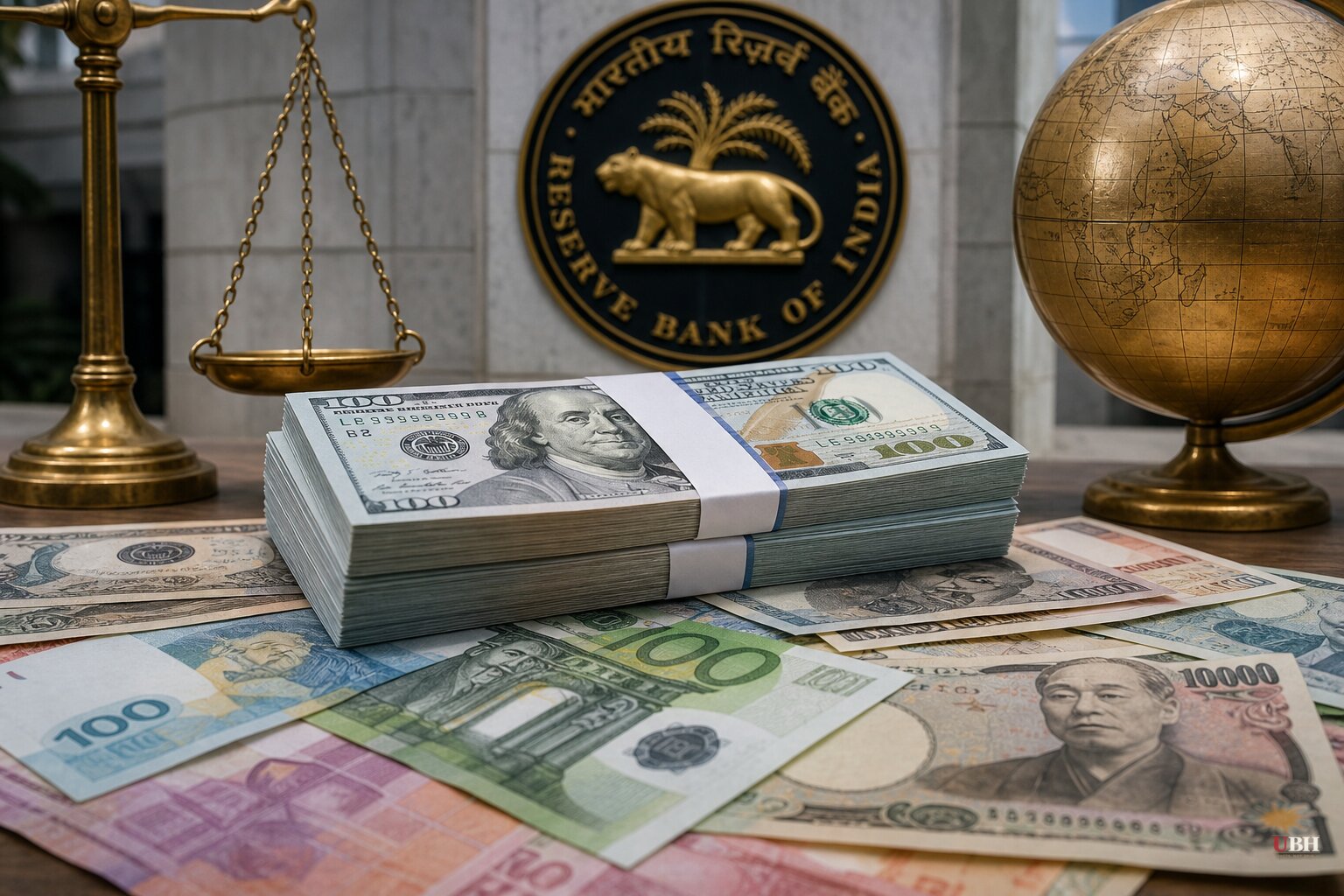
Since the US-Iran war rattled global currency markets earlier this year, India's central bank has quietly run one of the more effective defensive plays of the conflict. The Reserve Bank of India's foreign exchange reserves hit an all-time high of $740.80 billion as of August 28, according to data the central bank released Friday and reported by Informist Media. That's the ninth straight week of gains, up from the previous record of $729.33 billion set the week before.
In May, as the rial-adjacent shockwaves from the war hit the rupee, Prime Minister Narendra Modi publicly urged Indians to cut back on gold purchases, foreign travel, and fuel use to conserve the country's dollar reserves, according to the Times of India. Weeks later, the RBI rolled out a special swap scheme aimed at Non-Resident Indians holding foreign-currency deposits.
The RBI absorbed the currency-hedging costs on FCNR(B) deposits, foreign-currency accounts NRIs can hold at Indian banks. That let banks offer juicier returns without eating exchange-rate risk themselves, and some lenders were able to leverage those deposits into loans several times the original amount, the Times of India reported. Cheap money in, dollars flowing back into India's reserve war chest.
The swap windows had raised $136.38 billion by August 31, according to the RBI, cited by AP7AM. Roughly 92%, or $126 billion, came through the FCNR(B) deposits specifically, with the rest from offshore borrowing facilities, per a DBS Bank report cited by AP7AM. Radhika Rao, senior economist at DBS Bank, said the inflows have added to rupee liquidity that was already at a four-year high, pushing down overnight rates.
A report from DBS Bank, relayed by AP7AM on September 3, said the swap totals were "likely pushing foreign reserves past $750 billion." The Times of India ran with that framing in its headline, calling it a "nearly $750bn shield." But the RBI's own published figure, released the next day and reported by Informist Media, put reserves at $740.80 billion as of August 28, not past $750 billion. The DBS estimate was a forecast based on swap inflow totals; the RBI's number is the actual reported reserve level. Readers following the headline alone would think India had already crossed a threshold it hasn't reached in the RBI's own data.
This all sits inside the broader economic campaign the Trump administration has waged against Iran. Treasury Secretary Scott Bessent has pushed a sanctions push meant to, in his words, "sever every economic lifeline that sustains this tyrannical regime until Tehran stands alone," a campaign CNN and NPR have both covered as it's expanded to banks and intermediaries accused of laundering Iranian oil money. Iran's rial has cratered to record lows against the dollar amid the pressure, per CNN's reporting on the currency's open-market collapse.
India isn't a target of that sanctions campaign, but it's been caught in the currency turbulence the war has generated across the region. The rupee took a hit as fuel costs and gold import values rose during the conflict's early months, according to the Times of India, which is why Modi's austerity messaging and the RBI's swap scheme emerged in the first place. The rupee has since firmed, rising 0.3% against the dollar in the week ending August 28 alone, per Informist, aided by RBI dollar sales in the open market and a broader retreat in the dollar index.
DBS Bank's report flagged a specific risk that hasn't been fully addressed: a chunk of the FCNR(B) inflows are bunched into three- and five-year maturities. When those come due, NRIs will want their dollars back, and DBS suggested the RBI may need to earmark part of its existing reserve stock against those future liabilities to avoid a sudden spike in dollar demand. Rao noted that "concerted steps are necessary to drain the potential surge in liquidity" the scheme has created in the near term.
Traders are watching whether the rupee holds its current band of roughly 94.10 to 95.50 against the dollar, according to AP7AM, with a break below 94.10 potentially opening the way toward 93.50. Whether India's record reserve pile proves durable, or just a well-timed loan against a future currency squeeze, is a question the RBI hasn't answered yet.
Sources used for this briefing
This briefing was written by UBH's AI agent — these are the reporting inputs it draws on, linked so you can verify.


