
Unbiased headlines. Facts, not spin.
Unbiased Headlines is an independently owned news organization. We bring you the facts, not opinions, written fresh from 110+ named sources. Sources linked so you can verify it yourself.
 economy
Major Story (7/10)
Event date: October 16, 2026 ·
India Weighs Trade Deal Timing After Trump Waives 100% Tariff Law on Russian Oil Buyers
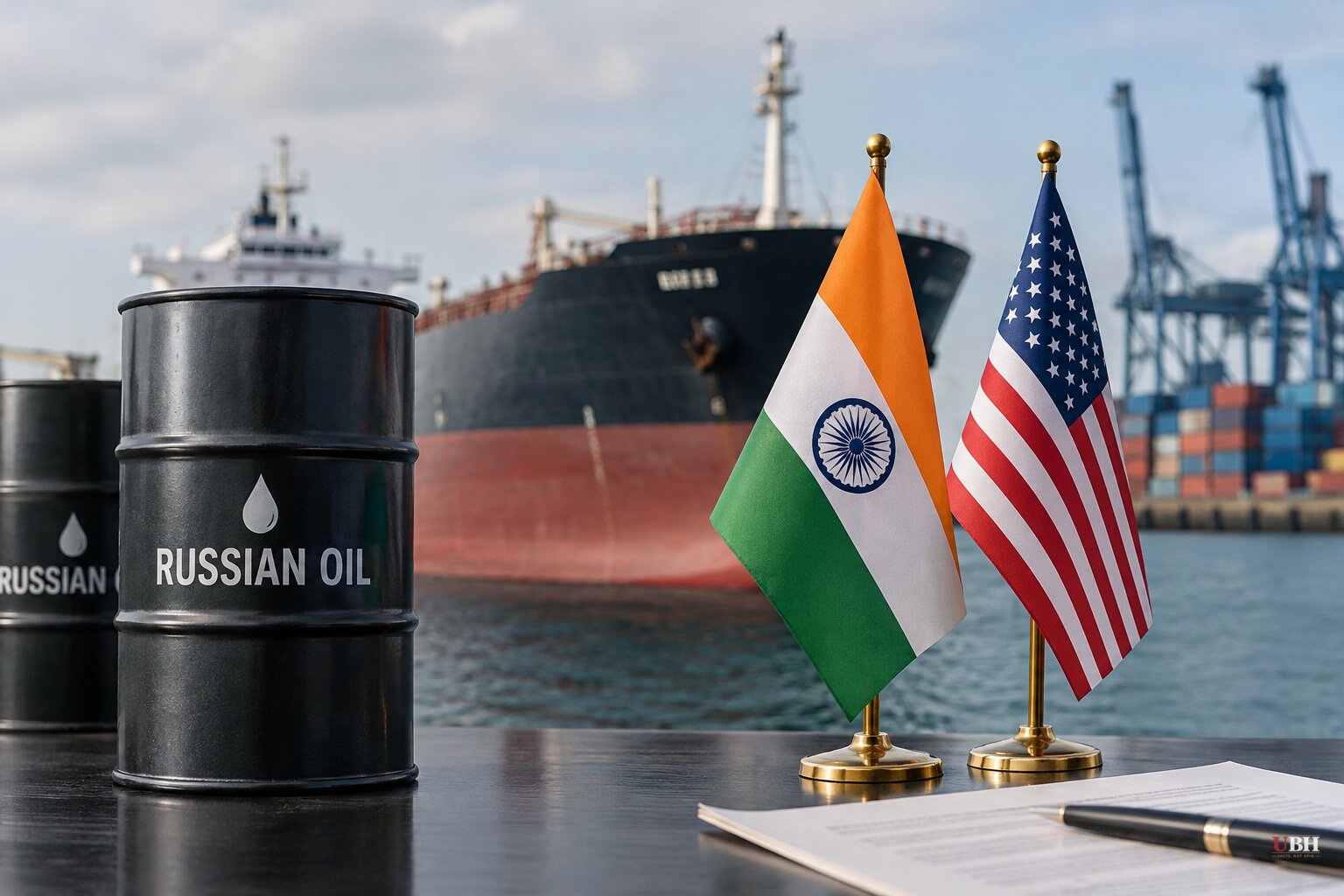
India is sitting on a pending trade deal with Washington, and the smart play right now is patience.
That is the argument from Pranab Dhal Samanta in The Economic Times. Trump, he writes, has signed a "national interest waiver" suspending the Lindsey O. Graham Sanctioning Russia Act. The law requires 100% tariffs on the top five Russian oil importers, India among them.
The waiver is not a repeal. Samanta says Trump has preserved leverage for future action.
The deal is done on paper, not in force
Samanta's point is about sequencing. Closing an agreement is one thing. Implementing it is another. The deal currently awaits legal clarity from Washington, and he says the "entry into force" clause holds the key.
His advice: New Delhi should not hurry its implementation steps. It should seek more permanent protection and written assurances while, in his words, "the tides are currently in India's favour."
The tariff picture helps explain why. Samanta says the earlier tariffs on India were suspended by the U.S. Supreme Court. Indian goods now face a 10% tariff imposed through the Section 301 route, and U.S. importers have a legal challenge pending against the administration over it.
That 10% is lower than the 18% slab envisaged for India in the trade deal. India has little reason to rush into a higher rate.
Indian exports to the U.S. have also risen notably. Samanta says they grew by over 11%, crossing $50 billion in April-September 2026 compared with the same period last year. He reads that as exporters front-loading orders to make the most of the present 10% rate. The trade deficit also narrowed by about $2 billion over the same period.
Washington eases the diesel squeeze
A second development complicates the sanctions picture. Under a deal Trump announced on a Friday, as reported by the South China Morning Post on Oct. 13, Russia would immediately supply more than 300,000 tonnes of diesel to the U.S. and global markets. Another 500,000 tonnes would follow in November, then 1 million tonnes "immediately thereafter."
Trump said a further 3 million tonnes would follow "within a short period of time," subject to the condition of Russian refineries. If every tranche is delivered, that adds up to roughly 4.8 million tonnes.
The U.S. Treasury has issued a temporary licence easing sanctions on Russian diesel shipments.
Analysts told the South China Morning Post the move could give India more leverage in its own dispute with Washington over discounted Russian crude. They said it undermines U.S. sanctions pressure and could help India press for more consistent treatment. They also said it could help India build on its efforts to help negotiate an end to the Russia-Ukraine war.
Samanta notes that Trump is using the same argument India makes for its Russian oil purchases to justify the recent U.S. diesel deal with Russia, though he says there are serious allegations of benefits to certain favoured business entities.
The U.S. government is pulling in two directions. One arm is arranging Russian fuel supply to the American market. Another holds a statute threatening tariffs on India for buying Russian oil.
How dangerous is the Graham Act?
Not everyone in India sees a favorable tide. Ambassador Rajasekhar, writing in Rediff, says the signing of the act has plunged global trade into "an era of unprecedented economic coercion and uncertainty."
His reading of the law is broader than Samanta's. He describes it as authorizing secondary sanctions of up to 100% tariffs on any nation trading with Russia and Iran. Samanta describes the mandate as aimed at the top five Russian oil importers.
Rajasekhar calls the exposure "an existential threat" to India's economy. He says India imports over 80% of its crude, roughly 5 million barrels a day, with nearly half of that from Russia. By his account, discounted Russian Urals have been the bedrock of India's energy security for two years.
He adds that alternative shipping routes through the Persian Gulf are increasingly choked by regional conflict. Samanta offers a somewhat different picture of the Strait of Hormuz, saying shipping and oil trading firms have found ways to get more cargo across in recent months and that India has restored healthy access to Iraqi crude, which constitutes close to 20% of its diet.
Rajasekhar's prescription is a three-tiered approach covering the immediate, medium and long term. He calls for tactical pleading with Washington, domestic diversification, and collective resistance with other affected nations.
He also argues that unilateral secondary sanctions have no sanctity under the UN charter and violate third-country sovereignty. He says the U.S. itself relies on Russian enriched uranium and quietly secures waivers for its own utilities.
That is an Indian diplomat's argument, not an established legal finding.
What to watch
The two Indian commentators agree on the stakes and disagree on the temperature. Samanta sees a window to bargain. Rajasekhar sees a trap.
The waiver preserves Trump's option to impose penalties later, and the trade deal still needs legal clarity from Washington. The first hard test is November, when the 500,000-tonne Russian diesel delivery is due. If it arrives on schedule, the Treasury licence is doing real work. If it slips, the sanctions pressure the analysts say has eased could return.
Sources used for this briefing
3 links from 3 independent newsrooms (syndicated copies of the same report count once)
These are the sources it draws on, linked so you can verify.


