
Unbiased headlines. Facts, not spin.
Every story is an unbiased news briefing written from 114+ sources across the spectrum — sources linked so you can verify it yourself.
 energy
Notable (6/10)
October 11, 2026 at 11:59 AM
energy
Notable (6/10)
October 11, 2026 at 11:59 AM
India Targets 100 GW of Nuclear Power by 2047, Expects Private Firms to Supply 30 GW
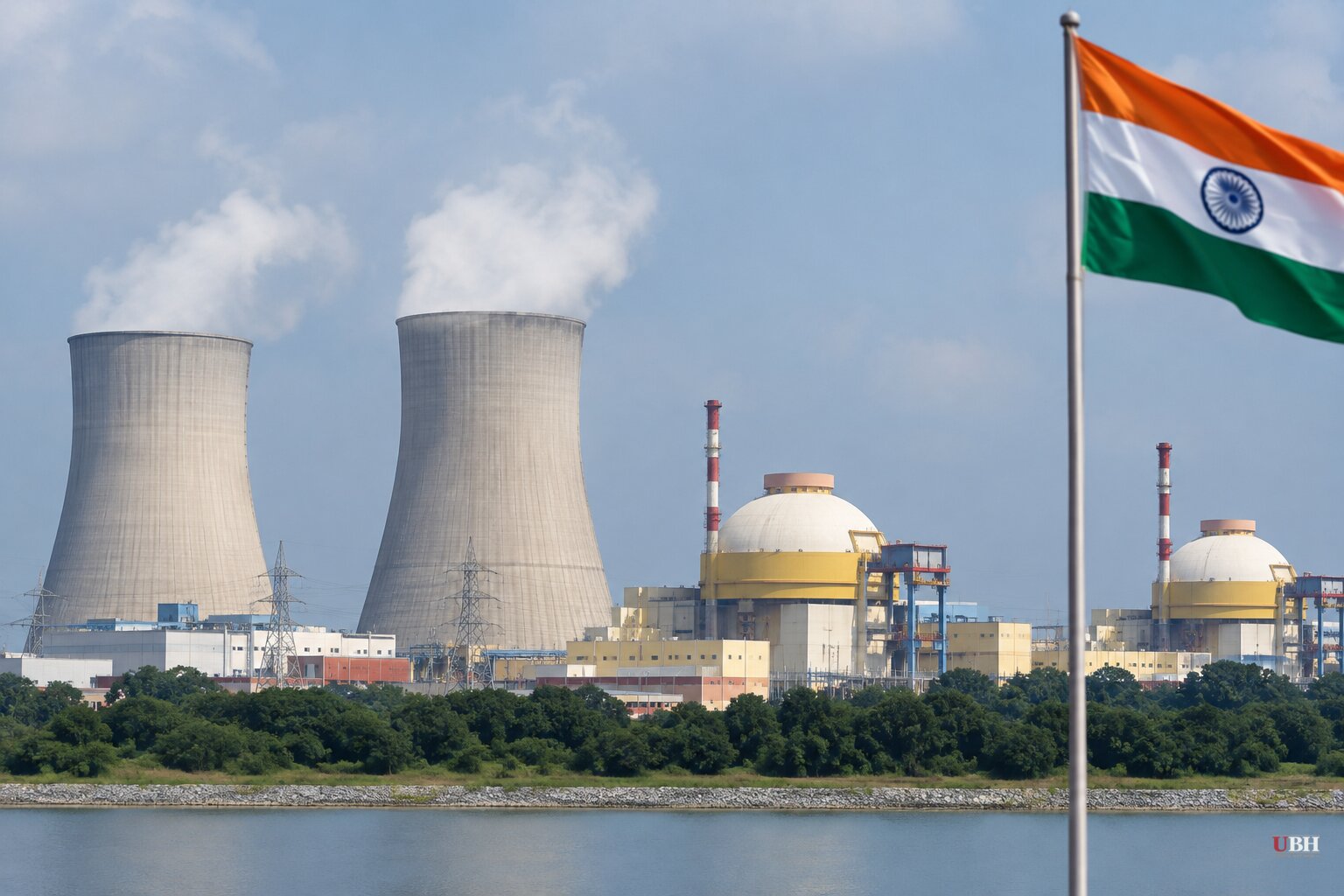
India wants to grow its nuclear fleet from about 9 GW today to 100 GW by 2047, and it is counting on private money to cover a big piece of the bill.
Atomic Energy Commission Chairman Ajit Kumar Mohanty laid out the plan in an interview with PTI, published today, Oct. 11. Mohanty also serves as secretary of the Department of Atomic Energy. He gave the interview while in Ranchi for the 36th convocation of the Birla Institute of Technology, Mesra.
The numbers
Mohanty said private players should contribute about 30 GW by 2047 and invest around Rs 7.5 lakh crore (Rs 7.5 trillion) doing it.
His cost estimate: "It costs around Rs 25 crore to generate 1 MW." At that rate, 30,000 MW comes to exactly Rs 7.5 lakh crore. The private-sector figure covers only the private slice of the build.
The same per-megawatt cost applied to the roughly 91 GW India would need to add to reach 100 GW works out to about Rs 22.8 lakh crore. That is simple arithmetic on Mohanty's own number, not a figure the government has published.
The Department of Atomic Energy puts installed capacity at 8.78 GW across 24 reactors, all run by the state-owned Nuclear Power Corporation of India Ltd (NPCIL). The government's interim goal is about 22 GW by 2031-32.
For 2047, the plan has NPCIL reaching 54 GW. Other public-sector companies, state governments and private players would supply the remaining 46 GW, with private firms expected to account for 30 GW of that.
What is already in the pipeline
Another 17 reactors with a combined capacity of around 13 GW are at various stages of implementation, Mohanty said. That is roughly the gap between today's fleet and the 22 GW interim target.
Getting from 22 GW to 100 GW in the 15 years after that is the harder stretch. It means adding about 78 GW.
Mohanty said nuclear projects typically take five to seven years to build, depending on technology, regulatory approvals and construction requirements. He also said he expects "a couple of private sector players" to be running reactors five years from now.
That timeline is tight against a five-to-seven-year construction window. Mohanty did not name the companies.
The legal change behind it
The policy shift rests on the Sustainable Harnessing and Advancement of Nuclear Energy for Transforming India (SHANTI) Act, enacted in December 2025. Mohanty said it opens the sector to broader public and private participation while keeping sovereign control over sensitive activities.
"We think private players should also enter the nuclear business and that is why new legislation was enacted," he said.
Private companies are assessing reactor technologies, fuel supply arrangements, land requirements and possible partnerships, Mohanty said. Those include joint ventures with NPCIL and foreign technology providers. India has signed civil nuclear cooperation agreements with 18 countries.
Costs and who bears them
Mohanty was direct about the economics. Nuclear is capital-intensive, with a large share of spending coming in the early construction years. The cost of electricity from new projects, he said, will be a key consideration for investors and power purchasers.
A private operator that spends Rs 25 crore per MW up front needs a buyer willing to pay a tariff that recovers it over decades. The government has not published tariff terms for private reactors. Whether state utilities, industrial customers or the public purse will carry the risk has not been laid out.
Mohanty also said India is exploring small modular reactors (SMRs) for energy-intensive industries such as steel and cement. They could potentially supply captive power at individual plants or industrial clusters, depending on reactor design and regulation.
Fuel and technology
Mohanty said India holds about 25 percent of global thorium reserves, which would support the second and third stages of its three-stage nuclear programme. According to Department of Atomic Energy data, the country has identified about 439,800 tonnes of in-situ uranium oxide resources across 11 states, including Andhra Pradesh, Telangana, Jharkhand, Meghalaya and Rajasthan. It also reports 1.18 million tonnes of thorium oxide resources.
The programme moves from uranium-fuelled reactors to fast breeder technology and eventually thorium-based fuel. The Prototype Fast Breeder Reactor at Kalpakkam in Tamil Nadu achieved first criticality in April 2026, a step in the programme's second stage.
What comes next
The 2031-32 milestone of about 22 GW is the first hard test. It depends on the 17 reactors now under implementation finishing on schedule.
The next signal for the private plan will be which companies commit to joint ventures with NPCIL or foreign vendors, and on what financial terms. Mohanty's own forecast puts the first private-run reactors around 2031.
Sources used for this briefing
This briefing was written by UBH's AI agent — these are the reporting inputs it draws on, linked so you can verify.


