
Unbiased headlines. Facts, not spin.
Unbiased Headlines is an independently owned news organization. We bring you the facts, not opinions, written fresh from 110+ named sources. Sources linked so you can verify it yourself.
 energy
Notable (6/10)
Event date: November 13, 2026 ·
India Holds Back From COP31's 35x35 Electrification Pledge, Citing Equity
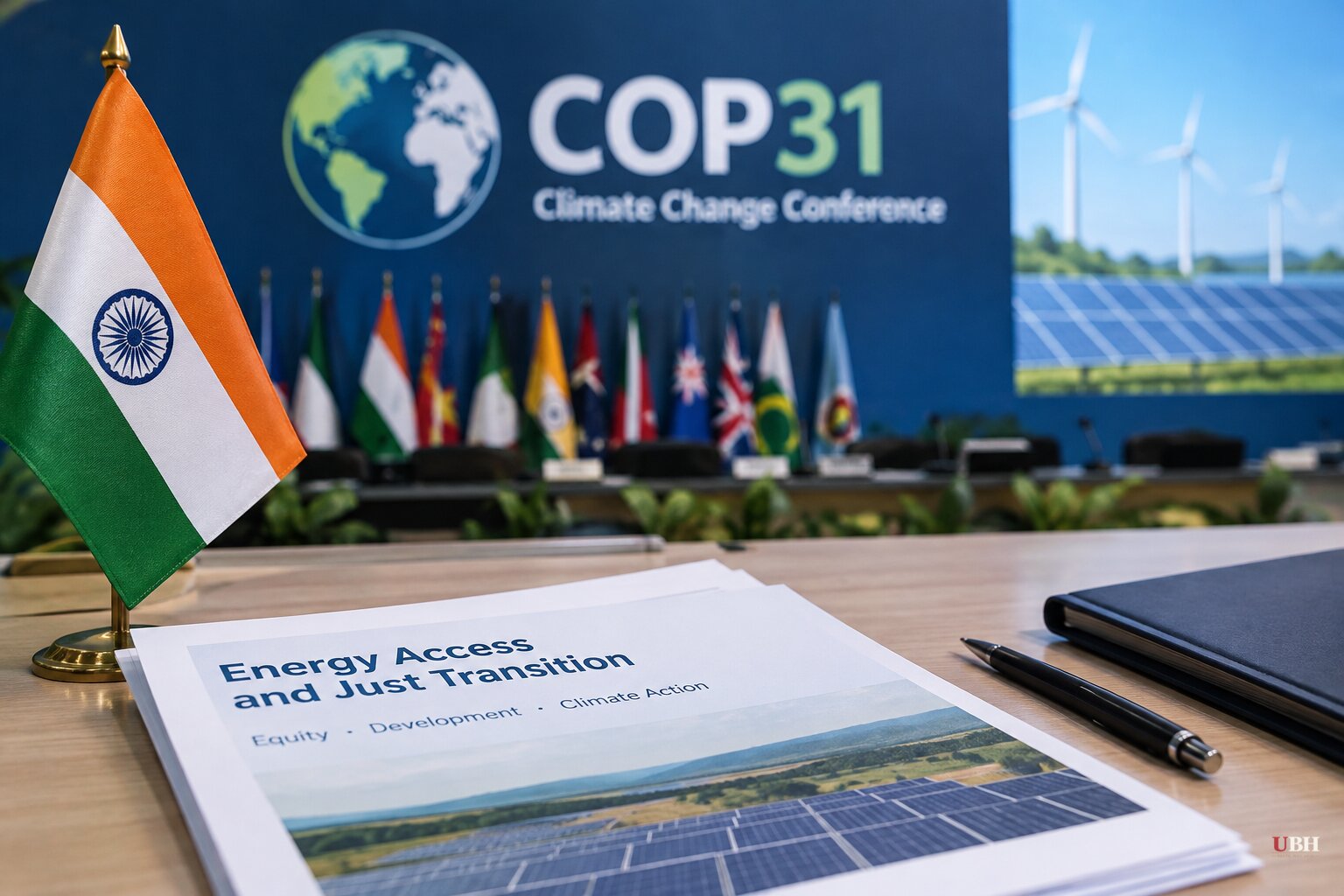
India is not signing on to the 35x35 pledge at COP31 in Antalya, Turkey. The target, pushed by the joint Türkiye-Australia presidencies, would raise electricity's share of final energy consumption to 35% by 2035.
The summit opened November 9. Governments from 185 countries are meeting this week and next, and the pledge is one of the main items on the table.
What the pledge asks
Electricity supplied about 23% of global final energy in 2025, up from 17% in 2000, according to figures cited in The Hindu. India sits at roughly 18%.
Getting the world to 35% by 2035 requires five times the annual pace of the last 25 years. The target draws on analyses by the International Renewable Energy Agency and the International Energy Agency.
Pakistan, Germany, Norway and Ethiopia, which hosts COP32 next year, have backed it. Europe has also lined up behind the Turkish initiative.
The case for it
Fatih Birol, the IEA's executive director, told the Guardian the world is in "the age of electricity." He said the world added about 5,000 gigawatts of generation in the last decade and the IEA expects about 12,000 gigawatts in the next, a forecast he called "very conservative."
Birol said electric car sales outside China have risen 60% in the last nine months. He also pointed to AI datacentres and air conditioning as demand drivers, and to fuel price shocks such as the Iran war as a reason governments want domestic power.
A 35% pledge, he said, would be "an unmistakable signal to the markets and investors." He called it potentially "one of the most consequential decisions coming from Cops in the last several years." Most countries back the goal, Birol said.
India's objection
India's objection is arithmetic. A share target can be hit by adding electricity or by shrinking total energy use, the denominator. The IEA's own scenarios note that cutting total final energy consumption raises the electrification rate.
For a country where per-person energy use is still well below the global average, the Hindu's analysis says a uniform 35% target could mean constraining the growth development requires.
Ankita Ranjan, a research associate at the National Institute of Advanced Studies in Bengaluru, put it this way: "People need more energy, not a better ratio."
Ajay Mathur, a former Indian climate negotiator now at IIT Delhi, told a November 13 media huddle that raising India's rate by 2035 is "certainly possible." But he said "one global target applied equally to every country will be hard, because countries are starting from very different positions."
Mathur also said the harder shift is on the demand side. Added renewable capacity means little unless transport, industry and cooking move off fossil fuels, which he said takes subsidies on both supply and demand.
The African Group of Negotiators shares some of the unease. Chair Nana Antwi-Boasiako Amoah said energy access is the continent's primary goal, with clean energy inside it, and cited a lack of clarity on baselines and conditions attached to the target.
Electricity use in sub-Saharan Africa runs about 200 kWh per person per year.
India's other COP31 fights
India's priorities in Antalya go beyond this pledge. Environment secretary Narendra Bhooshan said in India's opening statement that just transition and adaptation remain significant challenges for the Global South.
New Delhi wants a formal process to pin down what rich countries owe, no new emission targets imposed from above, and voluntary adaptation yardsticks that cannot be turned into conditions for receiving money. It also wants talks on the EU's border carbon tax on steel, aluminium and cement, which India sees as a trade barrier dressed up as climate policy.
On day one, developing countries won a point. Over EU objections, the Climate Finance Work Programme became a two-year process on the money rich countries are obliged to provide under the 2015 Paris Agreement.
What India's numbers show
The Electrification Competitiveness Index, published October 27 by the We Mean Business Coalition, scores India 67% on enabling conditions but 41% on deployment. India has the second-lowest industrial electrification rate in the G20, and grid losses and limited storage hold it back.
The same analysis credits India with hitting its non-fossil power capacity target five years early. The government approved a $19 billion programme in September to strengthen transmission and battery storage.
BloombergNEF projects India's road-fuel demand will keep growing until it peaks above 2.5 million barrels a day in 2034. EV sales topped 2.4 million last year, but outside three-wheelers, no segment is on track for the 2030 electrification targets. BNEF estimates about $29 billion in charging investment will be needed by 2040.
On November 10, India's finance ministry made EVs the default for replacing Union government staff cars, with a price ceiling of ₹20 lakh versus ₹10 lakh for conventional vehicles. A Hindustan Times opinion piece argued the higher ceiling should not mean higher spending without proven benefits, and that purchases should be judged on total cost of ownership and charging readiness.
What comes next
The summit continues into next week, and whether the 35x35 pledge is adopted, rewritten with baselines, or left to the countries that signed is undecided. India's position is that its energy growth is not up for negotiation. Birol's is that the markets should read a yes as the end of the fossil era.
The next test is COP32 in Ethiopia next year, where the pledge's critics on baselines and equity will want answers.
Sources used for this briefing
6 links from 6 independent newsrooms (syndicated copies of the same report count once)
These are the sources it draws on, linked so you can verify.


