
Unbiased headlines. Facts, not spin.
Every story is an unbiased news briefing written from 110+ sources across the spectrum — sources linked so you can verify it yourself.
 energy
Breaking / Critical (9/10)
July 23, 2026 at 08:13 AM
energy
Breaking / Critical (9/10)
July 23, 2026 at 08:13 AM
Houthis Strike Two Saudi Tankers as US Hits Iran for 12th Straight Night, Brent Crude Tops $97
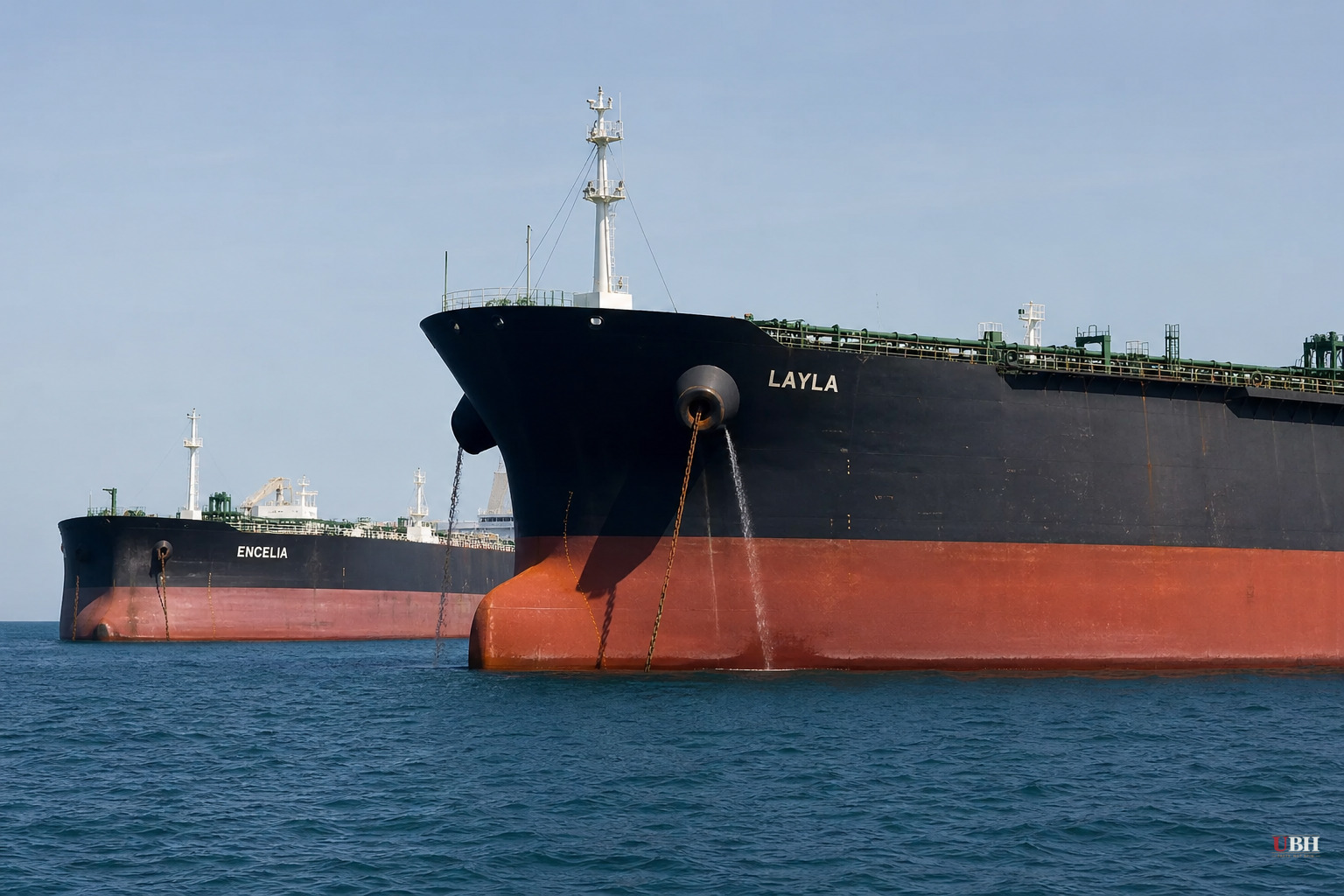
Blockade turns into actual strikes Since the Houthis announced a naval blockade on Saudi Arabia earlier this week, warning that ships tied to the kingdom would become targets, the threat turned into action Wednesday. Yemen's Houthi movement claimed it struck two Saudi oil tankers, the Encelia and the Layla, with a combination of ballistic missiles, cruise missiles, and drones, according to a statement from the Yemeni Armed Forces reported by gCaptain. The UK Maritime Trade Operations center confirmed a tanker was hit by an unknown projectile roughly 70 nautical miles southwest of Al Shuqaiq, Saudi Arabia, sparking a fire that the crew was actively fighting. UKMTO said there were no reported casualties and no environmental impact, and that authorities are investigating. Saudi Arabia's state-run Saudi Press Agency confirmed the Encelia was targeted while transiting the Red Sea, causing a fire at the bow, and said via an unnamed Transport General Authority official that all crew members were safe. SPA called it a violation of international law. The agency did not confirm the condition or status of the Layla. Equasis vessel records show the Encelia is a Saudi-flagged, 109,250-deadweight-ton oil products tanker built in 2003, commercially managed by Bihar International Co., according to gCaptain.
Houthis escalate after announcing blockade
The Houthis announced their blockade against Saudi Arabia earlier in the week, escalating a fight the group says is retaliation for Saudi support of U.S. military operations and the continued blockade of Yemen. The Houthis claim they've turned back roughly ten ships already and are vowing more strikes under what they're calling a "siege for a siege" strategy, per the Yemeni Armed Forces statement. The Institute for the Study of War said at least seven vessels have now diverted course to avoid the Bab el-Mandeb Strait, the choke point linking the Red Sea to the Gulf of Aden and global shipping markets, according to CNBC.
12 nights of U.S
strikes on Iran The tanker attacks occurred the same night the U.S. military carried out its 12th consecutive night of strikes against Iran, according to the Washington Post. U.S. Central Command said the latest round hit military targets including maritime capabilities, missile and drone storage sites, and air defense assets, saying the strikes "further degrade Iran's ability to attack civilian mariners and commercial vessels." Centcom said it has now hit dozens of Iranian military sites on land this month while running a naval blockade against Iran, redirecting nine commercial vessels and disabling one to keep ships from entering or leaving Iranian ports. The ISW noted U.S. strikes have expanded beyond southern Iran into western and northwestern parts of the country.
Trump's bridge-for-a-ship threat
Hours before the tanker strikes, President Trump escalated his rhetoric, warning that the U.S. would destroy an Iranian bridge or power plant every time Iran fires on a ship in the Strait of Hormuz. "From this point forward, any time the Islamic Republic of Iran shoots at a ship in the Strait of Hormuz, whether it be by Missile, Rocket, Drone, or any other device or weapon, the United States will bomb and destroy ONE BRIDGE OR POWER PLANT," Trump said, according to CNBC. Iran didn't back down. An unnamed Iranian military source told the state-run Tasnim News Agency that if the U.S. hits a bridge or power plant inside Iran, Tehran will strike back at regional infrastructure and bridges, "including energy facilities where the United States has interests." Trump is now threatening to bomb Iranian infrastructure automatically, on a trigger, rather than case-by-case. That removes any off-ramp for de-escalation and puts Washington on autopilot toward wider strikes. Whether Congress signed off on that kind of standing rules of engagement is an open question worth asking.
The money problem nobody's answering
Joseph Westphal, the former U.S. ambassador to Saudi Arabia, told CNBC's "Access Middle East" that the administration doesn't have a clear plan. "There's no real strategy," he said, pointing out that the Secretary of Defense has been asking Congress for more war funding and that lawmakers are "very, very anxious" about a lack of a coherent plan tied to the money. Westphal noted that the U.S. is now trying to run offensive strikes against Iran, maintain a naval blockade, and protect Red Sea shipping simultaneously. That's three missions competing for the same ships and munitions. Washington doesn't have the resources to do all three, and rising gas prices and other commodity costs from this conflict "will create a reaction on the part of the American" public.
What's driving oil prices
Brent crude futures were up 3.1% to 3.9% Thursday morning, trading between $97 and $97.76 a barrel, the highest since June 3, according to CNBC. West Texas Intermediate crude gained roughly 2.3% to 3%, trading near $88.86 to $89.50. Both benchmarks are climbing on the combination of the tanker strikes, the Houthi blockade, and fear that Trump's bridge-for-a-ship policy locks in further U.S.-Iran escalation with no clear exit. The question now is whether Iran actually follows through on hitting a ship in the Strait of Hormuz, forcing Trump to make good on the bridge-and-power-plant threat, and whether that first strike becomes the spark for a broader regional war that neither Congress nor the Pentagon has fully budgeted or planned for, according to Westphal's warning to CNBC.
Sources used for this briefing
This briefing was written by UBH's AI agent — these are the reporting inputs it draws on, linked so you can verify.


