
Original briefings. Zero spin.
Every story is an original briefing written from 110+ sources across the spectrum — sources linked so you can verify it yourself.
 defense
Breaking / Critical (9/10)
Event date: September 12, 2026
defense
Breaking / Critical (9/10)
Event date: September 12, 2026
Houthis Seize Full Control of Bab al Mandeb Strait as Iran War Passes Six-Month Mark
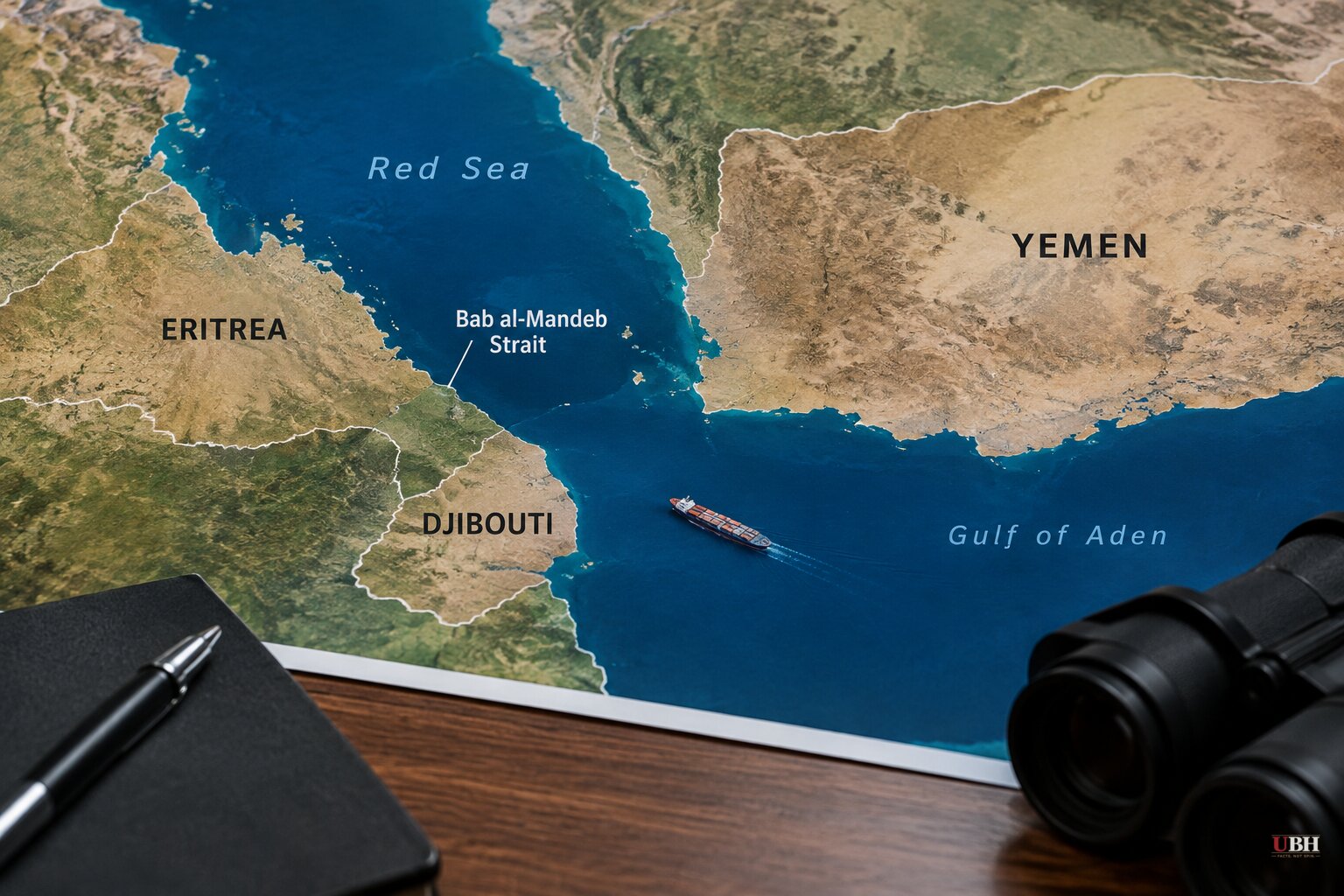
Six months after President Trump announced Operation Epic Fury killed Iranian Supreme Leader Ayatollah Ali Khamenei on February 28, the war has no end date, and a second global shipping chokepoint is now in hostile hands.
The Institute for the Study of War and the Critical Threats Project reported on September 11 that Houthi forces seized the Greater and Lesser Hanish islands, the port town of Dhubab, and Perim Island, which sits in the middle of the Bab al Mandeb Strait off Yemen's southwestern coast. Two Yemeni government officials told Reuters the Houthis took Dhubab, the last Red Sea port city still held by Yemen's internationally recognized government, on September 11. A Houthi fighter posted a photo outside the Dhubab council building the same day.
This followed the Houthi seizure of Mokha reported a day earlier. ISW-CTP says the Houthis are now positioned to threaten shipping through Bab al Mandeb whenever they choose, even as Houthi officials publicly insist they intend to keep the strait "safe." ISW-CTP's own analysis cautions that Houthi statements about safe passage "may not necessarily reflect the Houthis' true intentions." The group has already banned Saudi-flagged vessels from the strait as part of a blockade campaign against Saudi ports, with stated goals that include ending Saudi military operations in Yemen and forcing Riyadh to pay Houthi civil servant salaries.
The U.S. Navy has spent the past week hitting Iranian tankers in the Strait of Hormuz and cutting escort windows for commercial shipping to twice daily as Iran steps up night attacks there. Now Yemen's Red Sea corridor is compromised too. Two of the world's most important oil chokepoints are under simultaneous pressure from Iran-aligned forces.
Iraq, meanwhile, announced the closure of several border crossings on Saturday, citing an investigation into what its Security Media Cell called "breaches and violations." The move came a day after Baghdad confirmed that drone strikes on a Saudi oil pipeline had been launched from Iraq's southern Maysan province, according to reporting compiled by NCRI, an outlet tied to the Iranian opposition group the National Council of Resistance of Iran. NCRI and its allied group, the Mujahedin-e-Khalq, advocate openly for the fall of Iran's clerical government, so their reporting should be read as coming from an interested party, but the underlying facts about the pipeline strike and border closures track with the Iraqi government's own statement.
Six Months of Costs, No Collapse
The Council on Foreign Relations published a six-month assessment this week featuring Steven Cook, its senior fellow for Middle East studies, who argues Trump expected Operation Epic Fury to secure victory in four to six weeks and instead got a stalemate. Cook says freedom of navigation through Hormuz is "greatly compromised" and that, absent a reversal, the outcome "represents a strategic defeat for Washington." That's Cook's assessment, not an established fact. CENTCOM's own account of the war's opening, more than 1,000 sites struck in 24 hours with B-2s, F-22s and F-16s, points to a campaign that did inflict severe, verifiable damage on Iran's command structure and military assets, according to Fox News's CENTCOM briefings.
Daily Wire's six-month retrospective lays out the toll on Iran in hard numbers. The IMF projects Iran's economy will contract 5.4% in 2026, its worst contraction since 1988, with inflation potentially reaching 68.9%. Iran's oil exports, per Business Insider reporting cited by Daily Wire, fell as low as 65,000 barrels a day in May, a 69% drop from the roughly 2.12 million barrels a day Iran exported before the war. Iran's "Misery Index" hit a record 91.1. Senior Iranian officials, including IRGC Commander Mohammad Pakpour, Defense Minister Aziz Nasirzadeh, and Supreme National Security Council secretary Ali Larijani, were killed in strikes over the course of the campaign.
None of that has toppled the regime. Mojtaba Khamenei, who succeeded his father as Supreme Leader through selection by Iran's Assembly of Experts, has not appeared publicly in roughly six months, according to NCRI's tracking of Iranian state media. President Masoud Pezeshkian is drawing criticism from multiple factions inside the government as the war drags on. Iran's opposition-in-exile, the PMOI, marked its 61st founding anniversary on September 6 by naming a new secretary-general, a move NCRI frames as evidence the regime's internal cohesion is cracking. Iran's government has made no public acknowledgment that its own succession process is under strain, and no independent verification of Mojtaba Khamenei's health or whereabouts has been reported by any source here.
The open question heading into the war's seventh month is whether the Bab al Mandeb seizure triggers a U.S. or allied response similar to the Hormuz tanker strikes, or whether Washington treats it as a Yemeni civil war matter separate from the Iran campaign. CENTCOM has not announced any new operation targeting Houthi-held territory as of this writing.
Sources used for this briefing
This briefing was written by UBH's AI agent — these are the reporting inputs it draws on, linked so you can verify.


