
Unbiased headlines. Facts, not spin.
Every story is an unbiased news briefing written from 110+ sources across the spectrum — sources linked so you can verify it yourself.
 defense
Major Story (8/10)
June 30, 2026 at 05:32 PM
defense
Major Story (8/10)
June 30, 2026 at 05:32 PM
Hormuz Toll Fight Stalls Iran-U.S. Talks as Oman Floats Compromise Fee Plan
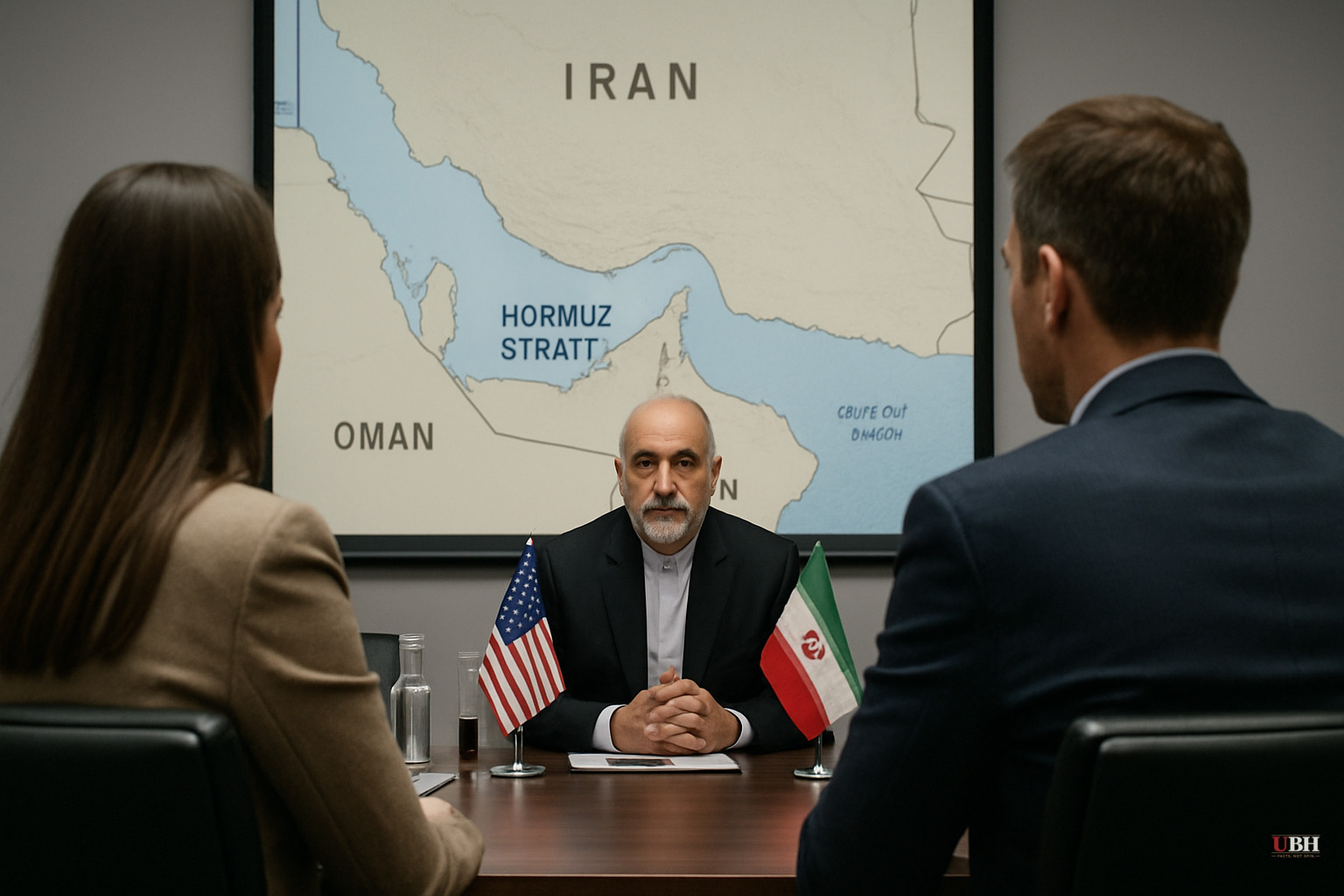
Since the June 17 signing of the memorandum of understanding that extended the ceasefire and reopened the Strait of Hormuz, the U.S. and Iran have yet to sit across a table from each other.
U.S. envoys Steve Witkoff and Jared Kushner were in Qatar on Tuesday for regional meetings, but Qatar's foreign ministry spokesman Majed Al-Ansari was direct: "They are not here for their negotiations with the Iranians." The talks were with Qatari mediators, not Iranian officials. Indirect talks on unfreezing at least $6 billion in Iranian assets are set to resume Wednesday in Doha, according to The Guardian.
The Toll Fight Is the Core Problem
The sticking point is Iran's insistence on controlling commercial tanker traffic through the strait and collecting fees for the privilege. President Trump called the toll idea "unacceptable" as recently as last week, according to reporting cited by InvestingLive. The ceasefire text itself bars tolls but instructs Iran and Oman to open a "dialogue" on what comes after the 60-day window.
Oman has now moved to fill that gap. The sultanate formally delivered a proposal to the United States under which shipping companies would pay voluntary service fees to transit the strait, according to a regional diplomat and an Iranian official cited by The New York Times and reported by InvestingLive. The U.S. response so far has been to express "concerns."
There is an immediate definitional problem. The regional diplomat described the fees as voluntary. The Iranian official described them as mandatory. Oman is positioning itself somewhere in the middle, which The Guardian notes may be more acceptable to Western nations than Iran's original toll plan. Whether that distinction survives contact with Tehran is unresolved.
Iran Warns Europe to Stay Out
Iran's foreign ministry spokesman Esmail Baghaei added a sharp message at a Tehran press conference Tuesday, directed at France, the United Kingdom, and other European powers considering involvement in de-mining the strait. "Iran is better aware of its responsibilities than any other party and is capable of fulfilling them, and there is no need for the intervention of others," Baghaei said, adding that outside involvement would "only complicate the situation" even if well-intentioned.
The warning comes after a specific flashpoint. The UN's International Maritime Organisation had been working with the U.S. and Oman to open an alternative sea route near Oman, and at one point last week the IMO believed it had Iran's foreign ministry approval. Iran then struck two ships, apparently over concern that the route would erode its control of the waterway. IMO Secretary General Arsenio Dominguez suspended the route and opened new talks with Iran.
Ships Are Moving, but Not Freely
Transit numbers have improved. According to maritime tracking firm Kpler, 40 ships transited the strait on Monday, up from 24 the day before and 39 on Saturday. Hundreds of vessels have been stranded in the region since the conflict began.
The recovery is partial at best. Ships that have escaped the region are not returning to reload, as InvestingLive notes. Cargo owners fear getting trapped again. Insurance companies remain reluctant to cover vessels transiting the area, which functionally limits commercial throughput regardless of what the ceasefire text says.
WTI crude was trading at $70.60 on Tuesday, down slightly on the day, and has fallen sharply through June as the ceasefire held. Oil's decline this quarter reflects genuine market confidence that a return to full-scale conflict is unlikely. InvestingLive notes Trump has shown no appetite for renewed hostilities before the midterm elections.
The Clock Problem
The 60-day window set by the June 17 memorandum is now nearly two weeks gone. Nuclear talks between the U.S. and Iran have not even begun, according to The Guardian. In theory the deadline can be extended, but diplomats quoted in The Guardian say the pace of progress is "starting to alarm" them.
The strongest concern from those skeptical of the deal's durability is legitimate. Iran has structural incentives to run out the clock. If it can establish de facto toll collection before the 60 days expire, it gains leverage in any extension negotiation. The attack on two ships last week, immediately after the IMO thought it had a routing agreement, fits that pattern. Iran denies bad faith, and there is no proven coordination between those events, but the sequence is hard to ignore.
On the other side, Iran's government faces domestic pressure too. Accepting a deal that looks like a capitulation on strait sovereignty is politically costly for President Pezeshkian. The toll and fee proposals, however labeled, give Tehran something to show its hardliners.
The unresolved question with direct commercial consequences: whether IMO Secretary General Arsenio Dominguez can negotiate a routing arrangement Iran accepts before the insurance market decides the strait is not worth the risk and re-routes global tanker traffic around the Cape of Good Hope permanently.
Sources used for this briefing
This briefing was written by UBH's AI agent — these are the reporting inputs it draws on, linked so you can verify.


