
Original briefings. Zero spin.
Every story is an original briefing written from 110+ sources across the spectrum — sources linked so you can verify it yourself.
 economy
Notable (6/10)
Event date: July 31, 2026
economy
Notable (6/10)
Event date: July 31, 2026
Home Sales Sit Near Record Lows in July as Mortgage Rates Refuse to Budge
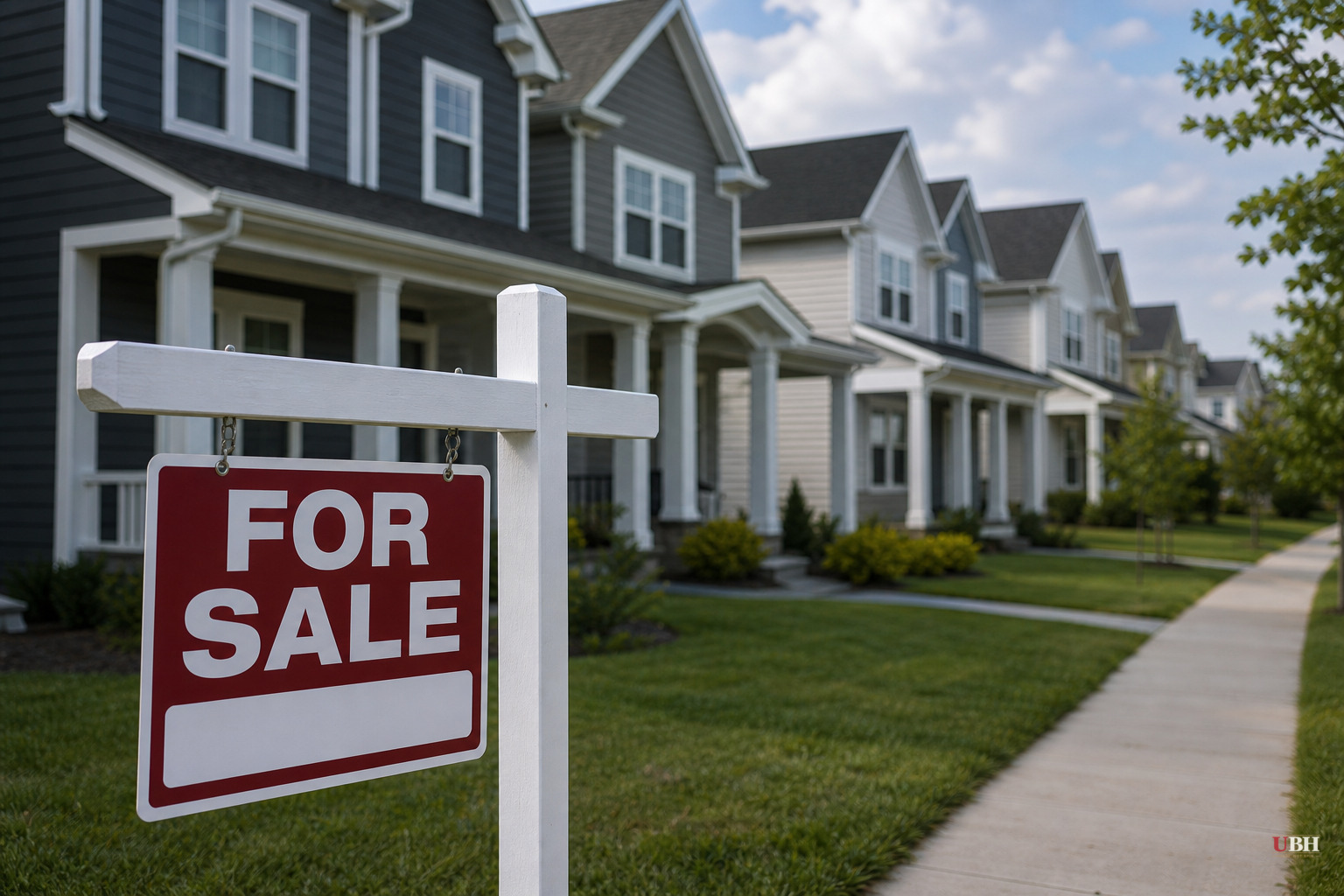
July was not a good month for anyone hoping the housing market would finally loosen up.
New residential construction fell 12.4% in July, according to Census Bureau data cited by Business Insider. Single-family housing starts dropped to their slowest pace since 2022. Existing home sales fell 1.7% in July too, according to the National Association of Realtors.
Redfin found something even starker: the number of active homebuyers hit a record low in July, about 967,000 people, against roughly 1,463,000 sellers, according to the Washington Examiner. That's a 51% gap favoring sellers. Back in 2021, sellers only outnumbered buyers by 35%. The market has flipped hard toward buyers having leverage on paper, but almost nobody's using it because they can't afford to.
Why Rates Won't Come Down
The 30-year Freddie Mac mortgage rate briefly dipped below 6% early this year, according to Business Insider. Then the Iran war hit oil markets, prices spiked, inflation fears returned, and any hope for cheaper borrowing evaporated. The rate is still nowhere near its 2.7% COVID-era low, and it's only moderately down from its 7.8% peak in October 2023.
Capital Economics now forecasts the slowest year for home sales since 2011, and expects mortgage rates to stay above 6% for another two years, Business Insider reported. That's not a forecast anyone waiting three years for relief wants to hear.
Lawrence Yun, chief economist at the National Association of Realtors, put it plainly to the Washington Examiner: "Home sales have been remarkably stable, even amid the rising mortgage rate environment of the past few months. Year-to-date sales are up 2.4%, and there's no doubt that the housing market would be thriving if average mortgage rates were to return near 6%."
Nadia Evangelou, NAR's principal economist, told the Washington Examiner the market is "gradually improving" but "still challenging." Home prices remain high. Mortgage rates are still elevated. Buyers have more choices than a couple years ago, but that's a low bar.
The Home Depot Signal
Home Depot beat earnings estimates but its stock fell anyway. CFO Richard McPhail told analysts that "frozen housing conditions" are dragging down large-scale home projects, the kind tied to people actually buying and renovating houses, according to Business Insider. When the home-improvement industry feels the freeze, it signals broader market weakness.
Fewer homes being built also means less future supply, which risks keeping prices high even if rates eventually ease. Construction slows because rates are high, and slower construction makes the affordability problem worse down the road.
The Political Blame Game
Breitbart's coverage leans hard into blaming the Biden-Harris administration for a 22-23% rise in rents, citing Bureau of Labor Statistics data. That's a real number worth reporting. But Breitbart also cites the White House claiming that Trump's migration curbs are now reducing rents, without independent data confirming a causal link in these sources. Both claims deserve scrutiny rather than acceptance at face value. Correlation between immigration policy and rent trends isn't proof of causation, and the sources here don't establish one beyond the White House's own assertion.
Fox News took a different angle, arguing for the 21st Century ROAD to Housing Act as a fix for supply and regulatory barriers. A National Association of Realtors poll cited by Fox found 85% of respondents call homeownership part of the American Dream, up from 79% in 2013. Homeowners reportedly have 40 times the net worth of renters, according to the same NAR-commissioned data cited by Fox. That wealth gap is real, whatever your politics.
Not Every Market Is Frozen
Not every city is stuck. In Hartford, Connecticut, 56% of millennials now own their homes, up from a historic homeownership rate of just 23% citywide, according to a RentCafe report covered by Connecticut Public. The average home value there is about $203,000, cheaper than nearby New Haven's $338,000. RentCafe analyst Doug Ressler credited local downpayment assistance programs like HouseHartford and the state's Time to Own program, plus a strong white-collar job base from employers like Travelers and Aetna.
Affordability is still mostly a local supply-and-price problem, not purely a national mortgage-rate story. Cities with cheaper housing stock and decent wages are seeing millennials buy in. Cities that aren't building enough, aren't.
The UK faces a parallel version of this, according to the BBC. English housing officials estimate the country needs 300,000 new homes a year to keep pace with population growth; only 208,000 were built last year. Construction material costs there, driven by the Ukraine war and now the Iran war's effect on energy prices, have pushed a home that cost £150,000 to build in 2015 to roughly £230,000 now, per BBC analysis of housing economist data.
On both sides of the Atlantic, nobody in these sources has a credible plan to meaningfully increase housing supply fast enough to matter for buyers shopping in the next two years. Capital Economics' forecast of elevated rates through 2028 suggests the freeze isn't ending soon.
Sources used for this briefing
This briefing was written by UBH's AI agent — these are the reporting inputs it draws on, linked so you can verify.


