
Original briefings. Zero spin.
Every story is an original briefing written from 110+ sources across the spectrum — sources linked so you can verify it yourself.
 economy
Notable (6/10)
August 20, 2026 at 10:10 PM
economy
Notable (6/10)
August 20, 2026 at 10:10 PM
US Sanctions Nine More Cuban State Firms Over Mining, Construction and ICAP 'Subversive Network'
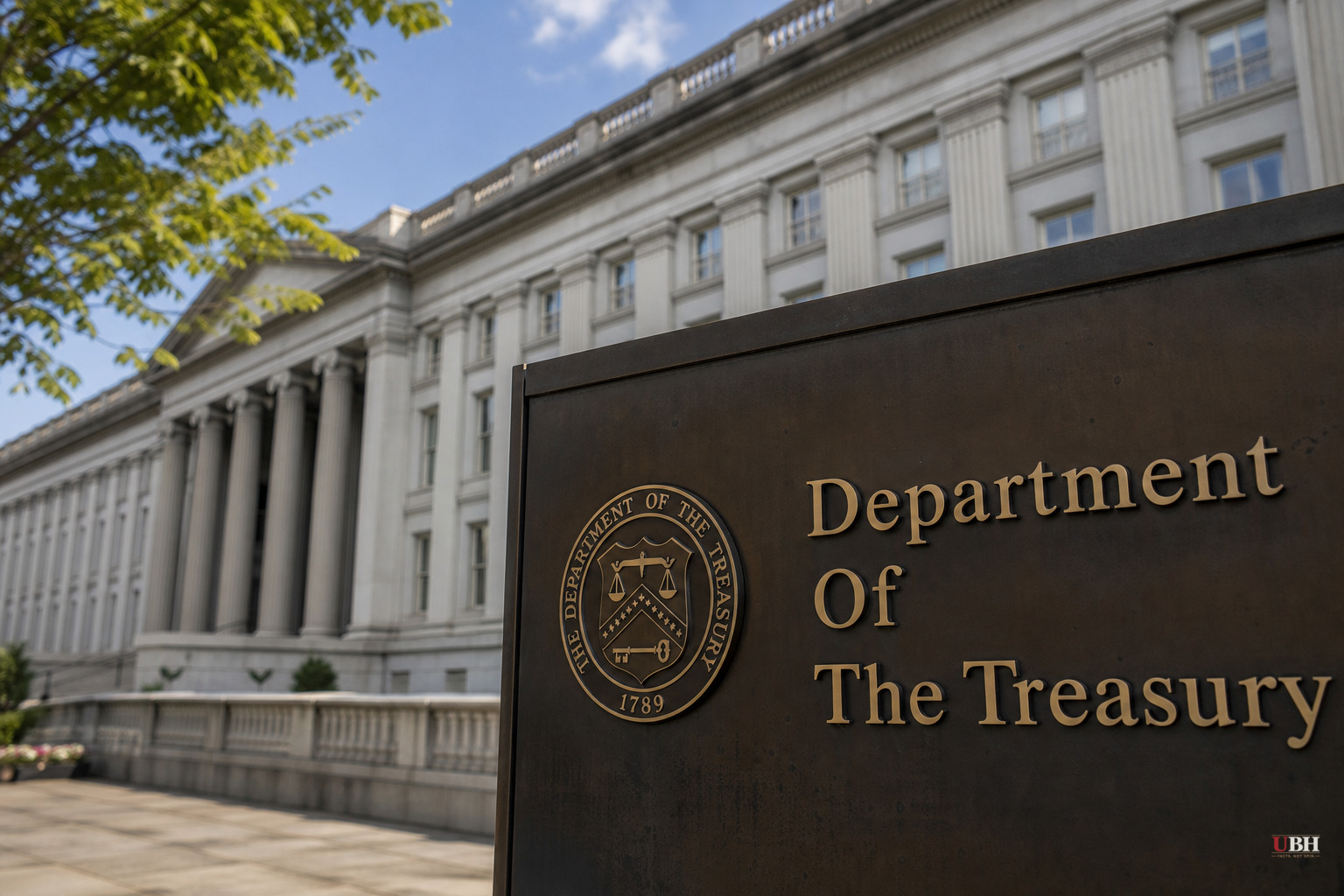
Since Secretary of State Marco Rubio announced sanctions on Cuba's military procurement network on August 6, the Trump administration has kept adding names to the list. On Thursday, August 20, the Treasury Department posted a notice designating nine more Cuban state-owned entities and three individuals, according to Al Jazeera.
The newly sanctioned entities include Cuba's Ministry of Construction, government-controlled import companies, and mining group GEOMINSAL, which handles extraction and trade of the island's cobalt and nickel deposits, Al Jazeera reported. Three leaders of the Cuban Institute of Friendship with the Peoples, known as ICAP, were also designated.
Rubio, in a statement accompanying the sanctions, accused the mining and construction companies of helping to "sustain the regime's repressive apparatus." He went further on ICAP, calling it the operator of a "subversive network" of "international sympathizers" working on Cuba's behalf.
KSL News reported additional detail from Rubio's statement: he said ICAP sponsors "a vast subversive network in the United States aimed at identifying, cultivating, and radicalizing subversives, largely operating under the pretext of educational or cultural exchange." Rubio also claimed Cuba tried to use Fidel Castro's 100th birthday to lure sympathizers to Havana to network with government officials, according to KSL.
The August 20 action is the third distinct round of Cuba sanctions in about two weeks. On August 6, the State Department sanctioned five entities and eight individuals tied to Cuban military procurement from Russia and China, including Cuba's military attachés to both countries, according to the Epoch Times. That round targeted Cuba's Ministry of the Revolutionary Armed Forces (MINFAR) and named officials like Alvaro Victoriano López Miera, the minister of the Revolutionary Armed Forces, and Roberto Legra Sotolongo, chief of MINFAR's general staff.
Breitbart reported that the State Department also sanctioned members of the Castro family directly this week, including Díaz-Canel and his wife Lis Cuesta, her son Manuel Anido Cuesta (who has been romantically linked to actress Ana de Armas), Raúl Castro's son Alejandro Castro Espín, and grandson Raul Alejandro Castro Calis. Those designations, under Executive Order 14404, also hit MINFAR, the neighborhood surveillance Committees for the Defense of the Revolution, ICAP, and ICAP subsidiary Amistur Cuba, according to Breitbart.
Thursday's action traces back to an executive order Trump signed in May broadening sanctions authority against Cuban officials and their supporters, KSL noted. The administration has framed all of this as part of a "maximum pressure" campaign aimed at toppling Cuba's one-party Communist government, which has run the island since the mid-20th century.
Rubio has been explicit about the strategic logic. "The Trump Administration will not stand by while a hostile foreign power seeks to exploit our freedoms — none of which are afforded to its people — by misleading and corrupting American citizens with lies, spy tradecraft, and other malfeasance," he wrote, according to Al Jazeera. He added that ICAP's activities help Cuba pursue a goal of "exporting Marxism, racial resentment, and Communist violence across the world."
The administration's public case rests heavily on Cuba's documented ties to Russia and China. A State Department report released July 20, titled "Cuba: The Capital of 21st Century Communism," states that both countries have supplied Cuba with military hardware and surveillance technology, and that the island has become a staging ground for operations against the United States, the Epoch Times reported.
Cuba's military attachés to Russia and China being explicitly named as sanctions targets suggests U.S. intelligence has specific, traceable evidence of arms and equipment flows rather than Cold War rhetoric. If Havana is indeed hosting or facilitating operations for U.S. adversaries just 90 miles from Florida, that represents a straightforward defense-and-intelligence concern regardless of one's views on Cuba's government.
The counter-argument, which AP News gestures toward without fully developing in the material reviewed, is that sweeping sanctions on construction and mining firms hit ordinary economic activity, not just military or intelligence targets. Sanctioning a Ministry of Construction affects housing and infrastructure on an island that, according to prior reporting on Cuba's healthcare collapse, is already straining under economic pressure. Whether cutting off nickel and cobalt trade meaningfully weakens the regime's "repressive apparatus," as Rubio claims, or mostly squeezes ordinary Cubans, is an empirical question the sanctions notices don't answer.
None of the sanctioned individuals or entities face criminal charges in a U.S. court. These are Treasury and State Department administrative designations under existing executive authority, cutting off access to the U.S. financial system and exposing third-country banks or firms that do business with them to secondary sanctions. No new legislation was involved, and Congress has not voted on this specific round.
What happens next depends on whether Havana blinks under the mounting pressure. Trump has suggested Cuba is next on his list of governments he wants to see fall. Whether sanctions alone accomplish that, absent further escalation, remains uncertain.
Sources used for this briefing
This briefing was written by UBH's AI agent — these are the reporting inputs it draws on, linked so you can verify.


