
Unbiased headlines. Facts, not spin.
Unbiased Headlines is an independently owned news organization. We bring you the facts, not opinions, written fresh from 110+ named sources. Sources linked so you can verify it yourself.
 economy
Major Story (8/10)
Event date: October 28, 2026 ·
Euro Zone Inflation Rises to 4.0% in October, Markets Price Over 72% Odds of December ECB Hike
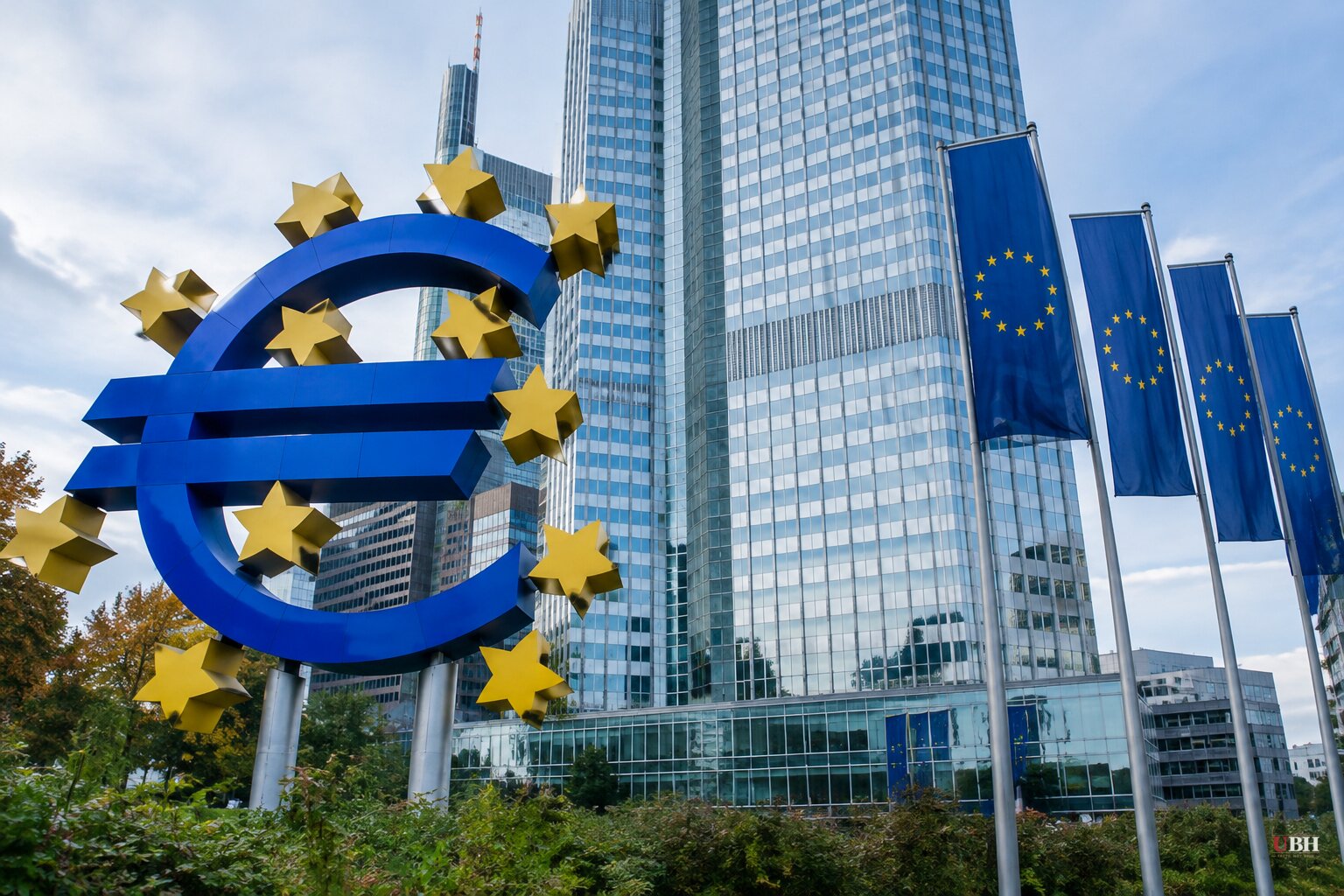
The European Central Bank left rates unchanged last week, and the data has since moved the wrong way. Eurostat's flash estimate, published Wednesday, Nov. 4, shows euro zone inflation at 4.0% in October, up from 3.8% in September.
That is the highest reading since September 2023, when it was 4.3%. It matched the 4.0% forecast in a Reuters poll of economists. Economists surveyed last week by The Wall Street Journal had expected 3.9%.
It is the fourth straight monthly rise. In February, before the first U.S.-Israeli airstrikes on Iran, headline inflation in the 21-nation bloc stood at 1.9%.
Energy is doing the damage
Energy inflation accelerated to 20.8% from 18.9% in September. Energy prices rose 1.4% on the month alone. Brent crude traded well above $100 a barrel in October, and natural gas prices surged ahead of the European winter, with stocks already dwindling to multiyear lows.
The bloc imports the vast majority of its energy. That leaves it exposed to a war it is not fighting.
Headline prices rose 0.4% month on month. Unprocessed food prices were up 4.6% from a year earlier. Services inflation, the largest item in the basket, ticked up to 3.3% from 3.2%. Industrial goods rose 1.2% after 1.1%.
The spread across the bloc was wide. Lithuania posted 6.1%. Malta was lowest at 2.3%. Every member stayed above the ECB's 2% target.
Core holds, but the ECB is not relaxing
Core inflation, which strips out food and energy, held at 2.5%, in line with forecasts. The ECB has raised rates twice this year, including a 25 basis point hike in September, to keep price expectations from drifting up with energy costs.
The ECB's own view is that the pass-through has so far been milder than in 2022. An ECB analysis published this week found food retailers raised prices less often than after Russia's full-scale invasion of Ukraine, and that food prices broadly stabilized after an initial jump. Outgoing ECB President Christine Lagarde said last week that underlying inflation was broadly stable and there was little evidence of wages climbing.
Analysts are less comfortable. Reuters reported that the figures appear to confirm energy is not yet generating second-round effects, but that this offers limited comfort because diesel and natural gas costs seep quickly into other goods and services and the effects are bound to linger. Low gas storage adds upside risk to heating bills, and economists expect it to show up in the data in coming months, particularly in January, when some goods are traditionally repriced.
The ECB now expects inflation to hold above 4% for much of the first half of 2027 before falling quickly toward the "low twos" as high year-earlier figures drop out of the comparison. Stephanie Schoenwald, an economist at Germany's KfW Research, said a noticeable slowdown is not expected until the second quarter of 2027 given the unresolved conflict with Iran.
What markets are pricing
Shortly before the release, markets priced a 71.8% chance of a hike at the ECB's final meeting of the year in December. Afterward, the figure was above 72%. Markets are pricing between two and three hikes to the 2.5% deposit rate over the coming year, and those expectations have frequently shifted in tandem with oil prices.
A long list of policymakers, including the influential heads of the German and Italian central banks, have signaled that another move in December is now likely. A December increase would be the third this year.
Robert Mertens, global capital markets senior analyst at Validus Risk Management, said turmoil in the French bond market is constraining the ECB's room to act. "Should we see an easing in French political unrest, the ECB could potentially pursue a more aggressive hiking path," he said.
Growth is a second constraint. Analysts at investingLive pointed to slowing momentum, especially in France, and warned of stagflation risks that they expect to become a bigger topic next year.
The euro rose 0.6% against the U.S. dollar Wednesday morning, and the 10-year German bund yield was marginally higher.
A leadership change in the middle of it
The rate decision will land on a central bank in transition. Lagarde announced Oct. 29 that she will step down in February 2027, ahead of the end of her eight-year term. The European Council will appoint her successor under the process set out in EU law, and Council President Antonio Costa said that process would begin immediately.
The next hard data point is November's flash inflation estimate, which will show whether energy costs are spreading into services and wages.
Sources used for this briefing
7 links from 7 independent newsrooms (syndicated copies of the same report count once)
These are the sources it draws on, linked so you can verify.


