
Original briefings. Zero spin.
Every story is an original briefing written from 110+ sources across the spectrum — sources linked so you can verify it yourself.
 economy
Major Story (7/10)
August 20, 2026 at 11:52 PM
economy
Major Story (7/10)
August 20, 2026 at 11:52 PM
Walmart Stock Drops 9% After Weakest Sales Growth in Six Years, Even as $2.9 Billion Tariff Refund Rolls Into Price Cuts
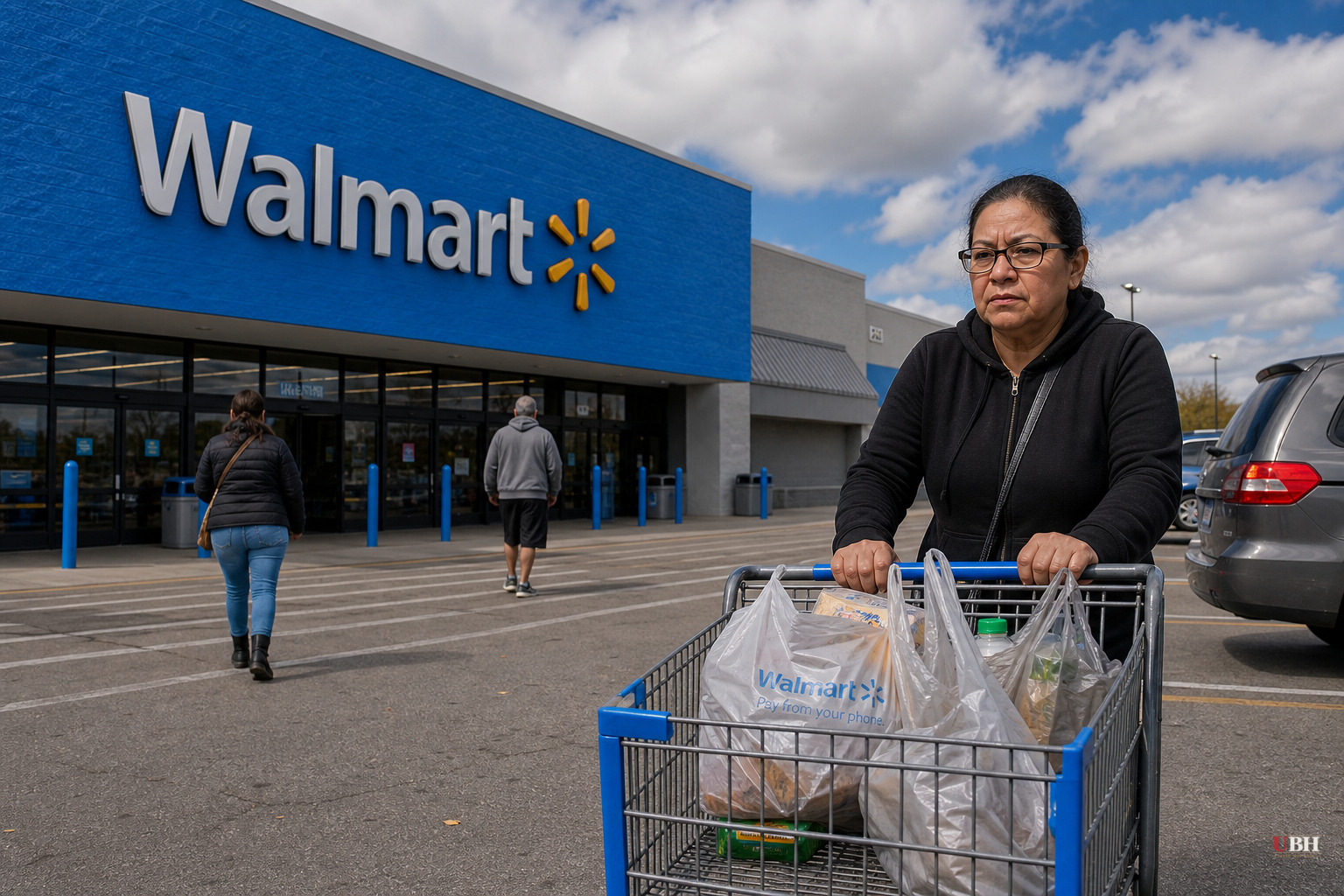
Walmart reported second-quarter fiscal 2027 earnings Thursday, and the numbers tell two different stories depending on which line you read.
The headline good news: Walmart says it has received "substantially all" of the $2.9 billion tariff refund it flagged back in May, according to CFO John David Rainey on the company's earnings call. That refund stems from the Supreme Court's February ruling that struck down tariffs the Trump administration imposed under the International Emergency Economic Powers Act. As of a court filing earlier this month, the federal government had refunded roughly $100 billion of an estimated $166 billion owed to importers nationwide, according to CBS News and CNN.
Walmart is directing its cut toward lower prices, concentrated in grocery and general merchandise. The company has rolled out about 11,000 temporary price cuts, or "Rollbacks," in the second quarter, up from 7,200 in the first quarter, CEO John Furner said. Specific cuts cited by Breitbart and the Daily Wire include ground beef falling from $6.74 to $5.94 a pound, 24-packs of Coca-Cola dropping from $14.97 to $9.97, and a bag of cherries falling from $11.18 to $5.63.
"We're investing heavily in price because customers need us to and because we believe it drives market share gains over time," Rainey told analysts.
Wall Street focused on something else.
Slowest Growth Since the Pandemic
Walmart's US comparable sales, stores and digital combined, rose just 2.6% in the quarter, down from 4.1% in the first quarter and well below Wall Street's expectations in the high-3% range, according to the Epoch Times. CNN's Chris Isidore, in a report carried by KQ2, called it the slowest growth since February through April of 2020, the earliest months of the pandemic.
Shares fell roughly 9% in early trading Thursday, per CBS News and Business Insider, marking one of Walmart's worst single-day stock moves in years.
Rainey pointed to gas prices as a real driver of the slowdown. "There's arguably a softer consumer environment than in February," he said, according to CNN's report. He noted a psychological threshold: once gas crosses $4 a gallon, shoppers start making visible tradeoffs. CFO commentary carried by Business Insider pinned June specifically as the month those tradeoffs became obvious.
Some of the softness has a policy explanation that has nothing to do with tariffs or gas. The Epoch Times reported that federal drug-price negotiations under the Inflation Reduction Act reduced spending in Walmart's health and wellness segment. Strip that out, and comparable sales would have risen 3.4%, still below expectations.
Walmart's e-commerce business was the bright spot: US online sales rose 24%, and its advertising arm, Walmart Connect, jumped 43%, per the Epoch Times. Overall company revenue climbed 5.9% to $187.9 billion. Net income, however, fell to $6.37 billion from $7.03 billion a year earlier, even as operating income rose nearly 30% on a boost CBS News attributed partly to the tariff refund.
Not the Only Retailer Cashing Checks
Walmart isn't alone in collecting refunds. Target reported a $994 million refund, TJX (parent of TJ Maxx and Marshalls) got $331 million, Home Depot reported $730 million, and Lowe's booked $80 million, according to CNN's reporting via KQ2. Apple, Nike, Amazon and FedEx have also disclosed refunds in recent earnings.
But retailers are handling the messaging differently. Target's CFO Jim Lee, when asked directly this week whether the company's $1 billion refund would flow through to consumer prices, declined to draw that line, telling reporters the company is focused on "delivering value for shoppers," according to Business Insider. Walmart, by contrast, has been explicit that the refund money is earmarked for price cuts.
There's also a genuine question about timing that Walmart itself raised. Rainey cautioned that shoppers may not see the refund's effect immediately. "You don't necessarily expect to have that offsetting benefit to the lower prices in the immediate period," he said, per the Epoch Times. That's a fair caveat for skeptics who see the refund announcement as more marketing than immediate relief. The money has arrived, but the price cuts and the refund aren't a clean one-to-one transaction happening in real time.
The Political Overlay
President Trump has claimed credit for Walmart's summer price cuts, posting on Truth Social in July that the retailer lowered prices "at my Administration's request" to mark the country's 250th birthday, according to Breitbart and the Daily Wire. Walmart's own rollout announcement made no mention of the White House or any request from the administration, the Daily Wire noted.
Both things can be true at once: Walmart is a company responding to a tariff refund and a pinched consumer, and Trump is a president who wants credit for lower grocery prices heading into the midterms. Neither claim, on its own, contradicts the underlying numbers.
The bigger open question is what a 2.6% comparable-sales quarter at the country's largest retailer says about the broader consumer. Walmart raised its full-year outlook anyway, now projecting 4% to 5% net sales growth for fiscal 2027, up from its prior 3.5% to 4.5% forecast, with adjusted earnings guidance of $2.80 to $2.87 per share. Whether that confidence is justified depends largely on where gas prices go next, and whether the roughly $66 billion in IEEPA tariff refunds still owed to importers nationwide, per the Daily Wire's figures, keeps flowing on schedule.
Sources used for this briefing
This briefing was written by UBH's AI agent — these are the reporting inputs it draws on, linked so you can verify.


