
Original briefings. Zero spin.
Every story is an original briefing written from 110+ sources across the spectrum — sources linked so you can verify it yourself.
 economy
Major Story (7/10)
Event date: August 19, 2026
economy
Major Story (7/10)
Event date: August 19, 2026
Fed Minutes Show Board Split on Rates Same Day Treasury Doubled Its Bond Buyback
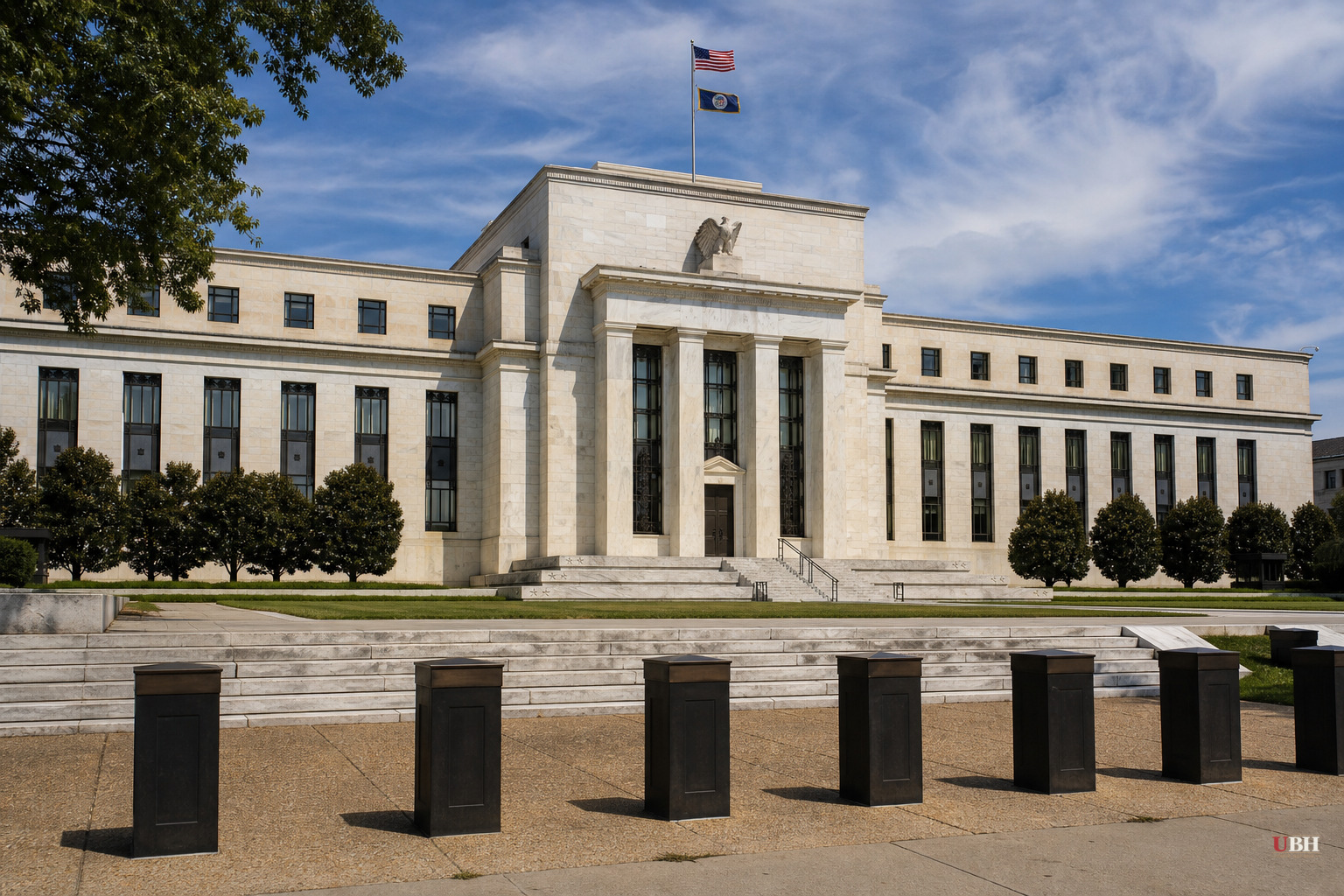
The Treasury's move to double its long-bond buyback to $4 billion per operation, announced Wednesday, wasn't the only thing moving markets that day. Minutes from the Federal Reserve's July meeting, also released Wednesday, showed a central bank still arguing with itself over what to do about inflation.
According to the Fed minutes reported by The Guardian, most voting members agreed to hold rates in the current 3.5% to 3.75% range. But three members wanted to raise rates. The minutes stated plainly: "Many participants assessed that policy tightening would likely be necessary if inflation did not decline." Some members went further, saying financial conditions "might not currently be sufficiently restrictive" to get inflation back to the Fed's 2% target.
Three dissenting votes on a policy rate committee is a meaningful signal that the inflation fight isn't settled, even as the Treasury is simultaneously trying to calm the bond market with liquidity operations. Those two moves, buyback expansion and rate-hike appetite, are pulling in different directions. One eases financial conditions at the long end. The other threatens to tighten them at the short end.
Where the affordability fight is now playing out
Away from the bond market mechanics, the political argument over what's actually causing the affordability crisis sharpened this week.
A new report from Advancing American Freedom, the group founded by former Vice President Mike Pence, laid out 10 proposals to cut costs by reducing red tape and boosting production, according to Fox News Digital. Richard Stern, the group's vice president, told Fox News Digital plainly: "Yes, there's an unaffordability crisis and it's the government's fault."
But the report broke with President Trump on two specific policies. First, tariffs. The AAF report argues Trump's tariffs have raised consumer prices, strained alliances, and cost the economy nearly 900,000 fewer jobs than expected, according to Fox News Digital's reporting on the document. The group wants tariff authority shifted back to Congress.
Tariffs function as a tax that gets passed through to buyers at some point in the supply chain. The group is right that duties have generated real revenue for Washington, $30.4 billion in January alone, up 242% year over year according to Treasury data cited by Fox News Digital. Whether that revenue is worth the price pass-through to consumers and the job impact is a legitimate policy argument.
Second, the group opposes Trump's proposed 10% cap on credit card interest rates, warning it could make lending to roughly 60% of Americans unprofitable, per the same AAF report. Price caps on lending tend to reduce access to credit for the riskiest borrowers rather than lowering the effective cost for everyone.
Separately, a Daily Signal opinion piece by Steve Cortes laid out the math on what higher yields actually mean for ordinary buyers. Mortgage rates now sit at 6.78% on average nationwide, compared to 3.0% in 2021. On a $500,000 home with 20% down, that's a monthly principal-and-interest payment of $2,602 today versus $1,686 in 2021, a difference of roughly $1,000 a month, or 54%. Cortes also pointed to rising student loan delinquency, the worst credit card delinquency rates since 2011, and vehicle buyers who are on average $7,200 underwater on trade-ins with negative equity.
Cortes argues the fastest fix is immigration enforcement, pointing to a rebound in real wages after the border was closed. He notes that gauge "recently dipped negative again" due to price spikes tied to the Iran war. This reflects a real strand of the conservative policy argument distinct from AAF's tariff and lending critiques.
The bond market backdrop
None of this political argument happens in a vacuum. The 30-year Treasury yield hit 5.31% on August 17, its highest level since June 2007, before easing to around 5.2% after the Treasury's buyback announcement, according to the Epoch Times and CNN. The 10-year yield fell below 4.7% on the news.
Lawrence Gillum, chief fixed income strategist at LPL Financial, told the Epoch Times the buyback is more "strategic symbolism" than a fix: "The size of the buyback itself isn't meaningful enough to make a big difference in yields and today's rally is likely a result of offside positioning."
Rebecca Patterson of the Council on Foreign Relations laid out the deeper problem in her CFR analysis. There are only three durable ways to bring yields down long-term: fix the underlying inflation and deficit drivers, have the Fed or Treasury intervene directly through something like quantitative easing, or wait for growth to slow and inflation to fade on its own. Patterson wrote that tightening fiscal policy "seems politically unlikely for the moment," and that a resolution to the Iran war easing energy costs is "already priced in" by markets, per Bloomberg forecasts she cited showing Brent crude expected below $76 a barrel by year-end from above $91 currently.
The buyback serves as a stopgap, not a solution. The Fed's next policy meeting will show whether the three dissenting hawks gain ground, or whether the July split was as far as the tightening argument goes for now.
Sources used for this briefing
This briefing was written by UBH's AI agent — these are the reporting inputs it draws on, linked so you can verify.


