
Original briefings. Zero spin.
Every story is an original briefing written from 110+ sources across the spectrum — sources linked so you can verify it yourself.
 economy
Notable (6/10)
August 20, 2026 at 11:01 PM
economy
Notable (6/10)
August 20, 2026 at 11:01 PM
Now Taxpayers Are Funding College Sports Programs Too, Not Just NIL Athletes
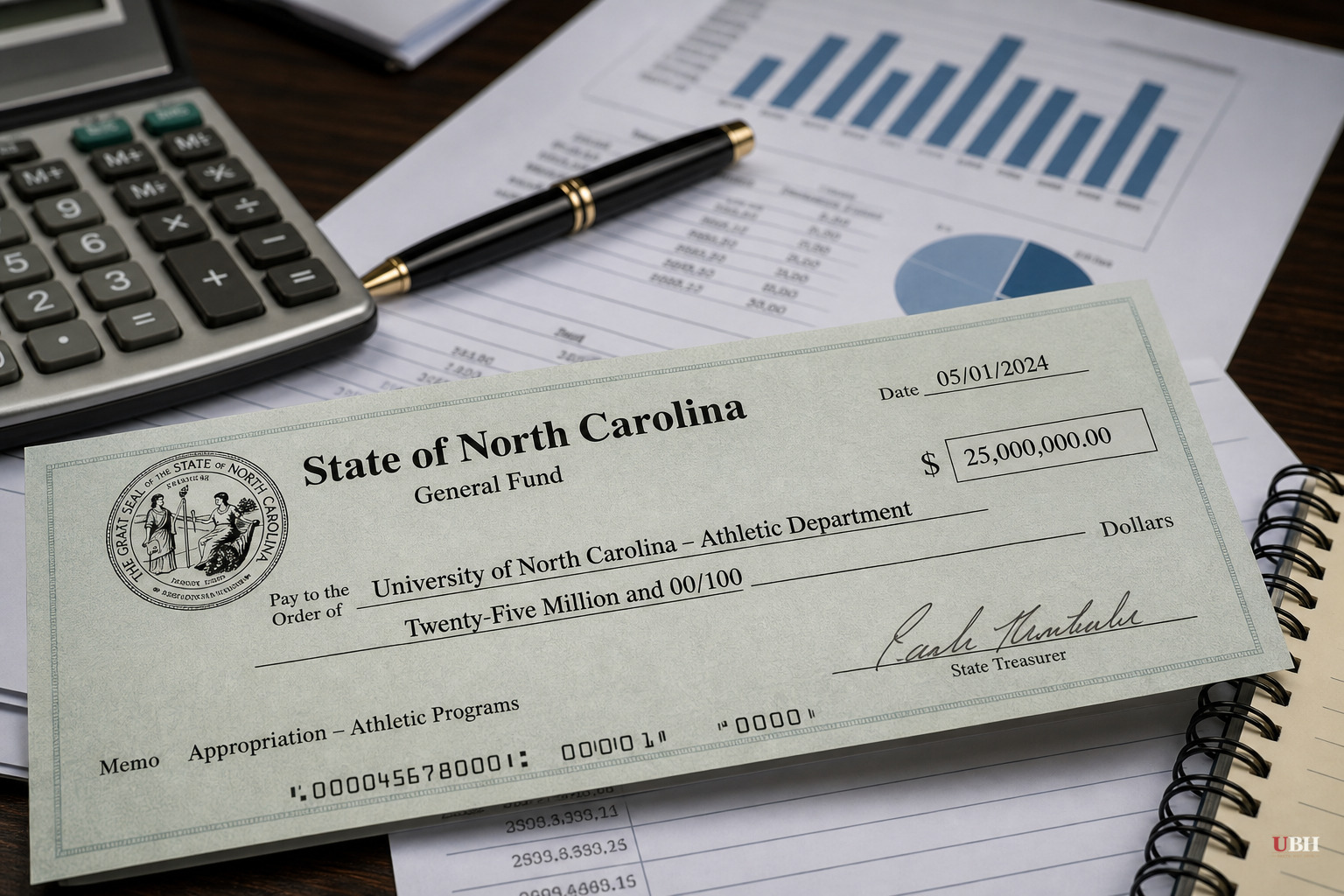
College sports already blew past the amateur-athletics fiction when the NCAA opened the door to name, image and likeness deals in 2021. Now, on top of a 2025 legal settlement letting schools pay athletes directly, some states are stepping in with taxpayer money to help their athletic departments keep up.
The University of North Carolina at Chapel Hill is getting $3 million for the first time, carved out of state sports betting tax revenue, according to the Associated Press. Wisconsin lawmakers approved $15 million for athletic costs at the University of Wisconsin. Connecticut and Louisiana are using tax dollars too, per reporting from CT Mirror and the AP. More states have discussed doing the same.
None of this money is landing directly in a quarterback's bank account. It's covering facilities and administrative costs schools used to pay themselves. By handing schools public funds for overhead, the state frees up the school's own money, allowing it to pour more of its own revenue into paying players and staying competitive.
Daniel McIntosh, faculty director of the sports business program at Arizona State University, told the AP this could spread fast. "Once one state provides that kind of assistance, schools in competing states can argue that they are being placed at a competitive disadvantage, which could create additional pressure on legislatures to respond," McIntosh said. Once North Carolina does it, Ohio and Georgia lawmakers start feeling political heat to match it, or watch their flagship programs fall behind.
The Money Problem Behind the Subsidies
The current athlete-pay cap sits at $21.3 million per school this year, the result of last year's settlement, and it's scheduled to climb again next year. That's on top of whatever players separately collect in NIL deals from boosters, brands, and collectives.
Most Division I programs can't get near that cap. But nearly all of them are scrambling to raise more money trying to compete anyway, according to the AP. Meanwhile the bills keep growing regardless of the payroll fight: coaching salaries, new facilities, and travel costs tied to conference realignment that blew up decades-old regional rivalries in favor of coast-to-coast scheduling.
The numbers back up how lopsided this has gotten. Athletic operating expenses at public Division I schools jumped nearly a third over the past four years, according to an Associated Press analysis using the Knight-Newhouse College Athletics Database. Revenue hasn't kept pace, and deficits are piling up.
Congress Could Make It Worse, Not Better
A bill in the U.S. Senate, the Protect College Sports Act, is being sold as a guardrail on this spending spree, according to CT Mirror. The latest version would let schools pay up to an additional $27.5 million a year just to retain players on their rosters, according to CT Mirror and KRMG, stacking on top of the existing cap rather than replacing it.
Washington's typical spending-bill move applies here: name it "protection," then let the number go up anyway. If this bill passes as written, taxpayer-funded subsidies to athletic departments won't be an emerging trend anymore. They'll be baked in as a permanent offset to costs Congress just made even higher.
The Fair Question Here
Supporters of these state subsidies have a real argument, not just a talking point. Athletic departments generate revenue, alumni donations, tourism dollars, and media attention for their states. North Carolina lawmakers can point to sports betting tax revenue, money that didn't exist as a state resource before legalized gambling, being redirected into something the public already cares about and pays to watch.
Sports betting tax revenue is still public money that could fund roads, schools, or tax relief instead. Wisconsin's $15 million and Connecticut's contributions aren't found money; they're general appropriations lawmakers chose over other priorities, at a moment when Division I athletics is running deficits by its own accounting.
The AP's Knight-Newhouse data shows expenses outpacing revenue system-wide. States bailing out that gap with public funds isn't fixing the underlying problem. It's letting athletic departments keep spending like they're not broke, on someone else's dime.
Watch what happens if the Protect College Sports Act clears the Senate. If the athlete-payment ceiling jumps to nearly $49 million combined per school, more states will face the same pressure McIntosh described, and more legislatures will have to decide whether taxpayer money belongs in a bidding war for 19-year-old wide receivers.
Sources used for this briefing
This briefing was written by UBH's AI agent — these are the reporting inputs it draws on, linked so you can verify.


