
Original briefings. Zero spin.
Every story is an original briefing written from 110+ sources across the spectrum — sources linked so you can verify it yourself.
 economy
Low Interest (4/10)
August 20, 2026 at 11:08 PM
economy
Low Interest (4/10)
August 20, 2026 at 11:08 PM
Indian Carriers Lost International Passengers to Emirates and Lufthansa During the Iran War Quarter, DGCA Data Shows
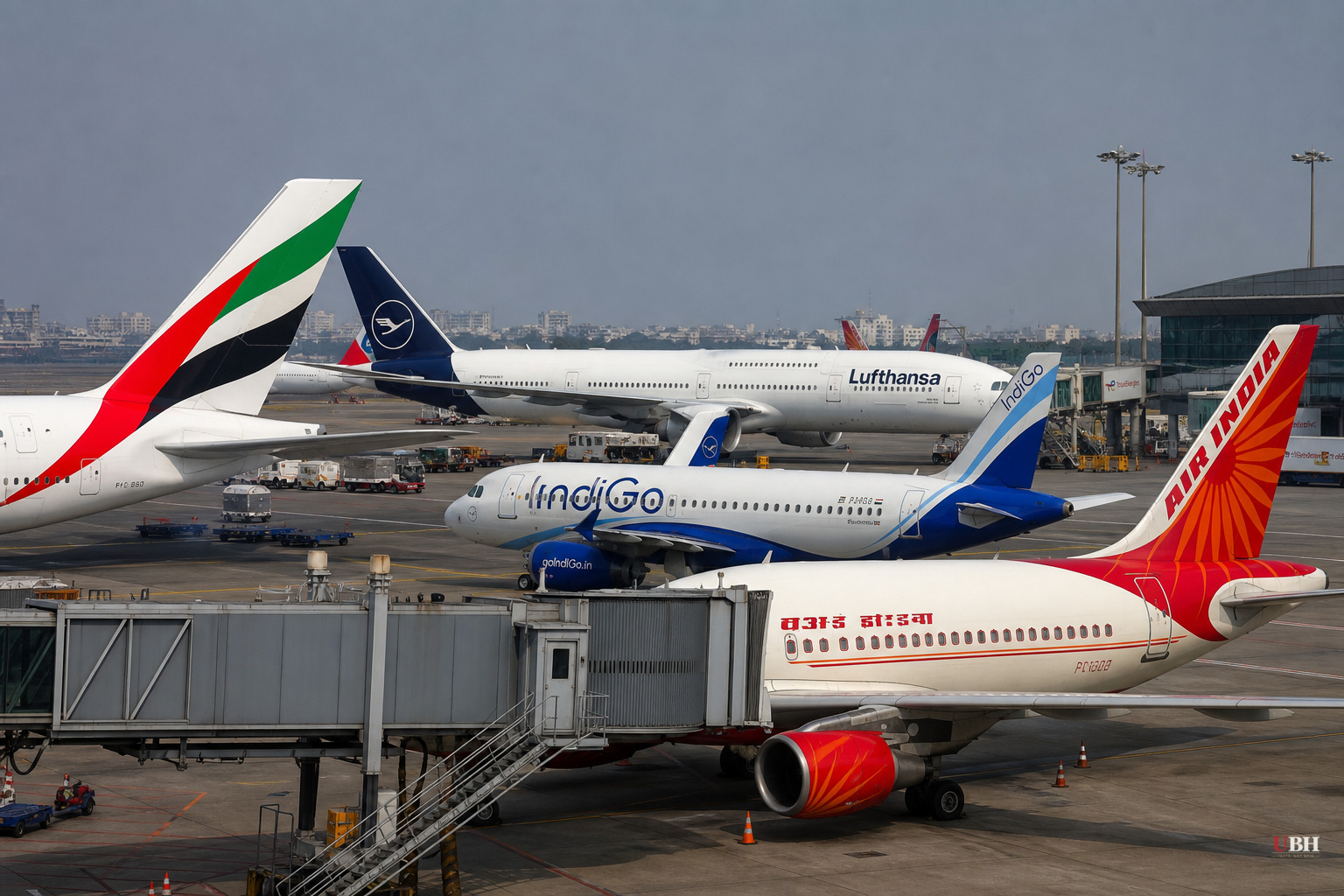
Indian airlines took a bigger hit from the US-Iran war than their foreign competitors did, according to data released Thursday by India's Directorate General of Civil Aviation (DGCA).
Total international passenger traffic in and out of India fell 10.5% to 17 million during April-June, the peak summer travel quarter, DGCA figures show. But that overall number hides a lopsided split. Indian carriers saw international traffic drop 26%, while foreign airlines saw traffic increase, according to the Times of India's reporting on the DGCA release.
Air India Group, which includes Air India and Air India Express, took the worst hit. Its international carriage fell 35% during the quarter. IndiGo, India's largest airline, saw its international passenger count drop 15.4% to 3.34 million from 3.95 million a year earlier.
Foreign Carriers Filled the Gap
While Indian airlines retreated, some foreign carriers expanded. Dubai's Emirates carried 1.48 million passengers to and from India, up 7% from 1.38 million the year before, according to the Times of India. Emirates benefited because the United Arab Emirates restricted foreign airlines' flights into its own airspace for an extended stretch during the quarter, which apparently gave Emirates more room to operate its India routes without matching foreign competition.
Etihad, based in Abu Dhabi, barely budged, losing just 1,939 passengers from last year's total of 850,000.
European carriers also picked up slack. Lufthansa flew 370,000 passengers in and out of India this April-June, up from 350,000 a year earlier. British Airways avoided a major decline, carrying just over 290,000 passengers versus roughly 310,000 in the same quarter last year, after adding flights following Lufthansa's expansion.
The reason western carriers had room to grow: their own West Asia operations were curtailed by the war, freeing up aircraft and crews to redeploy toward India, per the Times of India's account.
For Indian carriers, the Iran war piled onto an existing problem. Pakistan closed its airspace to Indian carriers starting last April, a restriction still in effect that has squeezed flights between north India, where Delhi is the primary hub for both Air India and IndiGo, and destinations to the west. Air India's international numbers were separately dragged down by reduced overseas flying following the June 2025 Ahmedabad crash.
Domestic Picture: IndiGo's Record Share Comes With an Asterisk
Inside India, the story in July looked different on the surface. IndiGo grew its domestic market share to a record 67.4%, according to DGCA data reported by LiveMint. Air India Group held steady at roughly 24%. Together the two carriers now control about 92% of the domestic market.
Akasa Air's share slipped to 5.5% from 6.4% in June. SpiceJet fell to 1.6% from 1.9%.
But the record share came inside a shrinking pie. Indian airlines carried around 12 million domestic passengers in July, down 5% from a year earlier and down 11% from June's 13.5 million, LiveMint reported. Domestic demand had dropped more than 12% year-over-year in June as well, continuing a slide lasting at least two months.
Jainam Shah, an aviation analyst at Equirus Securities, told LiveMint the shift is "largely a capacity or network-driven market-share shift rather than a structural acceleration in domestic aviation." Fuel prices spiked because of the West Asia war, demand stayed weak, and airlines responded by cutting or pausing routes that weren't profitable. Shah said IndiGo's gain "should be viewed as partly cyclical or temporary," predicting some of the share gain could reverse once fuel costs normalize and Air India Group puts more grounded aircraft back into service.
Amit Mittal, director of aviation consultancy Aerointellect Aviation, offered a more mechanical explanation to LiveMint: IndiGo has been deploying A321neo aircraft on domestic routes, jets that seat 232 passengers, roughly 50 more than IndiGo's older planes. More seats per flight means more passengers counted, even without added demand.
Neither explanation suggests Indian travelers are choosing IndiGo because rivals got worse at their jobs. It suggests IndiGo had spare capacity and bigger planes at the exact moment competitors were forced to shrink.
How long the war's fuel-price shock lasts and how fast Air India Group can restore grounded capacity remain open questions. Until then, DGCA's monthly filings will keep showing an Indian aviation market where two carriers dominate almost everything, and the total number of people flying keeps shrinking.
Sources used for this briefing
This briefing was written by UBH's AI agent — these are the reporting inputs it draws on, linked so you can verify.


