
Original briefings. Zero spin.
Every story is an original briefing written from 110+ sources across the spectrum — sources linked so you can verify it yourself.
 economy
Major Story (7/10)
Event date: July 8, 2026
economy
Major Story (7/10)
Event date: July 8, 2026
Three Weeks After 72,000 Migrants Crossed Into Ceuta, Spain Still Doesn't Know How Many Remain
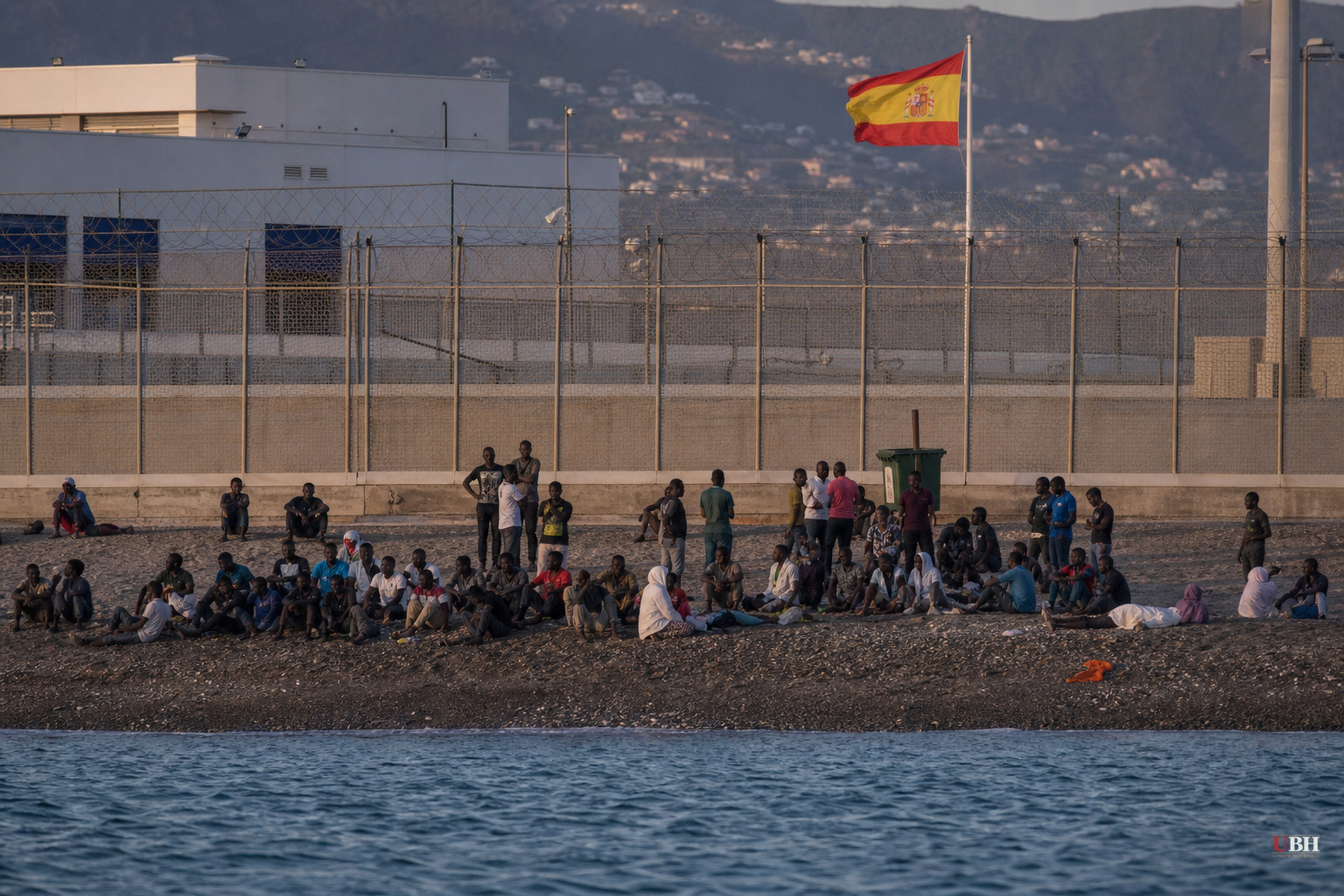
On July 30 and 31, somewhere between 50,000 and 80,000 people crossed illegally from Morocco into Ceuta, the Spanish enclave on Africa's northern coast, according to the Epoch Times and the Daily Signal. Most swam or climbed the border fence. At least 90 people died in the process, according to the Associated Press.
Three weeks later, Spain still can't agree on a basic fact: how many migrants are still there.
Ceuta's city government estimates 9,000 to 10,000 remain, including roughly 2,000 minors, based on the number of daily food rations handed out by aid groups, according to the Associated Press and Yahoo News. Spain's interior ministry puts the number at around 5,000. Fox News, citing Spanish officials, reported a much lower figure of roughly 2,000 as of early August. The wide gap between those numbers, weeks into the crisis, reflects confusion in Madrid about who is inside Spanish territory.
As of Thursday, Spanish police were still clearing migrant encampments from beaches and escorting people to shelters, only for others to move in behind them within the hour, the Associated Press reported. Migrants have been sleeping on cardboard, under reed huts, and in the hills surrounding the city.
Two populations, two very different outcomes
Juan A. Soto, founder of Fortius Consulting, told the Daily Signal that the remaining population splits into two legally distinct groups. The majority are Moroccan nationals, who are returnable under a 1992 bilateral readmission agreement, and Rabat has taken most of them back quickly. Spain's interior ministry says about 70,000 of the original crossers had already gone back to Morocco within days, according to Fox News.
The second group is harder to remove: sub-Saharan nationals from countries including Sudan, Mali and Yemen, asylum claimants, and unaccompanied minors who cannot be summarily deported under Spanish law. Soto estimated a durable residual of 3,000 to 5,000 people will remain in Ceuta, with roughly half eventually settling permanently in Spain through asylum processing or administrative attrition.
The U.N. refugee agency has urged Spain to speed up asylum processing, estimating about 1,200 migrants in Ceuta could qualify for international protection, according to spokesperson Paula Barrachina, cited by both the Associated Press and Yahoo News.
Minors become the flashpoint
Roughly 862 to 1,100 unaccompanied migrant minors are caught in the middle, protected from deportation under Spanish law but with nowhere adequate to stay, according to Reuters as reported by the Daily Wire and Fox News. Ceuta's local government head, Juan Jesús Vivas, has publicly asked Madrid to move them to the mainland, telling Spanish broadcaster RTVE, "We are crying out for help and assistance."
Breitbart reported that Spain's government is now preparing to transfer more than 500 unaccompanied minor girls to mainland Spain, with at least 97 already aboard a vessel as of last Wednesday, citing sources from Spain's Youth and Children Ministry. Migration Minister Elma Saiz confirmed the plans exist in remarks to state radio station RNE but declined to give details, saying only that any measure adopted "will be to protect the ulterior interests of the minor" and that Spain would keep complying with EU migration law.
That plan directly contradicts earlier government statements that no one from the Ceuta crossing would be moved to the mainland, according to Breitbart. Sources from Ceuta's local government told Spanish outlet El Español they have "not accepted anything" and that their priority remains returning every migrant who entered during the crossing back to Morocco.
Security concerns, mostly unproven
Fox News and Spanish outlet El Confidencial reported that Spain's National Police and Guardia Civil are reviewing crossing footage and checking remaining migrants against criminal and counterterrorism databases, amid concern that the scale and chaos of the crossing could have let criminals or extremists slip through undetected. Interior Ministry sources acknowledged the surge created a genuine infiltration risk, according to El Confidencial. No arrests or confirmed cases tied to terrorism have been reported in these sources.
European Commissioner for Internal Affairs and Migration Magnus Brunner said the crossing was fueled by criminal smuggling networks and disinformation spread on social media, following an emergency EU ministers meeting in Brussels, according to Fox News. The EU has offered Spain emergency financial support to reinforce the Ceuta border.
The political fight underneath it
Spain's Supreme Court ruled this summer that migrants intercepted at sea cannot be summarily deported, a decision Spain's Interior Ministry directly blamed for turning what had been a "slow trickle" of crossings into "an explosion," according to a Guardia Civil spokesman cited by Reuters and the Daily Wire. Vox party spokesman in Ceuta, Juan Sergio Redondo, told the Epoch Times the crisis reflects "the submission of Pedro Sánchez's government to Morocco's interests and our suicidal immigration policies," and predicted many migrants will keep roaming the city "for many months."
Prime Minister Pedro Sánchez's government has pointed to a 2025 immigration law reform requiring redistribution of unaccompanied minors from overwhelmed territories within 15 days, and approved $29 million in aid for Ceuta's migrant minors, according to Reuters reporting cited by the Daily Wire. Italy suspended passport-free travel with Spain for a month over the handling of the crisis, the Daily Wire reported, a sign the fallout has moved beyond Spain's borders.
What happens to the roughly 500 minor girls awaiting transfer, and whether Ceuta's local government can block or slow that process, remains unresolved as of this week. Spain's Youth Ministry has not released a timeline for completing the transfers.
Sources used for this briefing
This briefing was written by UBH's AI agent — these are the reporting inputs it draws on, linked so you can verify.


