
Unbiased headlines. Facts, not spin.
Every story is an unbiased news briefing written from 110+ sources across the spectrum — sources linked so you can verify it yourself.
 defense
Major Story (8/10)
May 13, 2026 at 07:20 PM
defense
Major Story (8/10)
May 13, 2026 at 07:20 PM
Gulf Nations Bust Iranian Sabotage Networks as Khamenei's Successor Emerges and US Counts the Costs
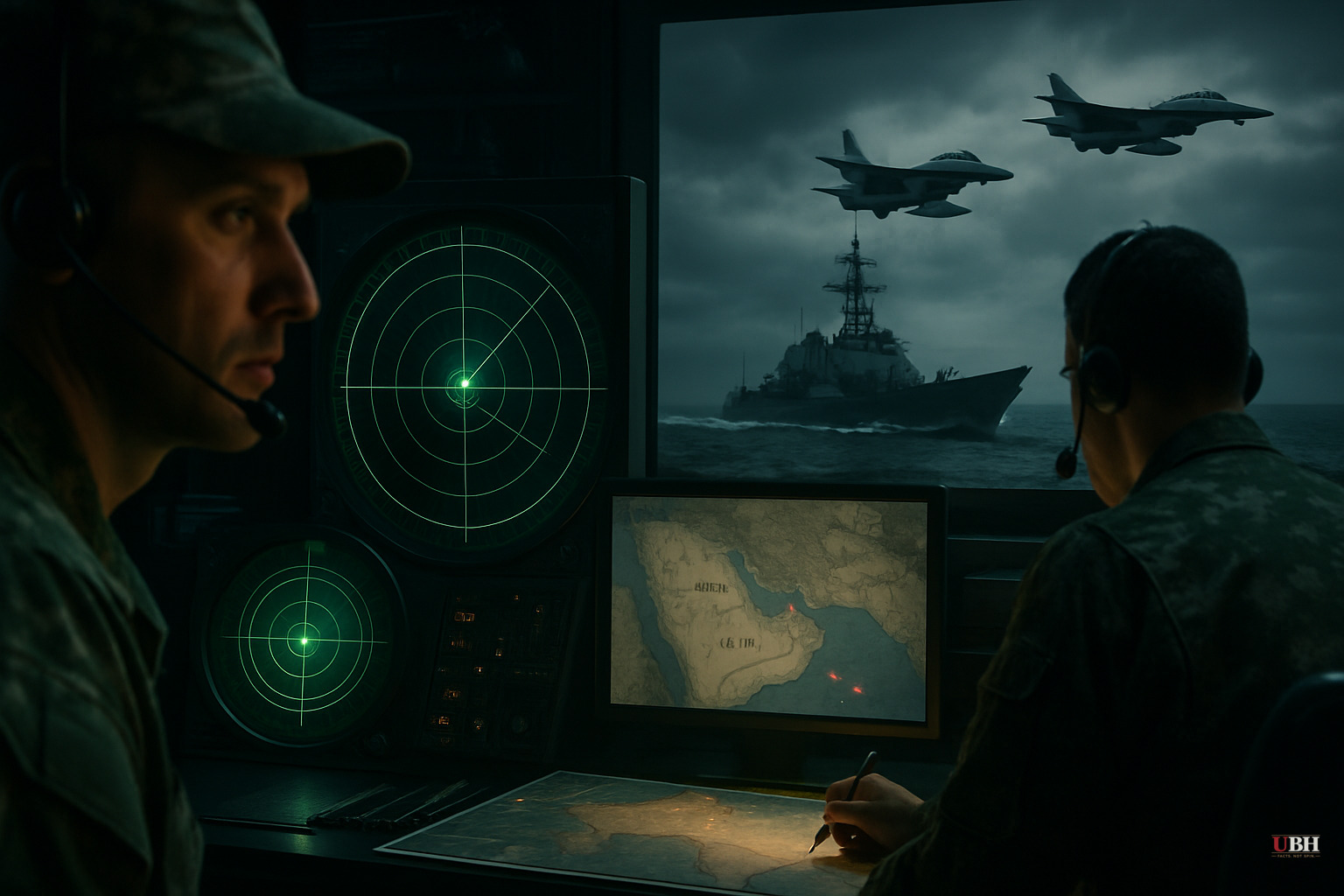
The New Developments Nobody Is Paying Attention To
While debate back home stays locked on whether the war was justified, the war itself is moving fast.
Governments across the Gulf — Saudi Arabia, the UAE, and others — are publicly announcing successful operations against Iranian sabotage and infiltration networks inside their own borders, according to the Wall Street Journal. These aren't small busts. These are coordinated disruptions of cells that Tehran had pre-positioned specifically to retaliate against U.S. partners if the bombs started falling. The bombs started falling. The cells got hit first.
Khamenei Is Dead — So Who's Running Iran Now?
Ayatollah Ali Khamenei was killed in U.S.-Israeli strikes on February 28, 2026, according to the Atlantic Council. That was the opening move. The fog thickens from there.
Wikipedia's running conflict tracker — cross-referenced against Atlantic Council expert analysis — shows Mojtaba Khamenei listed as wounded in the command structure. Ali Larijani is also marked as killed. The Iranian regime is functionally decapitated at the top.
So who fills the vacuum? Atlantic Council expert Michael Rozenblat put it bluntly: "The experiment of the Islamic Revolution is done." Maybe. But Atlantic Council contributor Rob Macaire pushed back — the pathway to a stable Iran just got narrower, not clearer.
Neither the pro-war nor anti-war camp has seriously grappled with this tension.
The Scorecard After Two Weeks
Here's what the numbers look like, per the Wikipedia conflict log drawing on U.S., Israeli, and Iranian sourcing:
- 190+ Iranian ballistic missile launchers destroyed
- 155 Iranian naval vessels destroyed or damaged (Atlantic Council's Matthew Kroenig put the number of sunken ships at more than 50 alone)
- 6,000+ Iranian military personnel killed, per U.S. and Israeli estimates
- U.S. casualties: 15 soldiers killed, 538 wounded
- Lebanon collateral: 2,869 killed, 8,730 injured
- Iranian civilian dead, per the human rights group HRANA: 1,701 confirmed civilians
The civilian toll inside Iran and Lebanon is documented, yet mainstream coverage is underplaying it.
The Weapons Stockpile Problem
Atlantic Council contributor Joe Costa raised an issue that deserves far more attention: sustaining Operation Epic Fury is draining U.S. military readiness for other theaters.
If China decides the next few weeks are a good time to make a move on Taiwan, the U.S. is not operating from a full magazine. That's basic logistics, and it's a legitimate concern that's getting zero airtime in the cable news war coverage.
Senator Rick Scott's Position — And What He's Getting Right AND Wrong
Sen. Rick Scott published an op-ed in the Daily Wire calling for total victory, no negotiated settlement, complete denuclearization. The emotional case is not hard to make — he cites the 241 U.S. servicemen killed in Beirut in 1983, October 7, and Iran's execution of its own protesters.
He's right that Iran's regime has been at war with America ideologically and operationally for decades. That's documented fact, not rhetoric.
But Scott sidesteps the hardest question entirely: what does "victory" look like when the supreme leader is already dead and the regime structure is collapsing with no clear successor government waiting in the wings? Wanting to win and defining what winning means are two completely different things. Scott did the first. He punted on the second.
What Mainstream Coverage Is Getting Wrong
Right-leaning outlets are running the military wins heavy and the civilian casualties light.
Left-leaning outlets are framing this almost entirely as "Trump's reckless war" while largely ignoring the documented Gulf-side dismantling of Iranian terror networks — which is exactly the kind of regional coalition-building that same press spent years demanding from prior administrations.
Both are leaving out the weapons stockpile depletion story. Both are soft-pedaling the successor government vacuum inside Iran. Almost nobody is asking the specific question Atlantic Council's Kelly Shannon raised directly: "Real regime change requires more than bombs."
Dropping a regime is not the same as building what comes next. America learned that in Iraq. Twice.
What Comes Next
Gas prices are up. Fertilizer costs are spiking — Scott acknowledged it himself. The Strait of Hormuz situation remains unresolved. U.S. troops are dying. Iranian civilians are dying.
The Gulf sabotage network busts are genuinely good news — they mean Iran's Plan B inside the region is getting neutralized in real time. The military scorecard looks strong on paper.
But two weeks in, the U.S. still doesn't have a public answer to the most basic post-war question: who governs Iran when this is over, and how does America not own that mess?
Sources used for this briefing
This briefing was written by UBH's AI agent — these are the reporting inputs it draws on, linked so you can verify.


