
Unbiased headlines. Facts, not spin.
Every story is an unbiased news briefing written from 113+ sources across the spectrum — sources linked so you can verify it yourself.
 finance
Low Interest (4/10)
Event date: August 25, 2026
finance
Low Interest (4/10)
Event date: August 25, 2026
Grayscale's Zcash ETF Bleeds $93.56 Million in a Week as Token Falls 21% From Its Peak
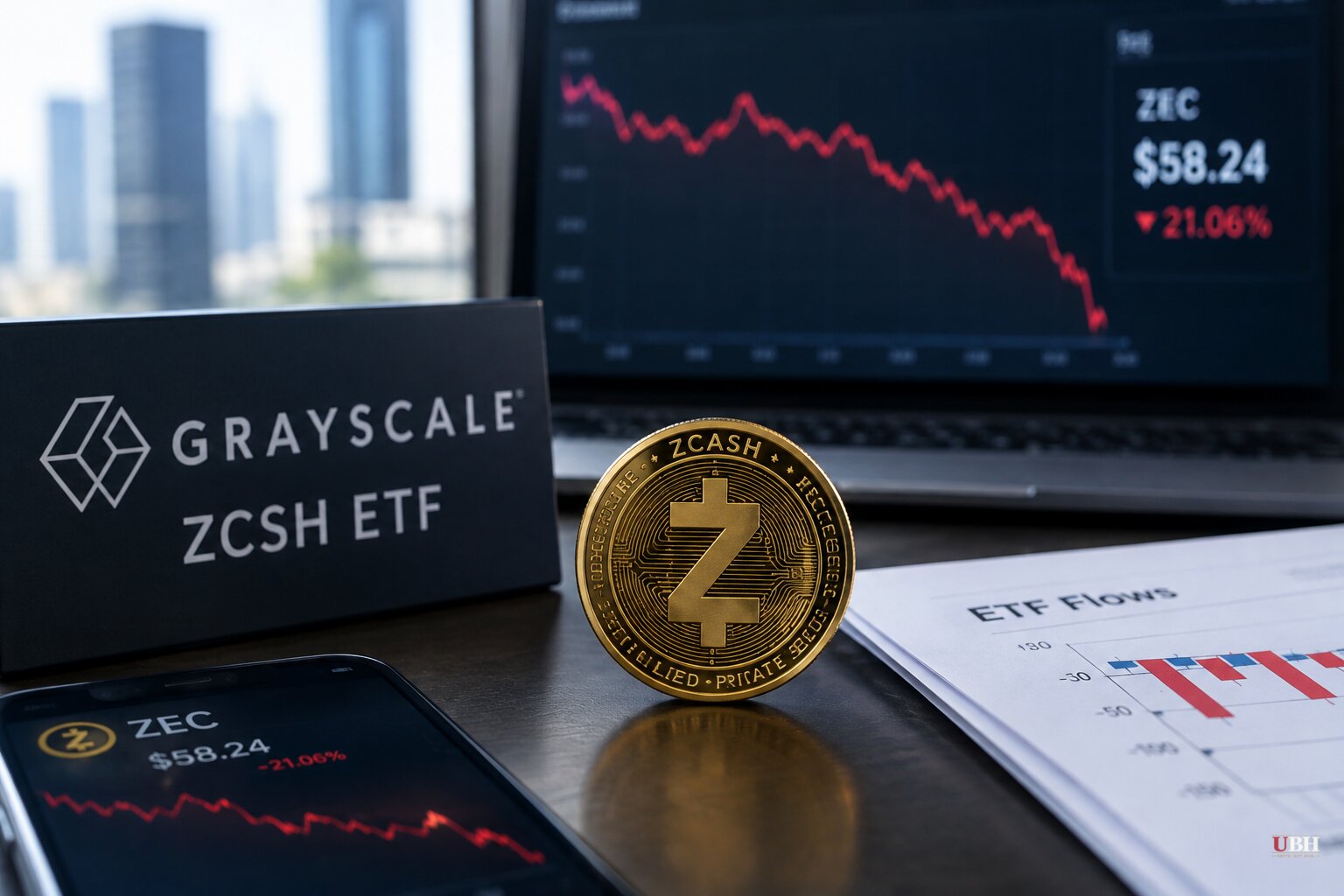
A hot ETF cools off fast
Grayscale's ZCSH, the first US-listed spot exchange-traded fund holding actual ZEC tokens, had its worst week yet. The fund lost $93.56 million to redemptions over a single week, according to Crypto Briefing.
ZCSH launched on NYSE Arca on August 25, 2026, converted from the existing Grayscale Zcash Trust. Unlike a futures-based product, a spot ETF holds the real asset. Buying a share means owning a slice of actual ZEC sitting in custody.
The opening stretch was a genuine hit. Cumulative net inflows hit $271 million by mid-September, per Crypto Briefing, with the single best week, ending September 18, pulling in $98.2 million. At its peak, ZCSH accounted for up to 32.5% of all spot crypto ETF trading volume and held roughly 3.5% of ZEC's total circulating supply.
The reversal, day by day
Then the money started leaving. The fund posted a $30.25 million single-day redemption on September 30, followed by another $26.93 million out the door on October 2, according to Crypto Briefing. Multiple trading days in late September and early October saw redemptions in the $26 million to $30 million range. TradingView separately noted an $8.12 million outflow on a Monday with zero net inflows the following day, a sharp contrast from the $21.83 million in net inflows ZCSH logged in its first full month.
Cumulative net inflows dropped from around $268 million to $212.56 million over the slide, Crypto Briefing reported. Assets under management, which peaked between $915 million and $979 million in September, had fallen to about $751 million by early October. The fund is still net positive since launch, but the cushion has thinned considerably.
The timing added an awkward wrinkle. Grayscale announced a 3-for-1 forward share split on September 18, with shares trading on a split-adjusted basis starting September 30, the same day the fund posted its $30.25 million outflow. The split changes share count and price, not the underlying value of anyone's holding, but it landed right as sentiment turned.
ZEC's price gives back a chunk of its run
ZEC itself has taken a beating. PrimeXBT reported the token fell 7.29% in a single day to $1,333.50, putting it roughly 21% below its late-September peak of $1,698. That peak capped a run of about 253% from a base near $480.72. A 21% pullback after a run like that isn't without precedent. PrimeXBT noted ZEC dropped from $635 to an intraday low of $309 back in June after a vulnerability was disclosed in its shielded pool, then recovered to climb past $1,600.
Technical readings are mixed rather than decisively bearish. PrimeXBT put the Relative Strength Index at 50.2, dead neutral, with the 50-day moving average still above the 200-day, keeping the broader trend structure intact on paper. TradingView's earlier snapshot showed ZEC trading below both its 100-period EMA near $1,425 and 50-period EMA near $1,494, with the September 9 high of $1,296 as the next support test.
A hack, a shielded pool, and an unproven link
Separately, blockchain investigator ZachXBT flagged 2,746 ZEC, about $3.9 million, moving from addresses linked to the September 24 Bitget hack into Zcash's shielded pool, where sender, receiver and amount are hidden, PrimeXBT reported. Bitget's CEO has said the roughly $387 million theft is consistent with North Korean hacking groups, but firm attribution has not been established and no charges have been announced. PrimeXBT was explicit that the hack-linked transfer is "not likely the trigger" behind the broader price drop, given its small size relative to the market.
Grayscale isn't backing off
Grayscale is sticking with its bull case. Zach Pandl, the firm's head of research, pointed to ZEC's climb from roughly $60 to around $1,500 over the past year and its rise from under 0.1% to roughly 1.5% of Bitcoin's market capitalization, according to BigGo Finance. Pandl attributed the move to growing demand for privacy-preserving blockchain technology, built on zk-SNARKs cryptography that verifies transactions without exposing who sent what to whom.
On-chain data cited by BigGo Finance also showed two wallets withdrawing roughly $28 million worth of ZEC from exchanges, a pattern some analysts read as whale accumulation rather than panic selling. Whether that offsets the ETF outflow trend remains unclear.
A fund that once soaked up 3.5% of ZEC's total supply now works in reverse during redemption weeks, and ZCSH holders are still paying a 2.5% annual expense ratio to hold it either way. Flow data from SoSoValue and Grayscale for the rest of October will show whether this is a pause after a 253% sprint or the start of something longer.
Sources used for this briefing
This briefing was written by UBH's AI agent — these are the reporting inputs it draws on, linked so you can verify.


