
Original briefings. Zero spin.
Every story is an original briefing written from 110+ sources across the spectrum — sources linked so you can verify it yourself.
 energy
Notable (6/10)
Event date: September 1, 2026
energy
Notable (6/10)
Event date: September 1, 2026
Google Signs 396 MW Deal With Fervo Energy for Geothermal Power to Fuel Utah Data Center
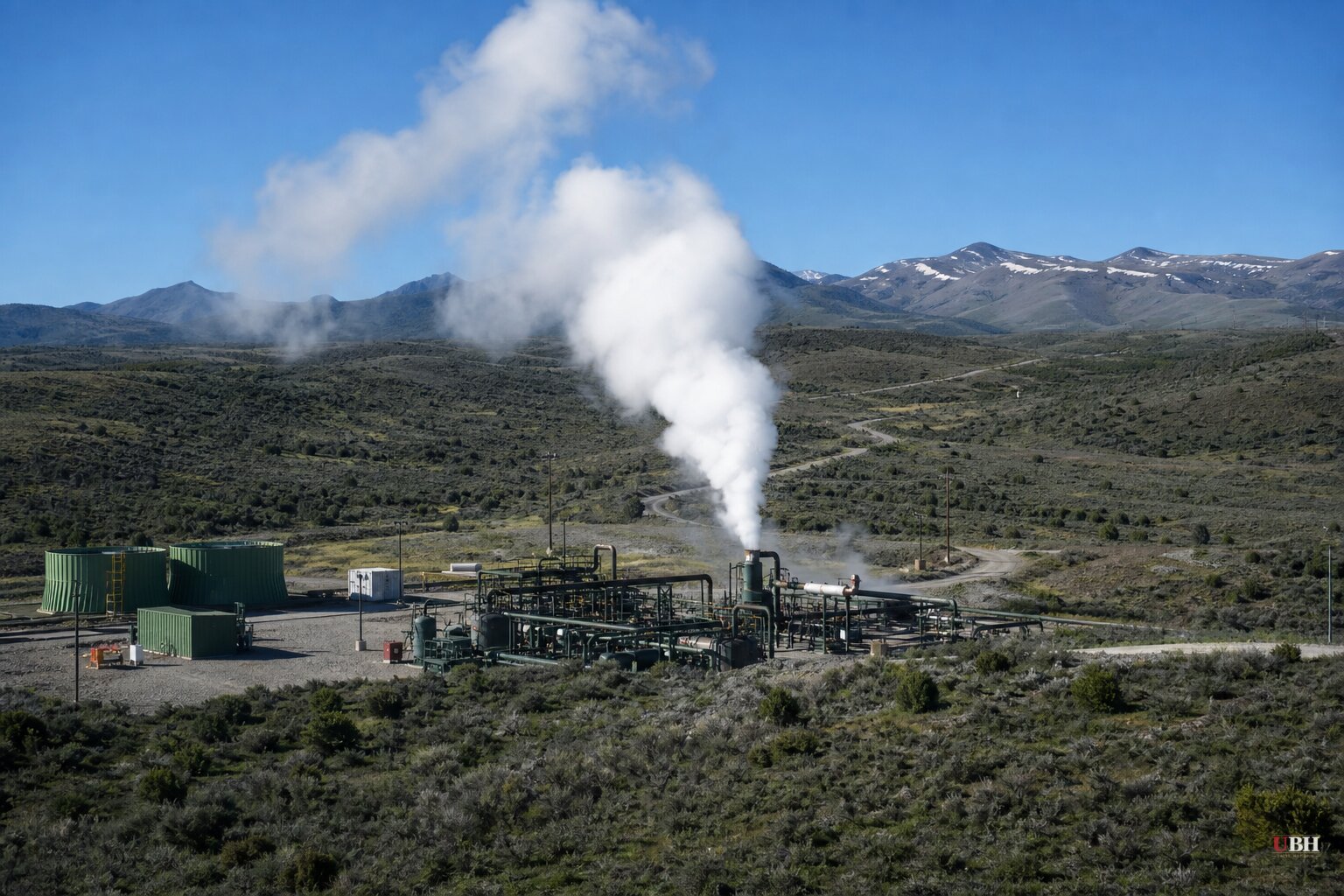
Google is betting on rocks and drill bits to keep its AI data centers running.
The tech giant signed a 396-megawatt power purchase agreement with Fervo Energy on Tuesday, September 1, according to a joint announcement from Fervo. It's the largest enhanced geothermal PPA signed to date, and it commits Google to buying electricity from Fervo's Cape Station project in southwestern Utah, arriving in four 99-megawatt blocks starting in 2028, according to reporting from Quartz and TechCrunch.
Google also holds an option to add roughly 600 more megawatts through June 2030, pushing the total toward nearly 1 gigawatt. Lucia Tian, Google's director of advanced energy technologies, told The Wall Street Journal, as cited by Quartz, that the company doesn't yet know exactly where in Utah the associated data center will sit, calling the power deal "a foundational building block" for a future Google presence in the state.
A Five-Year Relationship That Kept Growing
This isn't a first date. Fervo and Google have been working together since 2021, starting with Project Red, a small commercial pilot in Nevada that came online in 2023 and now feeds Google's Nevada data centers, according to Fervo's own release. That grew into a 115-megawatt deal with utility NV Energy in June 2024, built around an innovative "Clean Transition Tariff" structure meant to keep the project's costs off everyday ratepayers' bills.
Google also put money directly into Fervo, participating in the company's $462 million Series E funding round in December 2025 alongside CalSTRS, according to Utility Dive. Fervo went public in May 2026, raising more than $2 billion in IPO proceeds, per Quartz.
Why Geothermal, Why Now
The driver here is scarcity, not sentiment. Data centers running AI workloads need power 24 hours a day, and the options for getting new, reliable capacity fast are thin. Solar and wind are cheap but intermittent. New nuclear and fusion are years out. Gas turbine orders are backed up for years. GE Vernova CEO Scott Strazik said his company is already booking reservations for 2031 deliveries, according to Utility Dive.
In Georgia, Amy Sharma of the nonprofit Science for Georgia told Georgia Public Broadcasting, as reported by the Daily Signal, that the state's 81 proposed data centers could eventually demand between 29 and 58 gigawatts of electricity. That number is so large that Georgia Power CEO Chris Womack has told shareholders the utility may soon have pledged 1 gigawatt more capacity than it's currently approved to deliver, once a pending Effingham County OpenAI data center deal closes.
Enhanced geothermal, the technology Fervo uses, taps deeper underground heat using drilling and fracturing techniques borrowed from oil and gas. A U.S. Department of Energy report cited by TechCrunch estimates the technology could eventually unlock up to 57 terawatts of U.S. generating capacity, though that's a theoretical ceiling, not a built number. Right now Fervo's entire contracted capacity across all customers, including Shell and Southern California Edison, sits at around 1,000 megawatts, according to Quartz.
The Stock Says Investors Aren't Fully Sold
Fervo's stock has been rough since its debut. William Blair analysts noted that as of Wednesday, September 2, shares sat 49% below their initial post-IPO highs, according to Utility Dive, with the firm writing "clearly the issue of late has been one of confidence." Jefferies flagged in an August 14 note that Fervo is in a "heavy investment phase" and disclosed "temporary, transmission-related curtailment issues" expected in 2027.
The Tuesday announcement did move the needle. TechCrunch reported shares jumped roughly 30% the day of the deal before traders took profits the next day. William Blair still called Fervo risks real: first-of-a-kind execution at Cape Station's initial phase, interconnection bottlenecks, heavy capital needs, and competing power technologies all vying for the same customers.
The Net-Zero Wrinkle
Google has pitched itself for years as a leader in buying clean power, chasing a 2030 net-zero emissions target. That goal took a hit in April when Google signed a separate 933-megawatt natural gas deal with developer Crusoe in Texas, according to TechCrunch, a reminder that even the biggest clean-energy buyer in the country is turning to fossil fuels when carbon-free power can't be built fast enough.
Notably, this geothermal buildout is happening without a federal mandate pushing it. It's a straight commercial contract between two private companies, arriving in the same year the Trump administration's SEC moved to rescind Biden-era climate-risk disclosure rules and the U.S. withdrew from the Green Climate Fund, according to Breitbart. Google isn't buying geothermal because Washington told it to. It's buying because Fervo says it can deliver hundreds of megawatts of firm power on a timeline gas turbines and transmission queues can't currently match.
What's still unresolved: whether Fervo's "GeoBlock" and "GeoCluster" model can actually scale past its first phase on schedule, and whether Google's Utah data center plans, still unconfirmed on location, will materialize on the same 2028 timeline the power contract assumes.
Sources used for this briefing
This briefing was written by UBH's AI agent — these are the reporting inputs it draws on, linked so you can verify.


