
Original briefings. Zero spin.
Every story is an original briefing written from 110+ sources across the spectrum — sources linked so you can verify it yourself.
 energy
Breaking / Critical (9/10)
September 7, 2026 at 10:21 AM
energy
Breaking / Critical (9/10)
September 7, 2026 at 10:21 AM
Goldman Sachs Warns Oil Could Hit $120 a Barrel as Hormuz Ship Traffic Drops to 10 Vessels a Day
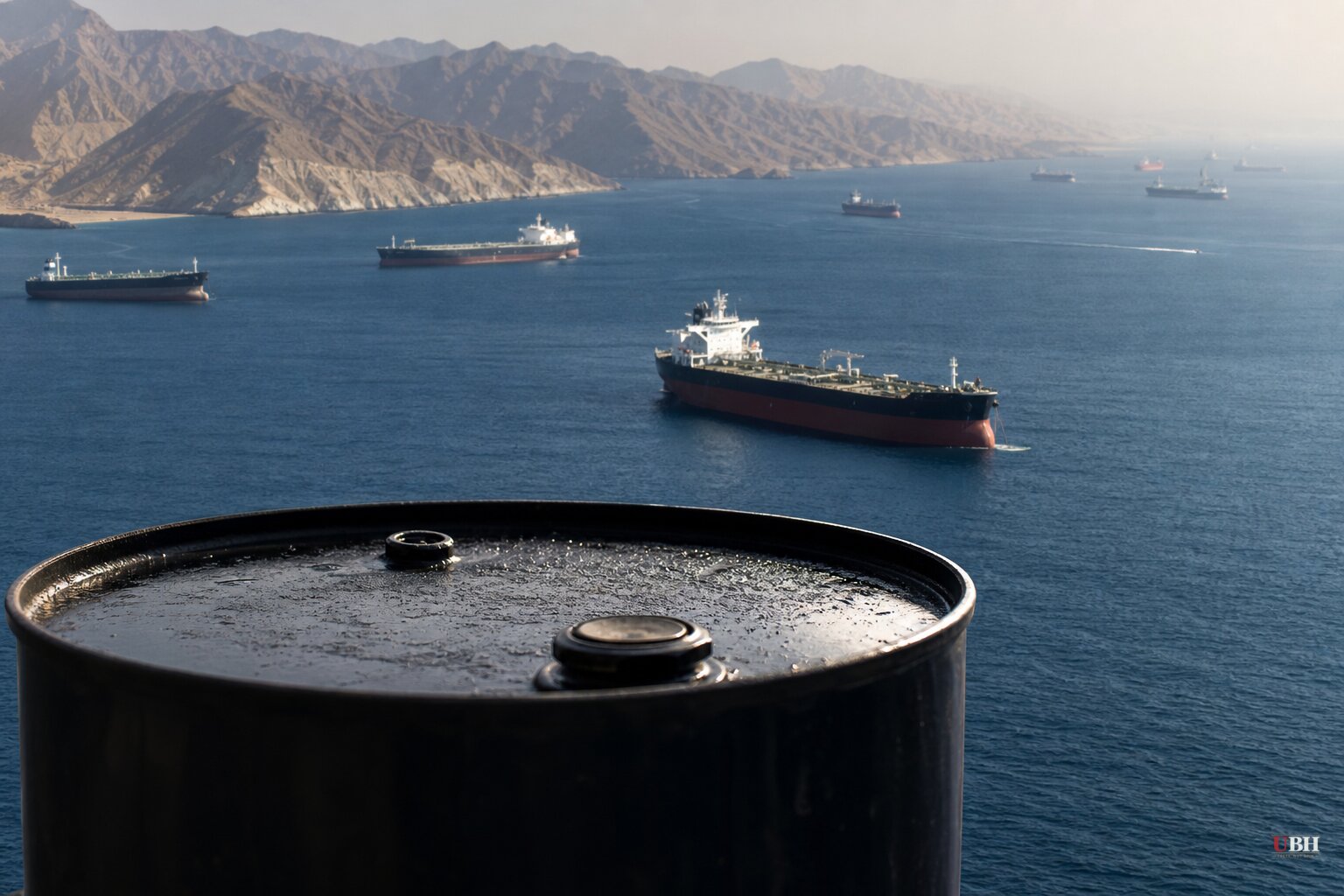
Since U.S. forces struck three Iranian oil tankers this past Saturday, September 5, oil markets have been repricing risk in the Strait of Hormuz almost by the hour.
Brent crude rose 1.47% to $97.25 a barrel and WTI gained 1.09% to $92.23 in Monday trading, according to TradingKey. This followed a 7.8% weekly gain for Brent and nearly 10% for WTI the prior week, the highest levels for both benchmarks since July 2025.
Ship-tracking firm Kpler found that as of September 6, only 10 commercial vessels a day were passing through the Strait of Hormuz, the lowest daily average since May, according to TradingKey. That's a chokepoint carrying roughly a fifth of global oil supply running at a fraction of normal capacity.
The U.S. military said it struck three Iranian oil tankers last Saturday, after Iran had launched ballistic missiles at U.S. Navy vessels, according to TradingKey. Iran has vowed to escalate further if Washington keeps expanding operations. Ali Rezaei, secretary of Iran's Supreme National Security Council, said new maritime restricted zones would be announced in the coming days, and that vessels entering those waters could face sanctions.
The U.S. Navy, for its part, has deployed more than 20 warships to the region, is blockading Iranian ports, and is escorting tankers from other oil-producing nations through the strait, TradingKey reported. Some commercial shipping companies are already rerouting around the conflict zone entirely.
Goldman's math: $80 or $120
Daan Struyven, co-head of global commodities research at Goldman Sachs, told Bloomberg in an interview published September 7 that recent events show "a substantial risk that disruptions to crude transport could become broader and more severe." Goldman's upside case: Brent hits $120 a barrel if Middle East shipping attacks intensify. Its downside case: Brent falls to $80 if regional exports return to normal, according to Bloomberg's reporting as carried by Bloomingbit and BigGo Finance.
Struyven isn't recommending investors bet directly on crude either way. He's telling clients to go long on natural gas and refined products like diesel instead, arguing the supply shock is hitting those markets harder than crude itself, per Bloomingbit. Diesel prices have more than doubled this year, according to the same reporting.
That call builds on a warning Goldman issued August 31, when the bank more than doubled its diesel margin forecasts to $63 a barrel in the U.S. and $49 in the EU, citing wars in the Middle East and Russia's ongoing war against Ukraine straining global refining capacity, according to UNN. U.S. retail diesel hit a record $5.85 a gallon on September 4, according to GateNews, a level that exceeds the 2022 peak.
Struyven also said China is likely to act as a stabilizing force in the crude market by cutting imports when prices run high, but that Beijing hasn't played the same moderating role in natural gas and refined products, per BigGo Finance.
The counter-case: Bessent bets on $40
Not everyone in Washington is bracing for $120 oil. U.S. Treasury Secretary Scott Bessent has predicted oil prices could fall to $40 a barrel once the Iran conflict ends, according to GateNews reporting from September 4. This is roughly 60% below Monday's Brent price and well south of even Goldman's $80 downside case.
Bessent's forecast rests on the assumption that once hostilities wind down, sanctioned Iranian barrels and rerouted supply flood back into a market that's currently pricing in war risk it won't need to price in forever. It's a fair point: oil forecasting during active shooting is inherently speculative, and prices have overshot both directions in past Middle East crises. Nobody, including Goldman, is claiming certainty here. Struyven's own framework is a $40 range between best and worst case, which is itself an admission of how little anyone actually knows about how this ends.
What's not in dispute is the traffic count. Kpler's 10-vessels-a-day figure is a real, measured drop, not a forecast. Rezaei's promised new restricted zones haven't been announced yet as of Monday, September 7. When they are, and how the U.S. Navy responds to them, will likely do more to settle the $80-versus-$120 question than anything said on a Bloomberg set.
Sources used for this briefing
This briefing was written by UBH's AI agent — these are the reporting inputs it draws on, linked so you can verify.


