
Original briefings. Zero spin.
Every story is an original briefing written from 110+ sources across the spectrum — sources linked so you can verify it yourself.
 economy
Major Story (8/10)
Event date: August 24, 2026
economy
Major Story (8/10)
Event date: August 24, 2026
GM and Unifor Reach C$1.1 Billion Ontario Investment Deal as US-Canada Tariff Fight Turns Personal
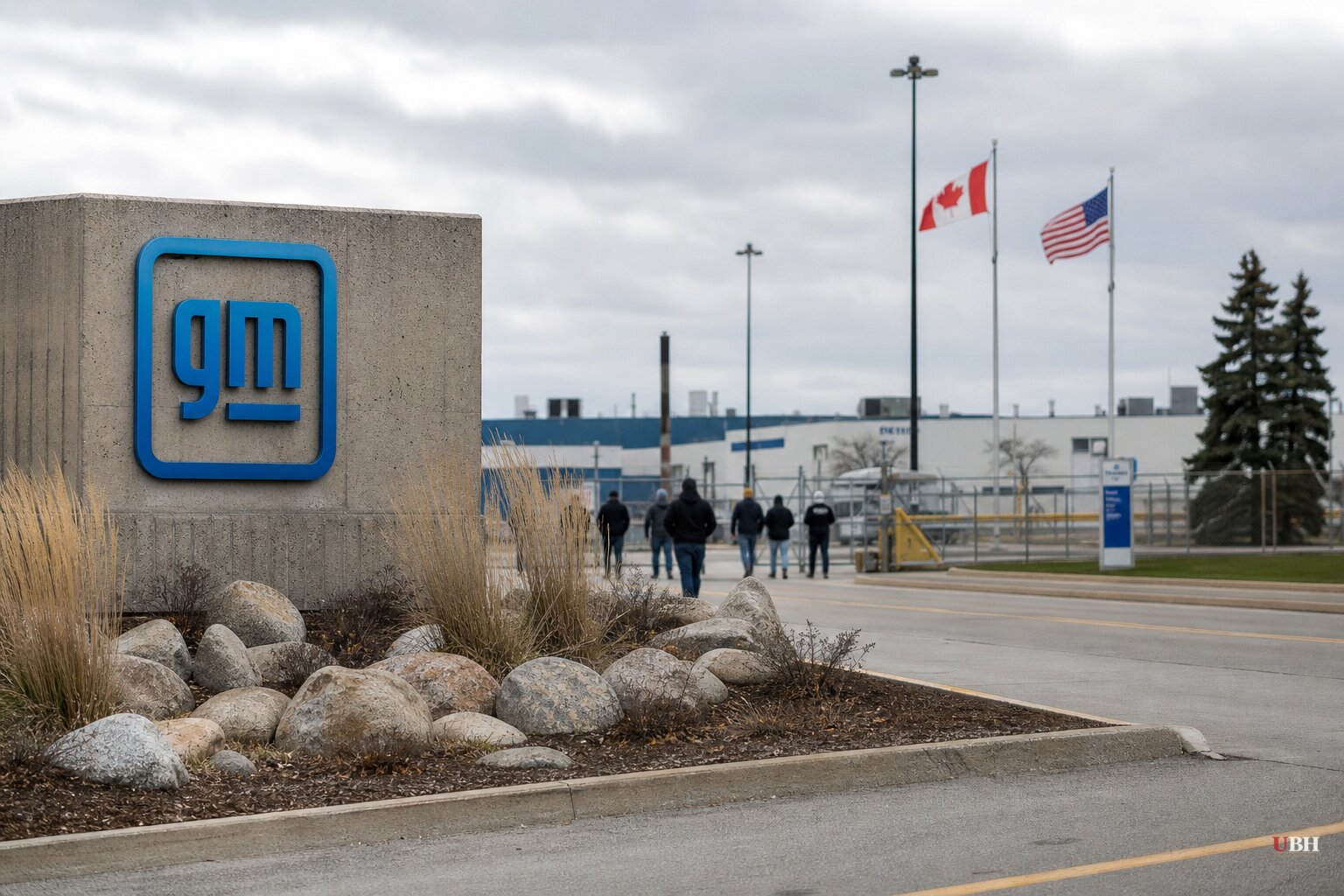
Since the U.S. imposed 50% tariffs on roughly $20 billion of Canadian goods on Aug. 22, after last-ditch trade talks collapsed the night before, the fight between Washington and Ottawa has spread from spreadsheets to insults. The newest development: General Motors and Canada's Unifor union reached a tentative deal, with 4,600 Ontario members voting Saturday and Sunday on whether to accept it.
According to the union's bargaining report, cited by Reuters, GM would invest C$1.1 billion (about $791 million) into its Canadian operations. That includes C$144 million to add production of the next-generation heavy-duty GMC Sierra pickup at GM's Oshawa plant, C$215 million for a new transmission line at St. Catharines starting in late 2029, and a pledge not to immediately sell or close the CAMI assembly plant in Ingersoll while GM studies other uses for it, including possible defense production for the Canadian Armed Forces. A C$691 million commitment to build V8 engines in Ontario was already announced back in April and is folded into the total.
GM is making this bet while Trump has threatened to raise tariffs on all Canadian autos, auto parts and steel to 50% starting Jan. 1, 2027, on top of the 25% already in place. Autos have become the central sticking point in stalled U.S.-Canada negotiations, according to Reuters, with U.S. Commerce Secretary Howard Lutnick saying Canadian negotiators only raised demands over medium- and heavy-duty trucks on the Friday afternoon before the deadline.
The trade war's other track
Separate from the auto threat, the 50% tariffs that took effect Aug. 22 hit a narrower slice of goods, about 5% of what Canada ships to the U.S. annually, according to Breitbart, ranging from hockey sticks to tongue depressors to alcohol, dairy and appliances. U.S. Trade Representative Jamieson Greer said Canada had "declined to finalize the trade deal" after new demands upended an agreement reached earlier in the week. Carney countered that "last-minute changes in the U.S. proposed terms were unfair, uneconomic, and called into question the reliability of any deal."
Canada's Finance Minister François-Philippe Champagne announced counter-tariffs on Aug. 25, calling them "proportionate, targeted, and strategic," according to the Epoch Times. Those countermeasures, plus a hike in Canada's steel and aluminum tariffs from 25% to 50%, are set to take effect Sept. 8, but have not yet kicked in.
The politics have gotten personal. Trump mocked Ontario Premier Doug Ford on Truth Social as "less charismatic, intelligent, and overall unimpressive" than his late brother, former Toronto Mayor Rob Ford, according to Fox News. Ford responded on Toronto radio station Newstalk 1010: "He can kiss my a-- as far as I'm concerned. We're going to go at him full steam." Trump also posted that "without the United States, Canada couldn't survive," accusing Carney and Ford of "bad leadership."
Trade and the auto industry
The strongest case against Trump's auto tariff threat comes from industry economists, not Canadian politicians. Patrick Anderson, CEO of the Michigan-based Anderson Economic Group, told CNN that a full-blown auto tariff "would be a body blow to the auto industry. We would see plants closing on both sides of the border." U.S. Commerce Department data cited by CNN shows America actually runs a trade surplus in autos with Canada, importing $24.5 billion in Canadian vehicles and parts in the first half of this year against $30.4 billion Canada imported from the U.S. Cox Automotive analyst Erin Keating noted Canadian-built cars depend heavily on parts from U.S. suppliers who employ more than half a million Americans.
If integrated North American auto production gets disrupted, U.S. parts workers and assembly-line employees take a hit too, not just Canadian ones. The GM-Unifor deal is itself an acknowledgment of that risk, an attempt to lock in Canadian production and jobs before the January 2027 tariff deadline arrives.
The Epoch Times also points out something to watch heading into the midterms: several of the states affected by Canada's counter-tariffs, including Michigan and Maine, are electoral battlegrounds. Ford put it bluntly on Aug. 24: "When it comes to the midterms, I have a message to the Americans: Don't vote in a person that's going to kill your jobs." Whether Ford's counter-tariff strategy of targeting swing states actually moves votes, the way similar tactics arguably pressured Trump into lifting steel and aluminum tariffs in 2018, remains an open question with the midterms still two months out.
The next concrete marker is Sept. 8, when Canada's retaliatory tariffs and the doubled steel and aluminum duties take effect. After that, all eyes turn to Jan. 1, 2027, and whether Trump actually follows through on 50% auto tariffs, or whether GM's C$1.1 billion bet on Ontario turns out to be premature.
Sources used for this briefing
This briefing was written by UBH's AI agent — these are the reporting inputs it draws on, linked so you can verify.


