
Original briefings. Zero spin.
Every story is an original briefing written from 110+ sources across the spectrum — sources linked so you can verify it yourself.
 economy
Major Story (7/10)
Event date: August 28, 2026
economy
Major Story (7/10)
Event date: August 28, 2026
Official Unemployment Rate Holds at 4.1%. A Broader Measure Says Nearly 25% of Workers Are Functionally Unemployed
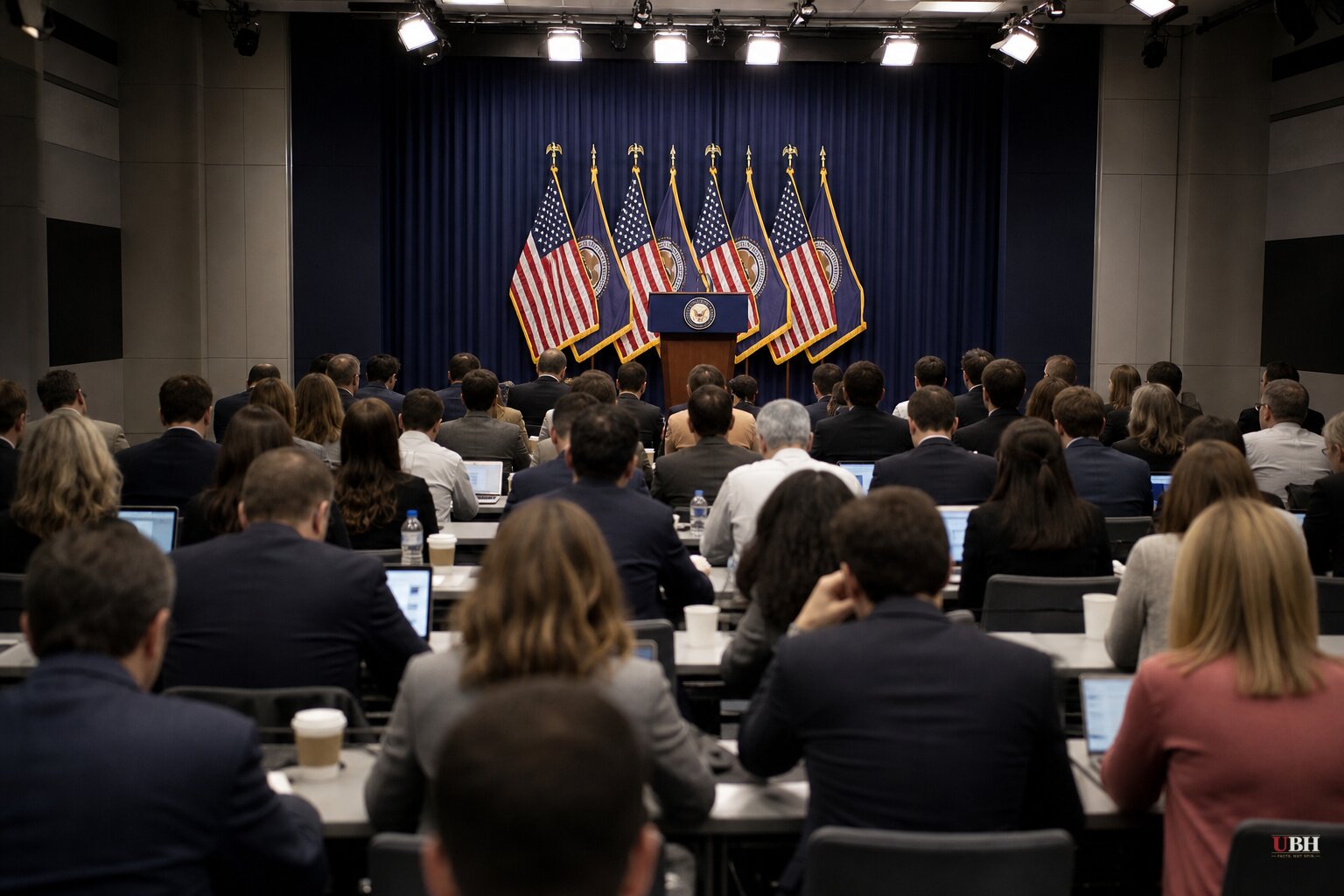
A competing set of labor numbers is complicating the official story on jobs. The unemployment rate sits at 4.1%, its lowest since spring. A separate measure of "functional" unemployment just logged its fourth consecutive monthly increase, hitting 24.9% in July.
Both numbers come from real data. They're measuring different things, and the gap between them is the story going into Friday's August jobs report.
The Official Number
The Bureau of Labor Statistics put the jobless rate at 4.1% in July, down from 4.2% in June and 4.5% in November. That's already better than the Fed's own median projection for 2026, which was 4.3%, and below its longer-run estimate of 4.2%, according to Crypto Briefing's read of the central bank's June projections.
Federal Reserve Chairman Kevin Warsh told the Fed's Jackson Hole symposium in Wyoming that current conditions are "consistent with full employment," a signal the central bank's attention is shifting almost entirely to inflation, not jobs. Initial jobless claims backed that up: they fell to 206,000 for the week ending Aug. 15, according to the Labor Department, in a range economist Mohamed El-Erian called evidence of "ongoing labor market resilience." State claims hit their lowest level since September 1969 last month.
Nonfarm payrolls actually shrank by 23,000 in July. June's gain was revised down to just 20,000, and May's was cut to 63,000. Combined, May and June lost 103,000 jobs in revisions, according to the Bureau of Labor Statistics as cited by Black Enterprise. Labor force participation fell to 61.4% in July, the lowest since early 2021, per Crypto Briefing. When the unemployment rate falls because people stop looking for work rather than because more people get hired, that's not the same as a hot job market.
The Ludwig Institute's Case
The Ludwig Institute for Shared Economic Prosperity (LISEP) tracks something it calls the True Rate of Unemployment, which counts anyone who's jobless, stuck in part-time work they don't want, or earning less than $26,000 a year before taxes as "functionally unemployed." That rate climbed to 24.9% in July, up from 24.7% in June and up 1.3 percentage points since March, LISEP said in an Aug. 20 release.
"We shouldn't read too much into a single month, but four months begin to tell a story," LISEP Chairman Gene Ludwig said. "Functional unemployment is moving higher while workforce participation is moving lower. If this continues, it would suggest the labor market is losing strength despite what we may see in the headline unemployment numbers."
The breakdown by group shows women bearing the brunt: their functional unemployment rate jumped 1.6 points to 31% in July, the highest since March 2021 when the economy was still climbing out of COVID. Men's rate actually fell 0.9 points to 19.5%. By race, Black workers sat at 27.3%, Hispanic workers at 26.7% (down 1.5 points), and white workers at 23.8% (up 0.6 points), according to LISEP data cited by Fortune, CBS News and Black Enterprise.
The Fair Counterargument
Not every economist buys LISEP's framing. Gregory Daco, chief economist at EY-Parthenon, told CBS News that "an unemployment rate that would be in the 20% range does not line up with anything we see in the U.S. economy." LISEP's poverty-wage threshold of $26,000 a year sweeps in a large share of full-time workers who have jobs and aren't looking for new ones, which is a very different situation than someone who's out of work entirely. Critics of the TRU measure argue it conflates low pay with unemployment, inflating a number that then gets compared apples-to-oranges against the BLS rate.
Daco does agree wage growth is soft. The Consumer Price Index rose 3.4% annually in July while wages rose 3.2%, meaning real pay is roughly flat to slightly negative. "One company's wage bill is another person's income, and in turn their capacity to spend," Daco told CBS News, tying that softness to muted consumer spending, which drives roughly two-thirds of U.S. economic output.
What's Actually Driving the Headline Rate Down
Both Fortune and Bytes Europe's reporting point to retiring Baby Boomers and the Trump administration's immigration enforcement shrinking the pool of people counted in the labor force. The breakeven rate, the number of jobs needed monthly just to hold unemployment steady, went slightly negative in the second half of 2025, meaning the economy could shed jobs and still see the rate look fine on paper. Economists expect that to happen again in 2028.
What's Next
Wall Street expects Friday's August jobs report, due Sept. 4, to show payrolls growing somewhere between 45,000 and 55,000, a rebound from July's contraction, with the unemployment rate holding at 4.1%. A rebound in that range would stop the recent deceleration, three straight months of 63,000, then 20,000, then negative 23,000, but wouldn't erase it. Whether payrolls actually clear 50,000, and whether participation keeps sliding, will say more about the real state of hiring than the headline rate by itself.
Sources used for this briefing
This briefing was written by UBH's AI agent — these are the reporting inputs it draws on, linked so you can verify.


