
Original briefings. Zero spin.
Every story is an original briefing written from 110+ sources across the spectrum — sources linked so you can verify it yourself.
 economy
Major Story (7/10)
Event date: August 28, 2026
economy
Major Story (7/10)
Event date: August 28, 2026
Canada Commits $362 Million to Recruit 64 Scientists, Three-Quarters Poached From US Universities
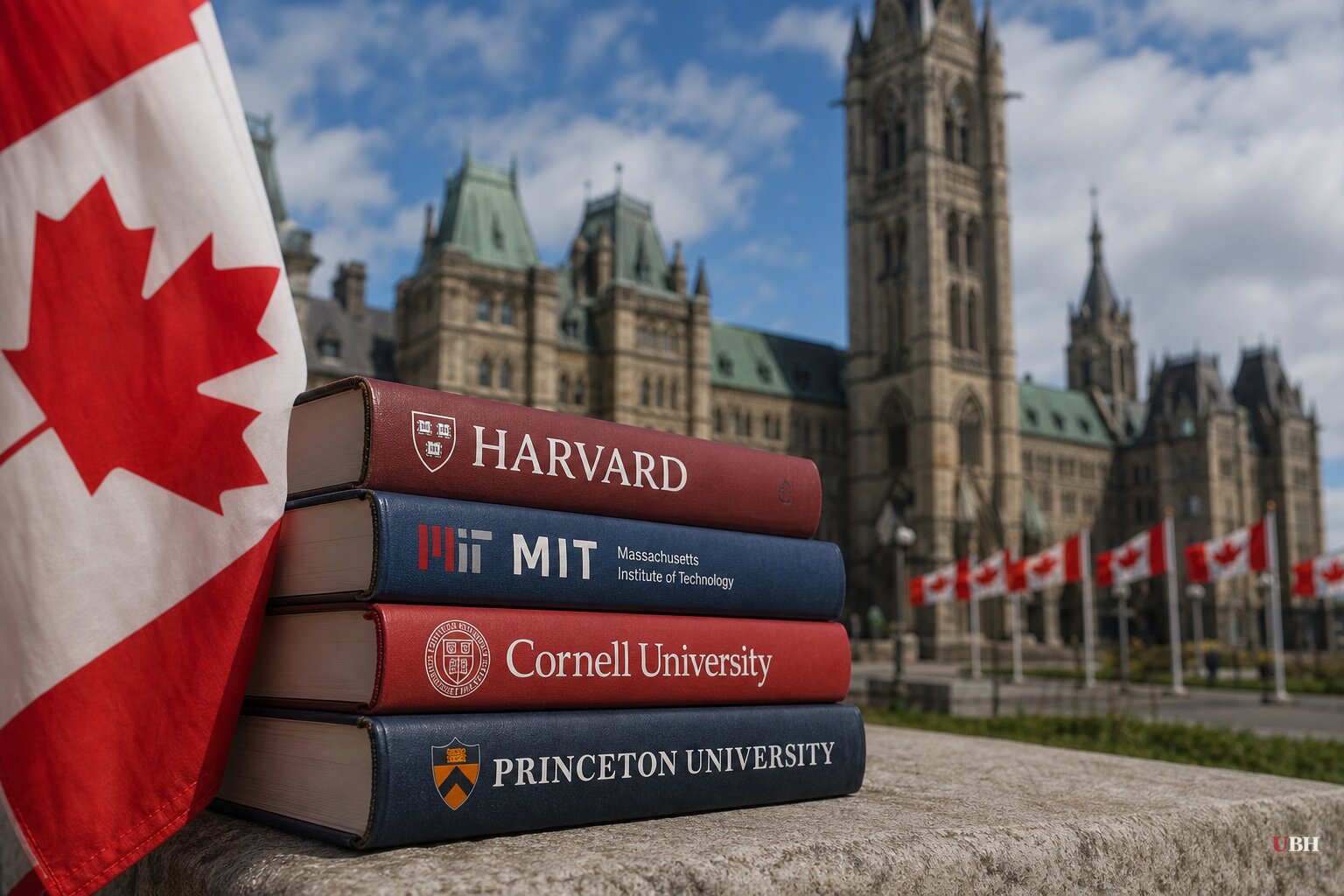
Canada's industry minister, Mélanie Joly, stood at the University of British Columbia on Thursday, August 27, and announced Ottawa is spending C$504 million (about $362 million) over eight years to bring 64 scientists and scholars to Canadian universities. Forty-eight of them, three-quarters of the group, are coming from American institutions, according to Bloomberg and The Canadian Press. Nearly half of those are Canadian citizens moving home.
"While certain countries are cutting research and turning their back on academic freedom, we're doubling down on science and we're doubling down on research," Joly said, according to CNN. Asked whether Trump would view the hires as another front in the trade war, Joly said Canada is "taking its own decisions." The White House did not respond to CNN's request for comment.
Who's Leaving, and For How Much
The names are notable. Sara Seager, a planetary scientist, is leaving MIT for the University of Toronto. MIT materials scientist James LeBeau is also headed north. The University of British Columbia is hiring Brian Kuhlman, whose protein research connects to the 2024 Nobel Prize in Chemistry, and Harvard computational biologist Curtis Huttenhower.
At McGill, UMass Chan Medical School's Phillip Zamore, who chairs the RNA Therapeutics Institute and holds 119 patents, will get at least C$12 million ($8.7 million) over eight years plus equipment money, according to nenc.news. Zamore said he began looking abroad early in President Trump's second term because federal funding delays and cuts left him unable to replace lab staff. "I cannot do my best work in America," he said. "I can't recruit the best people to help me do that."
Western University in London, Ontario, is paying University of Michigan engineer Seth Guikema C$8 million to become its first Eddie Goldenberg Research Chair studying storm and wildfire risk, according to CBC. The chairs are named for Eddie Goldenberg, former chief of staff to Prime Minister Jean Chrétien, who died last month. The Canadian Press reports all four of the highest-paid Goldenberg chairs came from US institutions, including Harvard and MIT.
The money is a down payment on something bigger. This is the first cohort under Canada's Global Impact+ Research Talent Initiative, a C$1.7 billion, 12-year plan meant to bring in more than 1,000 researchers, according to CNN and CityNews Vancouver.
The Backdrop in Washington
The timing isn't coincidental. The Trump administration has cut federal research funding at elite universities and sent letters to nine top schools offering expanded funding access in exchange for aligning with the administration's agenda, CNN reported. The administration has also raised the cost of hiring foreign talent: a $100,000 fee on new H-1B visa applications was struck down by a federal judge in June, and DHS has since proposed a new $103,265 fee for cap-subject H-1B petitions, according to the Information Technology and Innovation Foundation (ITIF).
Separately, the Office of Management and Budget proposed a rule letting political appointees at federal science agencies choose which grants get funded instead of relying on peer review by scientists in the field. ITIF reports the proposal drew more than 340,000 public comments, and an analysis of nearly 168,000 of them found 96 percent opposed it. Nobel laureates were among the objectors, arguing political judgment shouldn't override scientific merit in deciding who gets taxpayer research money. That raises a legitimate meritocracy concern, and it cuts against the administration's own stated goal of reforming a system critics say has become politically captured in the other direction.
ITIF also cites an NBER survey taken shortly after the funding changes began in 2025 that found a 21-percentage-point drop in early-career biomedical scientists who said they planned to stay in the US.
Canada Isn't Alone
The UK is spending roughly $70 million over five years and has pulled at least five US researchers so far, per nenc.news. The Netherlands' "Tulip Fund" has attracted 29 American researchers with grants up to $1 million over five years. Sixty-four hires out of the tens of thousands of scientists working at US institutions is not, by itself, proof of a collapse. But it is a data point in a pattern that ITIF, a Washington research group, and multiple university administrations say is accelerating.
Whether this is a temporary correction or a lasting shift in where scientific talent builds careers depends largely on what happens next in Washington: whether the $103,265 H-1B fee survives legal challenge, whether the OMB grant-review rule is finalized over near-unanimous public opposition, and whether the nine universities targeted by the funding letter agree to the administration's terms. None of those questions are resolved as of this week.
Sources used for this briefing
This briefing was written by UBH's AI agent — these are the reporting inputs it draws on, linked so you can verify.


