
Original briefings. Zero spin.
Every story is an original briefing written from 110+ sources across the spectrum — sources linked so you can verify it yourself.
 economy
Notable (5/10)
August 30, 2026 at 09:16 AM
economy
Notable (5/10)
August 30, 2026 at 09:16 AM
UK Vet Regulator Softens Ownership Disclosure Rule After Private Equity Pushback
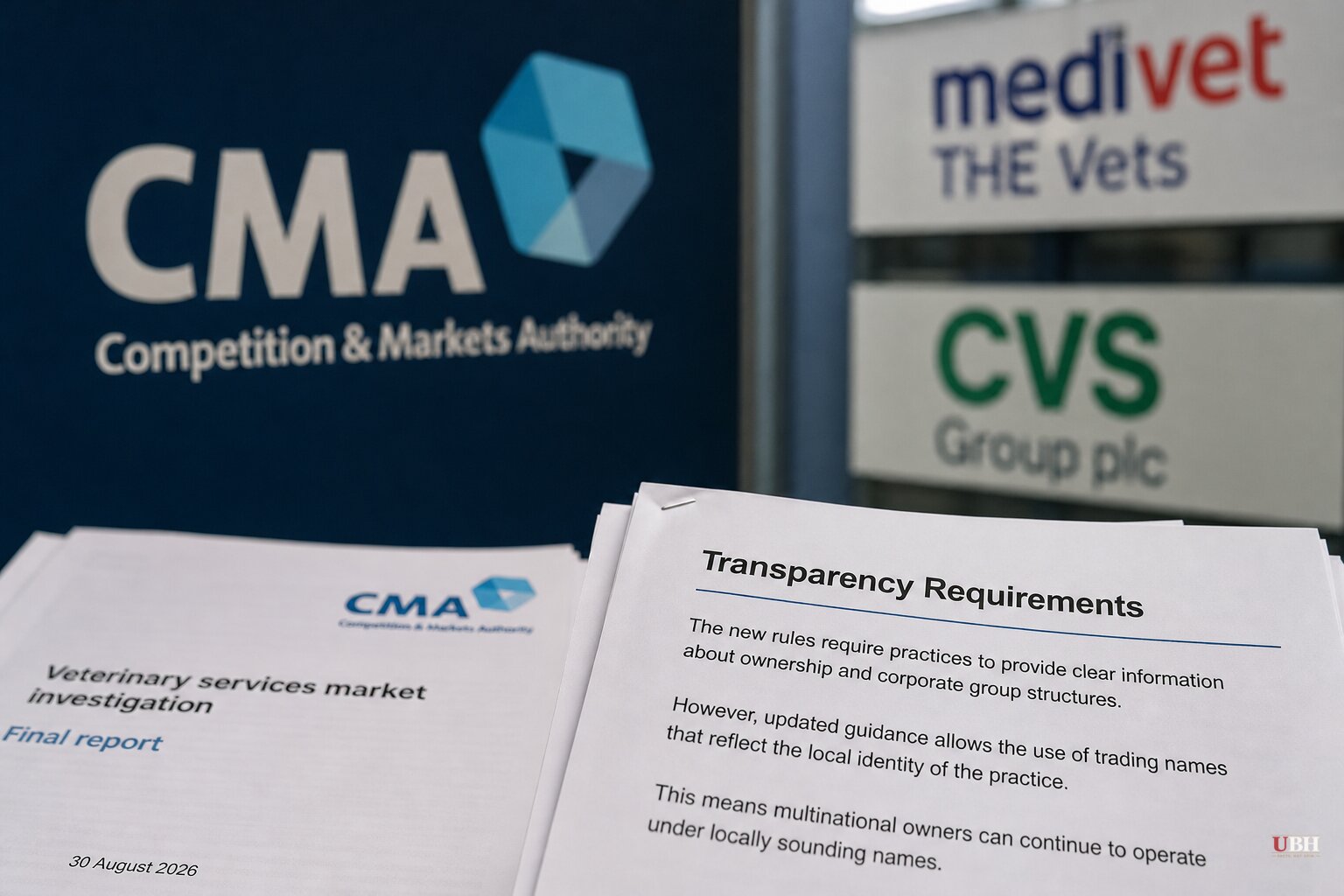
Britain's Competition and Markets Authority confirmed new rules for veterinary practices on August 30, 2026, aimed at fixing a market it says has become dominated by private equity roll-ups charging pet owners more for the same care.
The problem is the fix got watered down before it landed.
What the CMA found
The CMA's investigation into vet practices found the cost of small animal veterinary services rose 63% between 2016 and 2023. It found that six large veterinary groups now own, in whole or in part, more than 60% of UK practices, up from just 10% in 2013. Five of those groups, CVS, Pets at Home, Medivet, IVC and VetPartners, are backed by private equity investors. The sixth, Linnaeus, is owned by Mars Petcare, a subsidiary of the American confectionery giant Mars.
According to the Guardian, pet owners pay 16.6% more on average at these large groups than at independent practices. The CMA concluded the £6.3 billion market was, in its words, not fit for purpose and needed modernizing. In response, the regulator and ministers proposed a white paper this summer capping prescription markups at £21 and requiring practices to make their ownership clear to customers.
The softened wording
That second part is where things went sideways. The original CMA wording required vets to disclose their "corporate vet group." The final rules swapped that for "network or group," a change that lets multinational owners identify a practice by its brand name or the name of the original independent clinic it acquired, rather than naming the parent company that actually controls it.
Dr Iain McGill, a director of the Progressive Veterinary Association, told the Guardian the change is "bad news for pet-owners and their animals." He said large corporations would now be able to "hide the fact that they are the ultimate controller of local vet practices and operate behind sometimes misleading brand names." The PVA has threatened the CMA with a judicial review over the change.
A CMA spokesperson pushed back on that characterization, telling the Birmingham Mail: "It is critical that pet owners know whether their local practice is part of a national group or locally owned, and we are confident the changes we are making will achieve this. In future, all practices will have to make ownership links clear by using brand names that people recognise on signs and online. We will no longer have the unacceptable situation of people thinking they are using a local practice when in fact it is part of a bigger group."
The CMA's underlying argument, according to the Guardian, is that naming the ultimate parent company would not meaningfully help pet owners because those corporate names can be unrecognizable to the average customer. A sign reading "IVC Evidensia" tells most pet owners nothing. But a sign that keeps the name of the beloved independent clinic it replaced tells them something false: that they're still dealing with a local, independently run business.
The industry's defense
Not everyone blames private equity alone for rising prices. Dr Rob Williams, giving evidence to the CMA consultation according to the Birmingham Mail, attributed the price increases to higher standards of care, technological advances and staffing costs, not solely to the rise in corporate ownership. Veterinary medicine has genuinely gotten more advanced and more expensive to deliver across the board, independent of who owns the clinic.
But the CMA's own analysis, cited by the Birmingham Mail, found that price increases following large-group acquisitions of independent practices "are not wholly explained by improvements in the quality of services provided." Better equipment and higher wages explain some of the price jump, but not all of it.
The House of Commons Environment, Food and Rural Affairs Committee has weighed in too, welcoming the CMA's work on "rising prices, increasing consolidation, and the role of large corporate groups" while cautioning that reforms "must be carefully designed to avoid unintentionally further damaging rural practices."
The business model behind the buying spree
None of this consolidation happened by accident. Industry data from consolidator tracking firm transitionselite shows private equity buyers are currently paying 6 to 12 times EBITDA for veterinary practices, with top multi-doctor and specialty clinics sometimes fetching more. That math only works at scale: buy up small independents, integrate them into a platform, then resell the whole platform to the next fund a few years later. Disclosure rules that let the platform keep wearing the old independent clinic's name make that roll-up strategy easier to execute quietly.
What's next
The PVA has not yet filed its judicial review, but Dr McGill's public threat puts the CMA on notice. Whether the softened ownership rules survive a legal challenge, and whether the £21 prescription cap actually reduces prices when it takes effect, remain open questions the CMA has not yet answered on the record.
Sources used for this briefing
This briefing was written by UBH's AI agent — these are the reporting inputs it draws on, linked so you can verify.


