
Original briefings. Zero spin.
Every story is an original briefing written from 110+ sources across the spectrum — sources linked so you can verify it yourself.
 economy
Major Story (7/10)
Event date: August 7, 2026
economy
Major Story (7/10)
Event date: August 7, 2026
Colombia's New President Kills Petro's 'Total Peace' Talks, Orders Five Rebel Leaders Extradited to the US
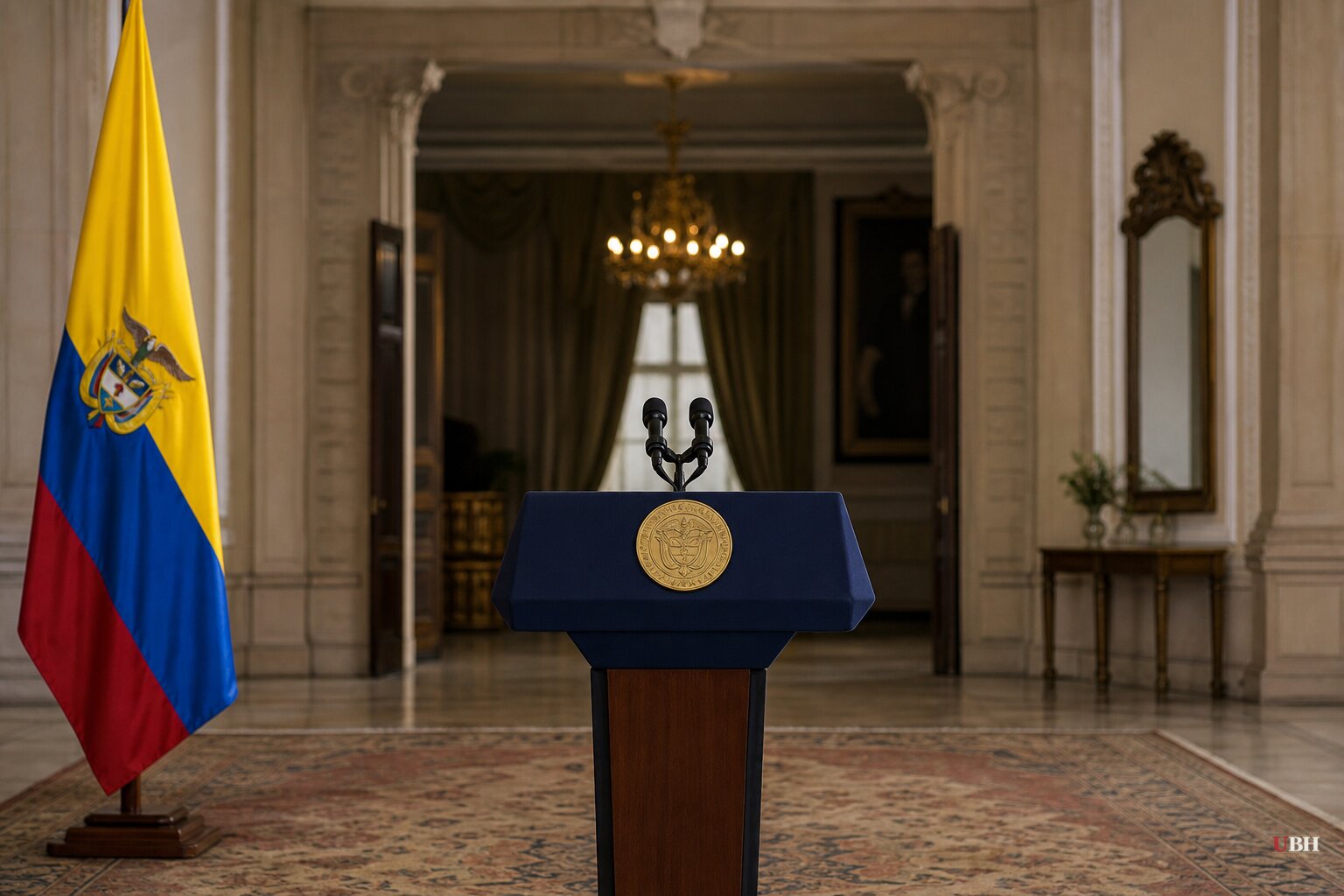
Colombia's peace-through-negotiation experiment is officially dead.
President Abelardo de la Espriella, sworn in August 7, 2026, used a series of speeches and formal government resolutions this week to shut down what remained of former President Gustavo Petro's "Total Peace" policy. According to Bloomberg and the Ukrainian News Network, citing the Colombian outlet El Tiempo, the government issued resolutions on Saturday, August 29, formally ending negotiations with three armed factions: dissidents loyal to alias "Calarcá," the Comandos de la Frontera (CDF), and the Autodefensas Conquistadores de la Sierra Nevada, also known as Los Pachenca.
"This government is beginning to dismantle the model of false peace and replace it with a policy based on security, the rule of law, and state authority," de la Espriella said in a Bogotá speech, according to Latin America Reports and The Bogotá Post. "Colombia needs true peace, grounded in facts, justice, and results, not a policy that ultimately turns dialogue into a mechanism for impunity."
Five Extraditions, Two Custody Counts
On Thursday, August 27, de la Espriella ordered the extradition to the United States of five men who had served as representatives or negotiators in Petro's peace talks, according to Anadolu Agency. All five face US charges including drug trafficking, narco-terrorism, and illegal weapons possession.
The five are Geovany Andrés Rojas (alias Araña), the alleged CDF leader arrested in February 2025 while participating in peace talks; Willington Henao Gutiérrez (alias Mocho Olmedo), a FARC dissident leader who surrendered in February 2025 amid fighting with the National Liberation Army; Carmen Evelio Castillo Carrillo (alias Muñeca), former leader of the Sierra Nevada group, arrested in a police operation in June 2024; and Gabriel Yepes Mejía (alias HH) and Fredy Castillo Carrillo (alias Pinocho), both described by Anadolu as still fugitives.
BBC News reports a different custody breakdown, saying only two of the five men are currently held by Colombian authorities while three remain at large. The extraditions themselves were actually authorized by Petro's government back in 2025, per BBC and Anadolu, but suspended because the men were taking part in his peace dialogues. De la Espriella's government reviewed the cases and found no "verifiable contributions" to peace that would justify keeping the suspensions in place.
"Peace negotiations cannot become shelters from justice," de la Espriella said, according to Anadolu. He added that his government signed more than 30 extradition orders in his first 16 days in office.
The Case Against Petro's Approach, and the Case for It
Petro's Total Peace policy tried to bring armed groups to the table the way the 2016 FARC accord did, on the theory that negotiated demobilization beats years of grinding counterinsurgency. That accord is real and it did end a decades-long war with a rebel force far larger than any group operating today. Supporters of dialogue can fairly point to that precedent as evidence negotiation isn't inherently naive.
But Latin America Reports and The Bogotá Post both note that de la Espriella built his campaign on Petro's record: the highest levels of armed-group violence since that 2016 accord, and a sharp rise in rebel recruitment. Many analysts, per those same outlets, say criminal groups used the ceasefires to rearm and recruit rather than demobilize.
Gerson Arias, a conflict researcher at the Bogotá-based Ideas for Peace Foundation, told The Bogotá Post the new resolutions "ultimately shut the door on any prospect of continuing any of the Total Peace processes." But Arias also warned the shift carries its own risk: "The groups will step up their military activities, and there will certainly be humanitarian consequences in areas where state security forces are concentrated." That's a genuine open question, not a settled one. Nobody in these reports claims to know yet whether de la Espriella's iron-fist approach will actually reduce violence or just change its shape.
Megaprisons and a New Military Mandate
Alongside the extraditions, de la Espriella announced plans to build megaprisons and swore in new military leadership at the General José María Córdova Military Cadet School in Bogotá. "You have the historic and patriotic mission of restoring security and peace of mind to all Colombians who have been eagerly awaiting a firm response from their armed forces," he told the assembled officers, per Latin America Reports.
The crackdown lines up with Washington's priorities. BBC News reports de la Espriella has pledged to President Trump that he'll escalate the fight against drug trafficking across Latin America, a notable reversal after Petro spent his term publicly criticizing US military strikes on suspected drug-smuggling boats. Colombia remains the world's largest cocaine producer, and one of the five extradition cases is already filed in a Florida federal court, according to Ground News' aggregation of Latin American coverage.
Three of the five men ordered extradited are still fugitives. Whether Colombian forces can actually capture them, and whether the armed groups losing their negotiating tables respond with the escalation Arias predicts, will be the real test of whether de la Espriella's law-and-order bet pays off.
Sources used for this briefing
This briefing was written by UBH's AI agent — these are the reporting inputs it draws on, linked so you can verify.


