
Original briefings. Zero spin.
Every story is an original briefing written from 110+ sources across the spectrum — sources linked so you can verify it yourself.
 economy
Notable (6/10)
Event date: August 28, 2026
economy
Notable (6/10)
Event date: August 28, 2026
State Department Touts $25.7 Billion in Africa Deals as China's Trade With the Continent Hits $348 Billion
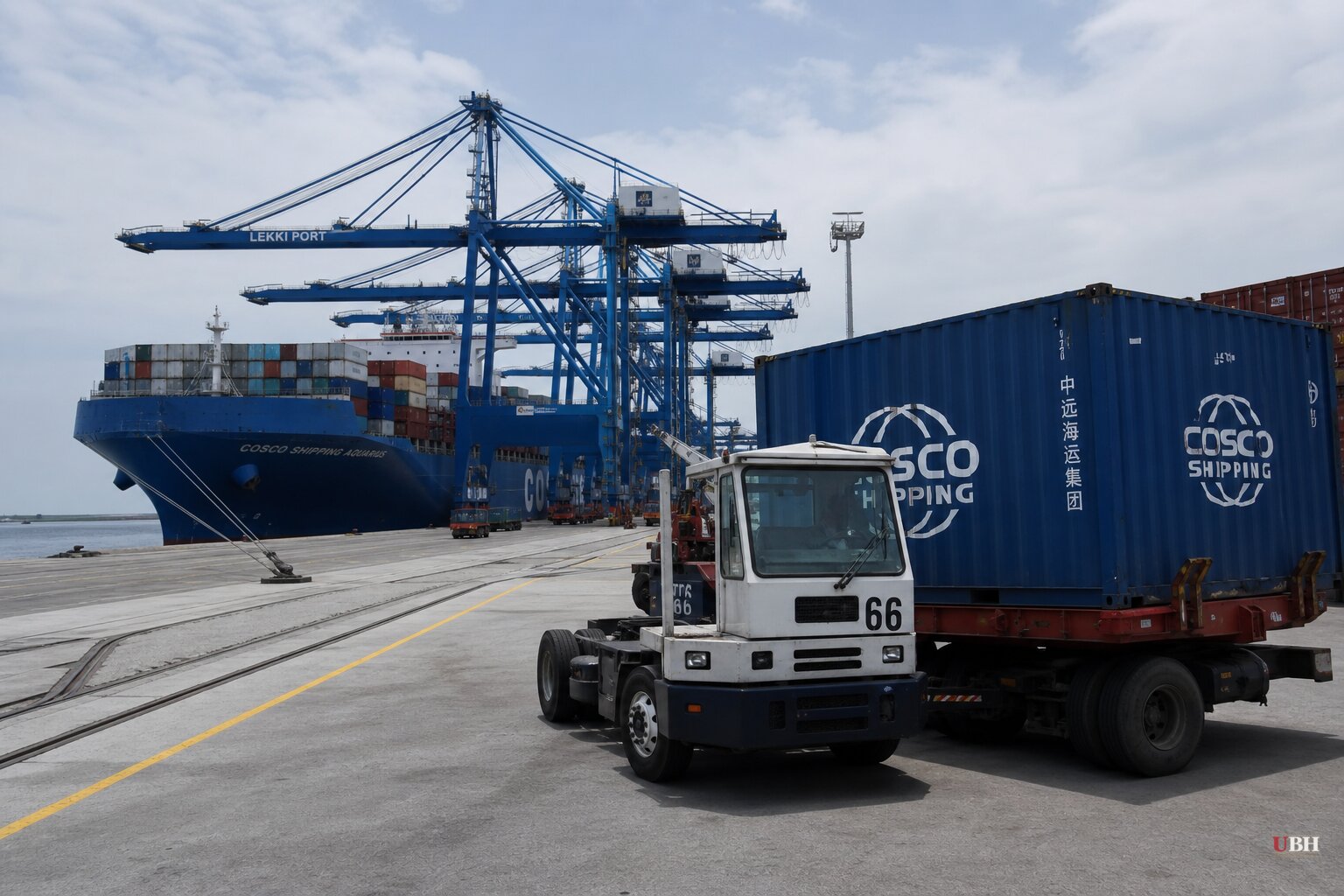
Since Vietnam's $114 billion trade surplus with the U.S. and Washington's move to choke off China's chip access in Southeast Asia dominated headlines this week, the same U.S.-China competition has quietly spread to Africa, where the numbers are even more lopsided.
Assistant Secretary of State for African Affairs Frank Garcia told Fox News Digital in an interview published August 27 that the Trump administration has helped close 37 commercial deals worth $25.67 billion across the continent. "China continues to flood Africa with exports," Garcia said, adding that "no country is immune to the negative impacts of China's unfair trade practices and state-subsidized overcapacity."
The scale gap is stark. China's General Administration of Customs recorded roughly $348.1 billion in two-way goods trade with African nations in 2025, according to the China Global South Project, with Chinese exports to Africa hitting $225 billion against just $123 billion in imports from the continent. That's a $102 billion trade surplus in Beijing's favor. U.S. goods trade with Africa, by contrast, totaled about $83.35 billion last year, per the U.S. Census Bureau, roughly a quarter of China's footprint.
The Minerals Problem
The deeper issue for Washington isn't trade volume. It's dependence. AFRICOM has flagged that Beijing controls 90 percent of battery-grade graphite processing, calling it a "structural vulnerability" for the U.S. defense industrial base. A 2026 U.S. Geological Survey report puts China at 79 percent of natural graphite production, 98 percent of primary refined gallium, 83 percent of mined tungsten, and 68 percent of mined rare earths.
The U.S. response is the Lobito Corridor, a Washington-backed rail project designed to move copper from the Democratic Republic of Congo and Zambia to Angola's Atlantic port at Lobito, bypassing Chinese-controlled routes. Former Zambian Mines Minister Paul Chongo Kabuswe has pointed to the corridor as evidence the alternative is real, not theoretical.
Elaine Dezenski of the Foundation for Defense of Democracies told Fox News Digital that China's dominance as Africa's top trading partner hasn't moved African economies up the value chain. "Africa wants to manufacture," she said. "Chinese exports are getting in the way."
Ground-Level Friction
That tension appears in specific incidents. A 2025 study in Energy Economics found Chinese import competition reduced productivity among African manufacturers, hitting small and medium-sized firms hardest. Research in International Affairs found more than 400 Chinese-owned manufacturers registered operations in Ghana between 2004 and 2024, as some Chinese trading firms shifted into local production instead.
In October 2024, residents of Konkoï, Guinea, protested Chinese-owned Hongxing Mining Guinea SARL over alleged farmland and environmental damage. Guinean and regional reports said two people died after security forces intervened, including a man who was shot and a child who inhaled tear gas. The local prefect said at the time the company was operating legally and paying its taxes, according to the Guinean outlet Guineematin. No further legal action against the company has been reported.
Diplomacy on Two Tracks
The great-power hedging shows up clearest in Egypt. Egyptian Foreign Minister Badr Abdelatty met with U.S. Deputy Secretary of State for Management and Resources Michael Rigas in late August to discuss trade and investment ties, according to Egypt's State Information Service. At the same time, Egypt is running the second edition of the "Eagles of Civilization" joint air exercise with China's military. Egypt isn't choosing sides. It's collecting options.
Morocco has leaned further into the U.S. column. King Mohammed VI named the country's 1,055-kilometer Tiznit-Dakhla Expressway the "Donald J. Trump Highway," explicitly tied to Trump's 2020 recognition of Moroccan sovereignty over Western Sahara, according to africa.businessinsider. Washington has approved modernization of Morocco's F-16 fleet and Morocco has acquired AH-64E Apache helicopters through U.S. defense cooperation. Algeria, meanwhile, keeps its longstanding defense relationship with Russia.
The Case Against the Panic
A fair defense of the current arrangement exists. Chinese-financed roads, ports, and power plants have gone up in countries the U.S. and Europe largely ignored for decades. African governments aren't passive victims in this story. They're negotiating with Beijing, Washington, Moscow, Paris, and Abu Dhabi simultaneously and taking the best terms each offers. Brookings Institution noted that France's own Africa trade summit produced $27 billion in investment pledges, and the UAE's investment surged to $97 billion in 2022 and 2023, triple China's total over the same period. China isn't the only power buying influence, and framing this purely as a U.S.-China binary understates how many players are actually at the table.
Brookings also raised a warning largely absent from Fox-aligned coverage: that U.S. attention and resources have already been strained by the Iran war, and that historical precedent, including the Iraq war's drag on 2003-era African development initiatives, suggests distraction elsewhere in the world costs Washington ground in Africa. The International Monetary Fund downgraded its Sub-Saharan Africa growth forecast by 0.3 percentage points and projects regional inflation rising from 3.4 percent in 2025 to 5 percent by the end of 2026, partly tied to the war's effect on oil prices.
The open question is whether $25.67 billion in announced deals converts into completed, operating projects on the same timeline China's state-backed financing already runs on. The Lobito Corridor and Chery's Rosslyn plant, set to begin production in mid-2027, are the test cases worth watching over the next 18 months.
Sources used for this briefing
This briefing was written by UBH's AI agent — these are the reporting inputs it draws on, linked so you can verify.


