
Original briefings. Zero spin.
Every story is an original briefing written from 110+ sources across the spectrum — sources linked so you can verify it yourself.
 economy
Major Story (7/10)
August 30, 2026 at 07:21 AM
economy
Major Story (7/10)
August 30, 2026 at 07:21 AM
Sudan's War Spills Into Chad as El Obeid's Refugee Camps Buckle Under New Arrivals
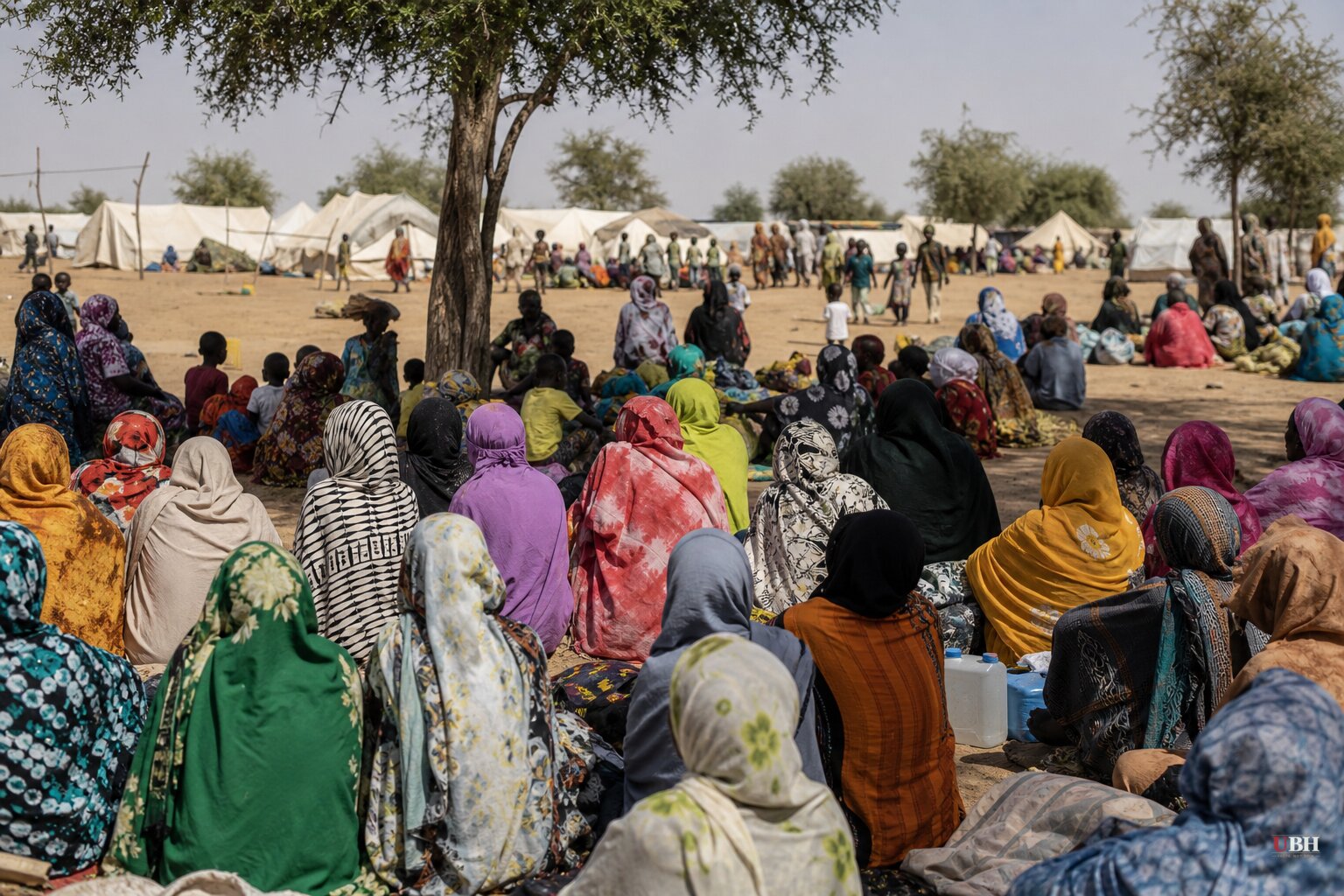
El Obeid's Camps Overwhelmed
More than 15,000 families have arrived in El Obeid since mid-July, adding to over 200,000 who arrived in the first half of 2026, according to government figures cited by Save the Children and reported by the Guardian. Satellite analysis by the Yale Humanitarian Research Lab found 800 new tents appeared in one camp outside the city between August 4 and 25 alone.
Paul Byars, Sudan country director for the Danish Refugee Council, told the Guardian he watched 450 people arrive in a single morning during a visit last week, and that roughly 85% of newcomers are women and children. The men, he said, mostly stay behind to farm.
A humanitarian volunteer identified by the Guardian only as Maryam, her name changed for safety, said the city, capital of North Kordofan and home to roughly half a million people before the war, is "shockingly overcrowded," with new arrivals showing up traumatized and short on food.
Why El Obeid Is Filling Up
Drone strikes on El Obeid surged in June, prompting UN warnings the city could face a repeat of El Fasher, the Darfur city RSF fighters seized in October 2025 after an 18-month siege that the Guardian says killed more than 10,000 people over two days. Strikes on El Obeid have since fallen, and Sudanese armed forces recaptured a key road north to Khartoum in late July, partially lifting the siege threat.
But fighting continues in the surrounding districts, and drones are still killing civilians. A strike on Kutum in North Darfur killed at least 30 civilians, including women and children, according to the United Nations, as reported by Breitbart.
The Numbers Don't Agree
Different UN bodies are citing different displacement totals, reflecting how hard it is to track a population that keeps moving. The Guardian puts total displacement at 11.3 million, more than a fifth of Sudan's population. Rosemary DiCarlo, UN under-secretary-general for political affairs, told the Security Council on August 24 the figure is roughly 13 million, according to Common Dreams. UN News, citing Education Cannot Wait's mid-year figures, puts it at 14 million. A separate tally cited by Global Issues says 8.6 million have fled the violence since the war began, with fighting displacing another 200,000 people since late 2025 alone, according to the UN's International Organization for Migration.
DiCarlo told the council the true death toll "is likely to be in the hundreds of thousands," and that mass rapes, abductions and killings are "recurring patterns" whose consequences "will be long-lasting and should shock us all."
"A Lack of Action," UN Says
Tom Fletcher, the UN's emergency relief coordinator, told the Security Council on August 24 he would skip his usual three requests — uphold humanitarian law, fund the response, help end the conflict — because the council has "heard those asks again and again." Instead, he said: "Sudan does not suffer from a lack of analysis. It suffers from a lack of action," according to Common Dreams. He said the world sends "drones, weapons, and mercenaries" instead of food, water and medicine.
A Guardian investigation, summarized by Breitbart, found a Colombian mercenary recruitment network supplying the RSF operates through UK-registered firms.
Chad Says Sudan's Air Force Hit Its Territory Twice in Two Weeks
The war is now bleeding across Sudan's western border. Al Jazeera reported that an airstrike near Chad's border with Sudan on August 28 killed at least 12 people and wounded seven, with a Chadian security source saying it targeted a fuel market used by the RSF. Chad's government blamed Sudan's army.
Chad's military said an earlier strike hit a convoy more than 100km inside Chad's Ennedi region, though it caused no Chadian casualties. Chad has since raised its alert level near the border and deployed roughly 100 armored vehicles and signal-jamming trucks to the area, Al Jazeera reported.
Sudan's Foreign Ministry said it was "surprised" by the allegations "before any professional and independent investigation into the circumstances of the incident," and said its forces act to "protect Sudan's sovereignty, security and safety" without targeting neighboring territory. The US embassy in Khartoum, however, also blamed the Sudanese army for the strikes, according to Al Jazeera. No independent investigation has been announced. Nearly one million displaced Sudanese are now in Chad, where Al Jazeera reports they face a separate water crisis.
A $22 Million Investment Against an Enormous Gap
Amid the deterioration, Education Cannot Wait announced a three-year, $22 million investment to restore schooling for 200,000 children in West Darfur, South Kordofan and Gedaref states, according to UN News. The fund's director, Maysa Jalbout, called education "one of the most powerful tools in the humanitarian toolbox."
The scale of need dwarfs the funding. UNICEF's mid-year update found 81% of Darfur's schools remain closed, 70% of children there aren't attending school, and some have missed nearly 500 days of learning. Roughly 8 million of Sudan's 17 million school-age children are currently out of school, per UN News. The program, run by Save the Children with Plan International and local partners, is a fraction of what Education Cannot Wait says it needs. The group has launched a $600 million global campaign to reach 10 million children in crisis zones worldwide.
What's Unresolved
President Trump said Saudi Crown Prince Mohammed bin Salman personally asked him to broker a Sudan peace deal, and that he has begun working on one, according to Breitbart. No framework, timeline or public terms have been released. Whether that effort produces anything concrete, or whether Chad orders an independent probe into the August 28 strike, or whether El Obeid's camps keep growing past their current capacity, are the open questions heading into the next Security Council session on Sudan.
Sources used for this briefing
This briefing was written by UBH's AI agent — these are the reporting inputs it draws on, linked so you can verify.


