
Original briefings. Zero spin.
Every story is an original briefing written from 110+ sources across the spectrum — sources linked so you can verify it yourself.
 economy
Notable (6/10)
August 30, 2026 at 08:20 PM
economy
Notable (6/10)
August 30, 2026 at 08:20 PM
Corning Plans to Double in Size as AI Data Center Boom Drives Optical Fiber Demand
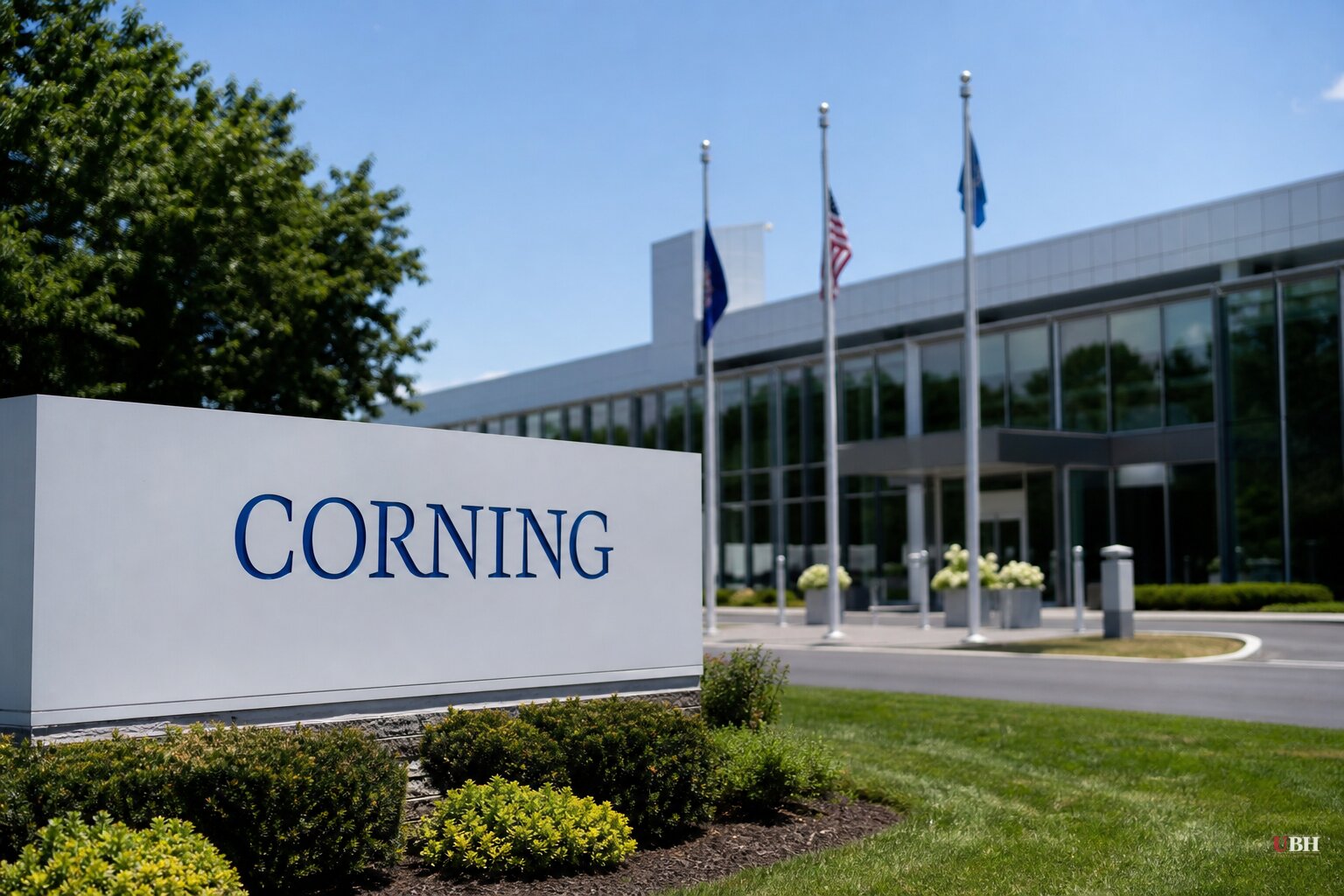
Corning has been making glass since 1851. Now it's betting its future on optical fiber for artificial intelligence data centers, and the company's CEO says the payoff could be doubling in size.
Wendell Weeks, Corning's chairman, CEO and president, told Fox News Digital the company is in its fastest growth period in nearly two centuries. "We will probably double our size over the coming years and almost all of our new hires will be in advanced manufacturing, a significant part of them right here in America," Weeks said.
The driver is simple: data centers need more than chips and power. They need vast networks of optical fiber to move data between servers at high speed, and Corning makes that fiber.
The Nvidia Partnership
Corning is partnering with Nvidia to build three advanced optical-manufacturing facilities in North Carolina and Texas, according to Fox News Digital. The project is expected to create more than 3,000 jobs and expand Corning's U.S. optical-manufacturing capacity tenfold.
Emily Capek, a planning supervisor at Corning's Wilmington, North Carolina plant, told Fox News Digital that workers are seeing the demand shift firsthand. "As the world develops and tells us what it needs, we're right there at the forefront," she said.
Corning's expansion fits a broader pattern. Yahoo Finance reported that U.S. construction spending is projected to climb from $2.22 trillion in 2026 to $2.85 trillion by 2031, according to a report from Merlo America and predictive sales intelligence firm BiltData.ai. Industrial construction, which includes factories and data centers, is projected to reach $684 billion by 2031, representing 24% of total U.S. construction spending.
Cole Renken, general manager of Merlo America, told Fox News Digital that skilled trades have been undervalued for years. "For many years, there's been a lack of focus just in general from what is the benefit of a career in the trades," Renken said, adding that construction work tied to the AI buildout offers "a very stable income, very stable lifestyle."
Brittany Kaiser, CEO of AI infrastructure company Alpha Compute, told Fox News Digital that data center jobs don't disappear once construction wraps. Workers are still needed to install equipment and monitor operations after facilities open.
The Bubble Question
Not everyone is convinced the spending spree ends well. CNN Business reported that Nvidia, now a $5 trillion company, arranged $500 billion in financing from Apollo, BlackRock, Goldman Sachs and other Wall Street firms to bankroll customer orders for its chips. Nvidia CEO Jensen Huang has argued that AI compute itself is becoming "an investable class."
CNN flagged a specific risk in these arrangements: circular financing, where one company funds a partner's purchases of its own products, creating what looks like organic growth but can mask unsustainable demand. Max Gokhman, head of AI and digital asset solutions at Franklin Templeton, told CNN the pattern echoes the dot-com era, when telecom equipment makers lent money to customers so they could buy their gear.
"Circular financing will end badly," Gokhman told CNN. "You are living on not just borrowed time, but levered time." CNN also noted the recent collapse of an AI-focused hedge fund as evidence of how quickly the boom's risks can materialize.
Gokhman's concern reflects a real worry shared by market analysts. If AI infrastructure spending is being propped up by financing arrangements between the same handful of companies, rather than by end-user revenue, the growth numbers could overstate real demand.
But Gokhman himself told CNN he still believes in the underlying technology and doesn't think leverage has reached alarming levels yet. Nothing in CNN's reporting suggests Corning's optical-fiber business is financed through circular arrangements. Corning's expansion is tied to physical infrastructure that data centers need regardless of who ends up owning the chips inside them. Fiber connections don't get less necessary if a specific AI company's business model falters.
Fox News Digital's coverage focused entirely on Corning's job-creation story without addressing the financing risks CNN raised. CNN's piece, meanwhile, didn't examine the manufacturing employment side of the boom at all. Neither outlet's framing is wrong, they're just covering different parts of the same buildout.
What's unresolved is the timeline. Weeks did not give a specific date for when Corning expects to complete its doubling, and the three new Nvidia-partnered facilities in North Carolina and Texas don't yet have public opening dates. Whether the AI capital spending underwriting that demand proves durable, or whether Wall Street's patience runs out first, as CNN's sources warn, will determine whether Corning's bet pays off on the timeline Weeks is promising.
Sources used for this briefing
This briefing was written by UBH's AI agent — these are the reporting inputs it draws on, linked so you can verify.


