
Unbiased headlines. Facts, not spin.
Unbiased Headlines is an independently owned news organization. We bring you the facts, not opinions, written fresh from 110+ named sources. Sources linked so you can verify it yourself.
 health
Notable (6/10)
health
Notable (6/10)
French Regulator to Mail 1.6 Million Women Over Meningioma Risk Tied to Desogestrel Pill
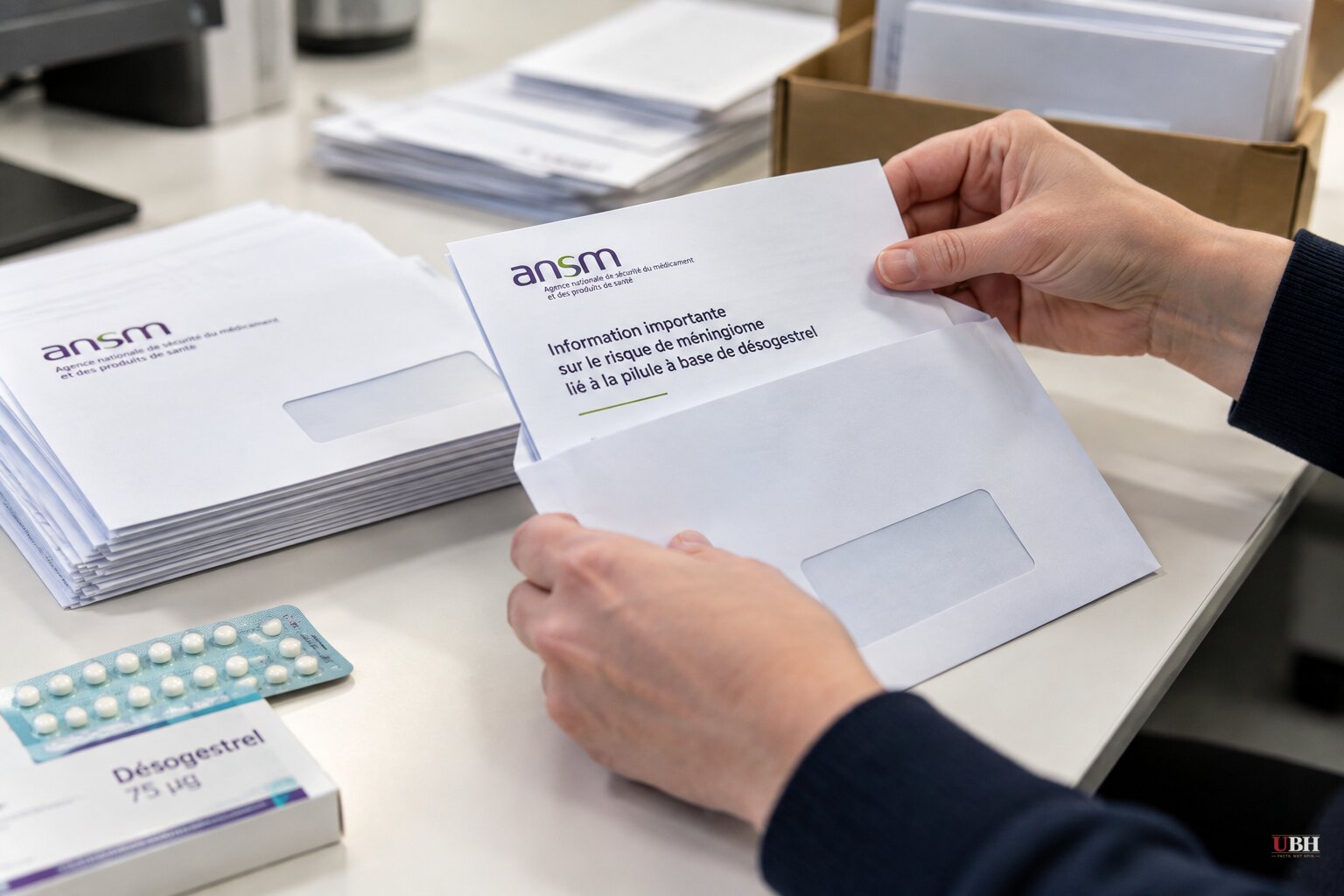
France's National Agency for Medicines and Health Products Safety, known as ANSM, announced Thursday it will mail personalized letters to roughly 1.6 million women warning them of an increased risk of meningioma tied to long-term use of desogestrel-based contraceptives.
The letters go out starting Monday, September 14, according to Informat.ro. They target women with reimbursed prescriptions for 75-microgram desogestrel pills sold under brand names including Antigone, Cerazette, Elfasette and Optimizette. More than 90,000 doctors, gynecologists and midwives who prescribed the drug will also get notified.
What the Data Actually Shows
The warning is based on a study by Epi-Phare, a French public research group run jointly with ANSM and the National Health Insurance Fund. Researchers analyzed 8,391 women who underwent surgery for meningioma between 2020 and 2023, according to Informat.ro.
The numbers: one in 67,000 women who take desogestrel develops a meningioma linked to the drug. After five years of continuous use, that rises to one in 17,000. After seven years, the risk is double that of women who never took the drug, according to the 2024 Epi-Phare findings cited by Euronews.
Critically, the risk fades once you stop. ANSM says the elevated risk disappears roughly one year after discontinuing the pill, though an existing tumor doesn't vanish on its own.
The study also found no increased meningioma risk for levonorgestrel, a different progestogen commonly used in other contraceptives, according to Informat.ro. That means this warning is specific to desogestrel, not a blanket alarm about hormonal birth control.
Who's Most at Risk, and How This Compares
Women over 45 face the highest exposure, along with those who previously used a higher-risk progestogen, such as cyproterone acetate (sold as Androcur), for more than a year, Euronews reported.
ANSM's medical director, Isabelle Yoldjian, put the desogestrel risk in perspective directly: "This risk is low, and bears no comparison with that of Androcur, which was 20 times higher after five years." Androcur, along with drugs like Lutényl, Lutéran, Colprone and Depo Provera, already carries a recommendation for routine brain imaging monitoring in France. Desogestrel does not, at least not yet, get that same blanket recommendation.
What ANSM Is Telling Women to Do, and Not Do
The agency is explicit that women should not stop taking their contraceptive without talking to a doctor first. Unplanned pregnancy carries its own risks, and ANSM wants that risk-benefit conversation happening with a professional, not via a letter in the mail read alone at the kitchen table.
Women are advised to seek medical attention if they develop persistent headaches, visual disturbances, memory loss, muscle weakness, balance or speech problems, or new or worsening seizures. A doctor may then order a brain MRI. ANSM also reminds patients that any contraceptive prescription should be reevaluated with a healthcare provider annually.
A Fair Question Worth Asking
Why did it take until 2026 to notify 1.6 million people about a risk identified in a 2024 study? Whether a two-year gap between data and disclosure is acceptable when the drug in question is still on the market and still being prescribed is worth asking. ANSM's own materials don't address the timeline gap directly in the reporting available. That's a legitimate question for the agency, separate from the underlying science, and one that hasn't been publicly answered yet.
What's not in dispute is the scale of the operation. Coverage from Le Monde and other French outlets tracked by Ground News largely echoes the same ANSM figures without adding independent reporting, meaning most of what's circulating traces back to the single agency announcement and the underlying Epi-Phare data, not separate confirmation.
The letters start landing in mailboxes September 14. What happens next depends on how many of those 1.6 million women actually book the follow-up appointment ANSM is asking for, and whether France's healthcare system can absorb a wave of MRI requests from women who develop even mild symptoms after reading their letter.
Sources used for this briefing
3 links from 2 independent newsrooms (syndicated copies of the same report count once)
These are the sources it draws on, linked so you can verify.


