
Original briefings. Zero spin.
Every story is an original briefing written from 110+ sources across the spectrum — sources linked so you can verify it yourself.
 health
Notable (6/10)
Event date: September 5, 2026
health
Notable (6/10)
Event date: September 5, 2026
France's Worst Fire Season in Decades Reignites Legal Fight Over Mandatory Brush Clearing
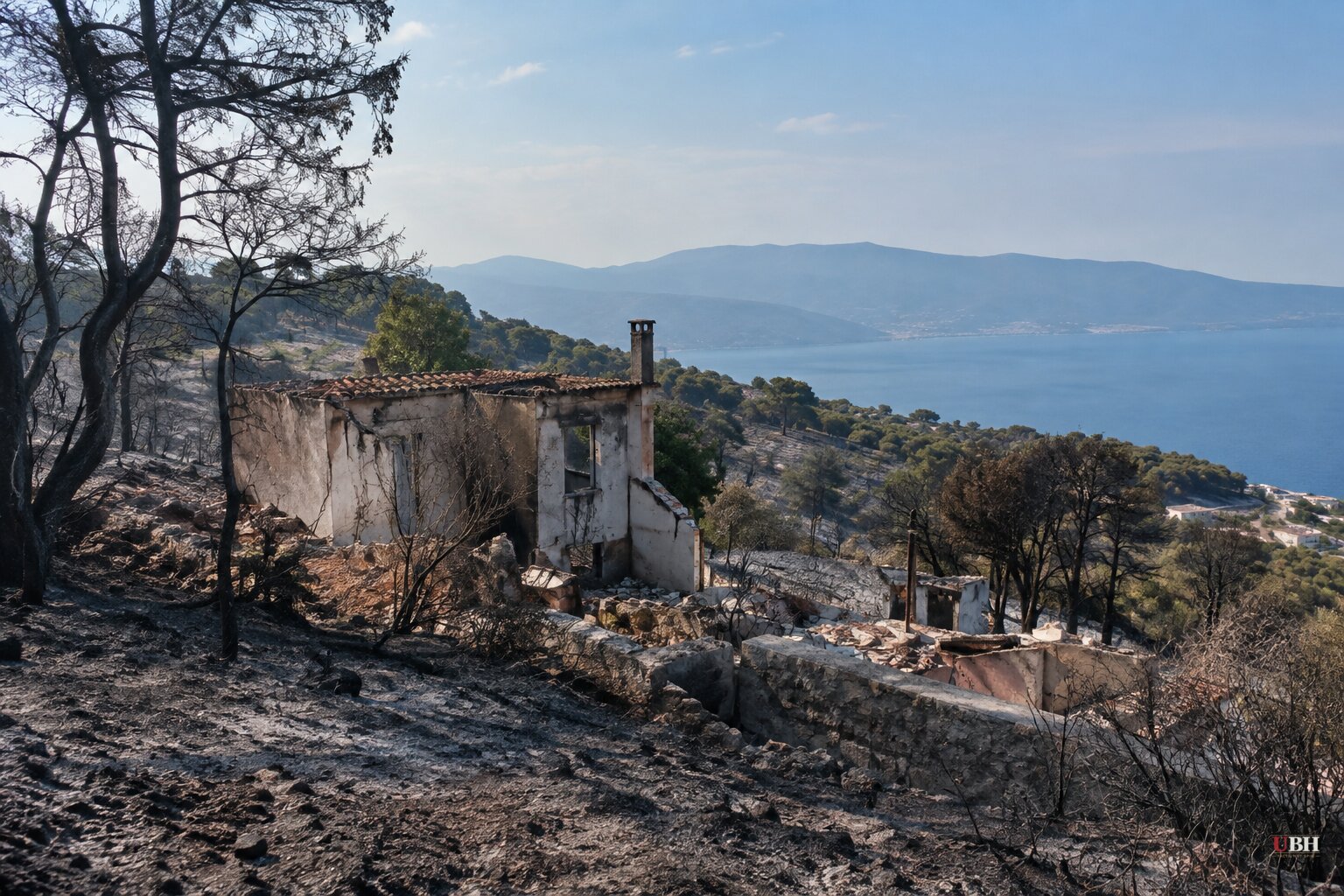
France just lived through its worst wildfire season in decades. More than 96,000 hectares, roughly 237,000 acres, had burned by August 22, according to The Epoch Times. The largest blaze in a generation tore through pine forests southwest of Bordeaux in the Gironde region, and the Gros Bessillon fire in the Var department east of Marseille burned for a month before crews contained it in mid-August.
Across the wider European Union, more than 600,000 hectares burned in the first eight months of 2026, according to the European Forest Fire Information System, cited by UN News. That's below the same period in 2025, which UN News describes as the worst year on record, but it's more than double the 20-year average of roughly 280,000 hectares.
The Brush-Clearing Fight
One prevention rule has become the center of a political fight in France: mandatory brush clearing. Owners of buildings within 200 meters of woodland must clear vegetation within a 50-meter radius of any structure.
State officials point to the 2021 Gonfaron fire in the Var as proof it works. Homes on properly cleared land came through that blaze largely unscathed, according to The Epoch Times.
But the obligation has been under legal challenge even as this summer's fires raged. The Provence-Alpes-Côte d'Azur branch of the League for the Protection of Birds, France's leading bird-protection group, joined the tortoise conservation group SOPTOM in suing over a September 26, 2025 decree from Var Prefect Simon Babre that set the clearing rules. Their concern: the endangered Hermann's tortoise, found on the French mainland only in the Var outside Corsica, along with two shrike species.
On August 11, meeting with farmers whose land had been destroyed by the Gros Bessillon fire, Babre confronted the groups directly. He asked them to withdraw the lawsuits, arguing the clearing obligations were already being enforced too loosely, according to The Epoch Times.
The bird-protection group says that framing misses the point. "We do not contest the usefulness of the legal clearing obligations," Anaël Marchas, a legal officer with the group's Var branch, told The Epoch Times. "What poses a problem for us today is the way these operations are going to be carried out." Heavy mechanical clearing during the tortoise's breeding season can kill large numbers of them on a single plot.
Marchas didn't call for scrapping the rule. "There is a need to carry out these clearing operations because public safety is at stake," he said, while arguing that wildfire prevention and biodiversity protection shouldn't be treated as a zero-sum fight. As of the available reporting, no court ruling on the lawsuit has been announced, leaving the underlying legal dispute unresolved heading into next fire season.
Human Cause, Climate Conditions
Breitbart has reported that French authorities estimate roughly 90 percent of the country's wildfires are started by human activity, framing that figure as undercutting what it calls a media narrative that blames climate change for the fires. That statistic, about how fires start, is real. But it doesn't address a separate question: how far and how fast a fire spreads once it's burning.
UN News, citing the same wildfire data, makes that distinction explicit. Human activity causes most ignitions, but the spread, speed and intensity of fires are strongly affected by warmer, drier conditions and changing land use. Both things can be true at once, and treating the ignition statistic as a rebuttal to the spread-and-intensity point conflates two different claims.
Arrests and Spreading Risk
French authorities have arrested people in connection with this summer's fires throughout the season, with Breitbart reporting roughly 400 arrests at one point and a related Epoch Times report putting the cumulative total at 474 people. Breitbart also reported that an Algerian migrant already under a deportation order was accused, not convicted, of burglarizing homes evacuated because of the Gironde fires, and that the heat from those fires detonated forgotten stocks of World War II shells in one burning town. Breitbart additionally reported that rusting World War I and II ordnance uncovered by the flames has posed a danger to firefighting crews across the continent.
The risk has also moved north. A wildfire broke out in Scotland's Cairngorms in mid-July and burned for over a month before the Scottish Fire and Rescue Service stood crews down, according to UN News. More than 500 firefighters, backed by aircraft and bulldozers digging firebreaks, fought the blaze after it pushed into dry peat and threatened the village of Nethy Bridge, prompting Police Scotland to declare a major incident and evacuate many of the town's 600 residents. "We were very fortunate that the wind remained from the west and took the fire towards the hills, otherwise we would have had a serious threat to property and possibly life," resident James MacEwan told UN News. Will Hayes, a researcher with the UK's Leverhulme Centre for Wildfires, Environment and Society, said traditionally wetter, cooler regions in Northern and Central Europe are now seeing more frequent windows of fire risk. Belgium also fought a fire that burned more than 27 square kilometers in the High Fens region, per Breitbart.
The French court fight over brush clearing will likely set a template other fire-prone regions watch closely: whether wildfire-prevention rules can survive legal challenges grounded in species protection, and whether prefects like Babre can force faster compliance without further litigation. No ruling date has been reported.
Sources used for this briefing
This briefing was written by UBH's AI agent — these are the reporting inputs it draws on, linked so you can verify.


