
Original briefings. Zero spin.
Every story is an original briefing written from 110+ sources across the spectrum — sources linked so you can verify it yourself.
 health
Notable (6/10)
September 10, 2026 at 10:20 AM
health
Notable (6/10)
September 10, 2026 at 10:20 AM
New Study Says Melting Permafrost and Wildfires Could Add 0.4°C to Global Warming by 2100
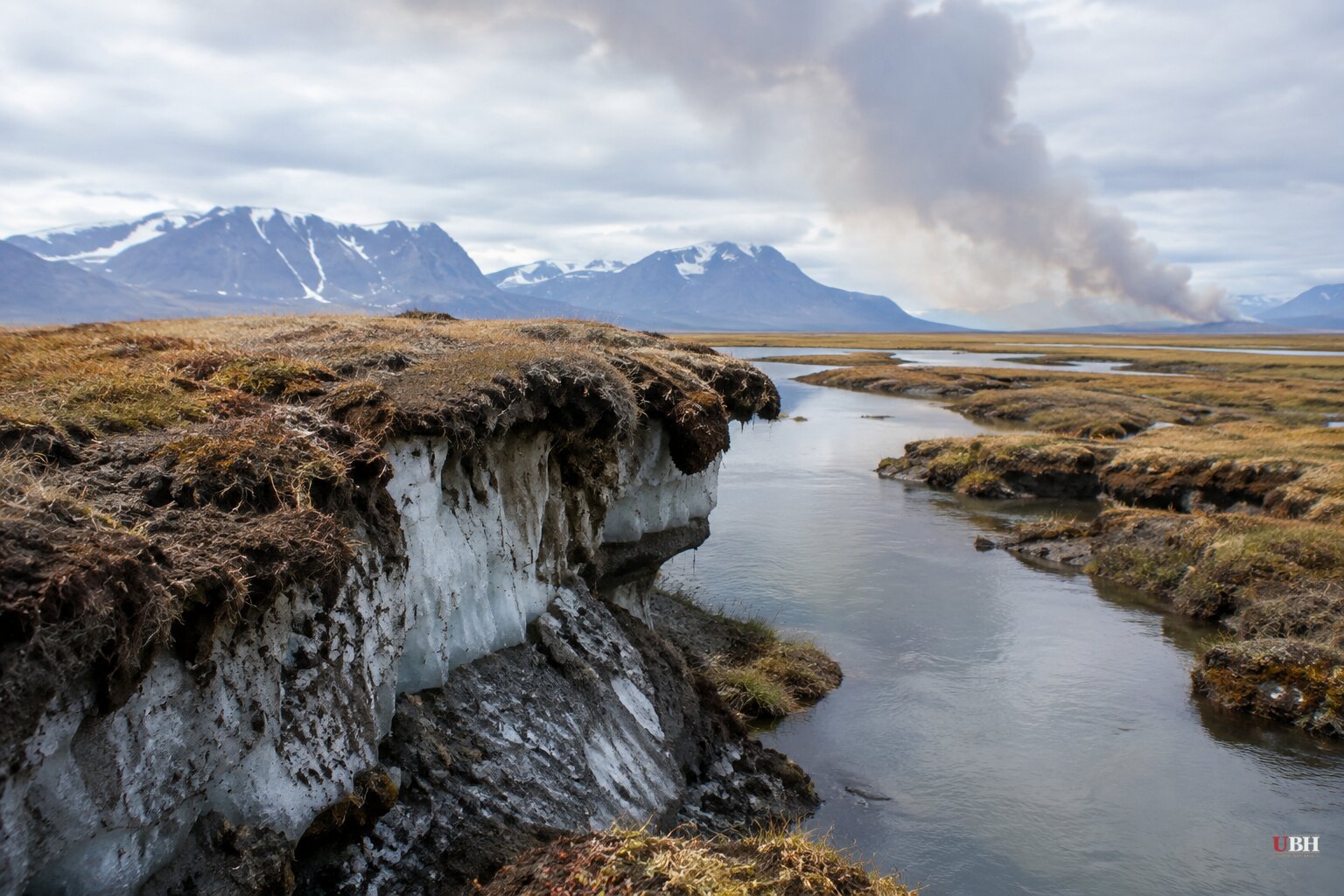
A new study published in Environmental Research Letters says the planet's forests, wetlands and frozen soil are starting to add their own fuel to the climate fire, on top of whatever humans burn.
The paper, titled "Projected amplification of global warming by warming-induced greenhouse gas emissions," was led by Sam Abernethy of Spark Climate Solutions Research, with co-authors from Stanford University, the Environmental Defense Fund and the Woodwell Climate Research Center. It's the largest attempt yet to quantify four natural feedback loops at once: thawing permafrost, bigger wildfires, warmer wetlands and warming inland waters, tracking both CO2 and methane releases from each.
The researchers estimate these natural feedbacks could amplify total global warming by 20% to 30% by 2100, adding an extra 0.2°C to 0.4°C beyond what direct human emissions would cause on their own, according to Phys.org's writeup of the paper.
Under a strong climate action scenario (SSP1-2.6), the paper projects an added 0.2°C, with a stated uncertainty of plus or minus 0.2°C. Under a higher-emissions scenario (SSP4-6.0), it projects an added 0.4°C, again with a plus-or-minus 0.2°C range.
A projected 0.2°C effect with a 0.2°C margin of error means the real number could be anywhere from roughly zero to 0.4°C. Same story on the high end: 0.4°C plus or minus 0.2°C spans 0.2°C to 0.6°C. The paper's authors aren't hiding this. It's baked into their own published numbers, but headlines built around "30% worse" tend to skip the caveat.
Abernethy told the Guardian that "this hidden multiplier is missing from the models guiding climate policy, so those models are likely underestimating how much warming is coming, and overestimating how much carbon we can still afford to emit."
Co-author Rob Jackson of Stanford called the disruption of the planet's carbon cycles a phenomenon now being seen "in real time," telling the Guardian it's "a wake-up call" that needs to be built into the next generation of climate policy. He warned that failing to do so "will make meeting the world's climate goals less and less likely."
Buried in the Phys.org account, which was written by Spark Climate Solutions itself, is a useful takeaway: these natural feedbacks scale directly with how much CO2 humans are still pumping out. Cut direct emissions, and the natural feedback warming shrinks too. It's not a runaway effect independent of human choices. It's tied to the same lever governments already claim to be pulling.
Newsbytes App's summary flattens the nuance into "cutting fossil fuel use is more urgent than ever," without mentioning that the paper's authors themselves say the feedback risk is proportional to emissions. This means current emissions-cutting policy already addresses part of the problem the study describes.
The United Nations acknowledged last week that the 1.5°C threshold from the Paris accord will be breached within the next few years regardless, with the UN saying climate impacts like this summer's heatwaves and wildfires will "strike faster, hit harder and last longer," according to the Guardian. This new study is being pitched as an explanation for why the overshoot could end up worse than current models suggest.
Nobody disputes that permafrost is thawing or that wildfires are getting bigger. Those are physical observations, not modeling assumptions. What's genuinely uncertain, and stated as such in the paper itself, is how big the resulting feedback actually turns out to be, given a margin of error nearly as large as the projected effect. The authors say they want these feedbacks folded into the next round of IPCC assessments and national climate plans. Whether that happens, and whether follow-up research narrows those error bars, is the open question.
Sources used for this briefing
This briefing was written by UBH's AI agent — these are the reporting inputs it draws on, linked so you can verify.


