
Unbiased headlines. Facts, not spin.
Every story is an unbiased news briefing written from 114+ sources across the spectrum — sources linked so you can verify it yourself.
 health
Notable (6/10)
Event date: September 2, 2026
Ross Fire Passes Two Weeks Burning in North Texas, Now Largest Summertime Wildfire in State History
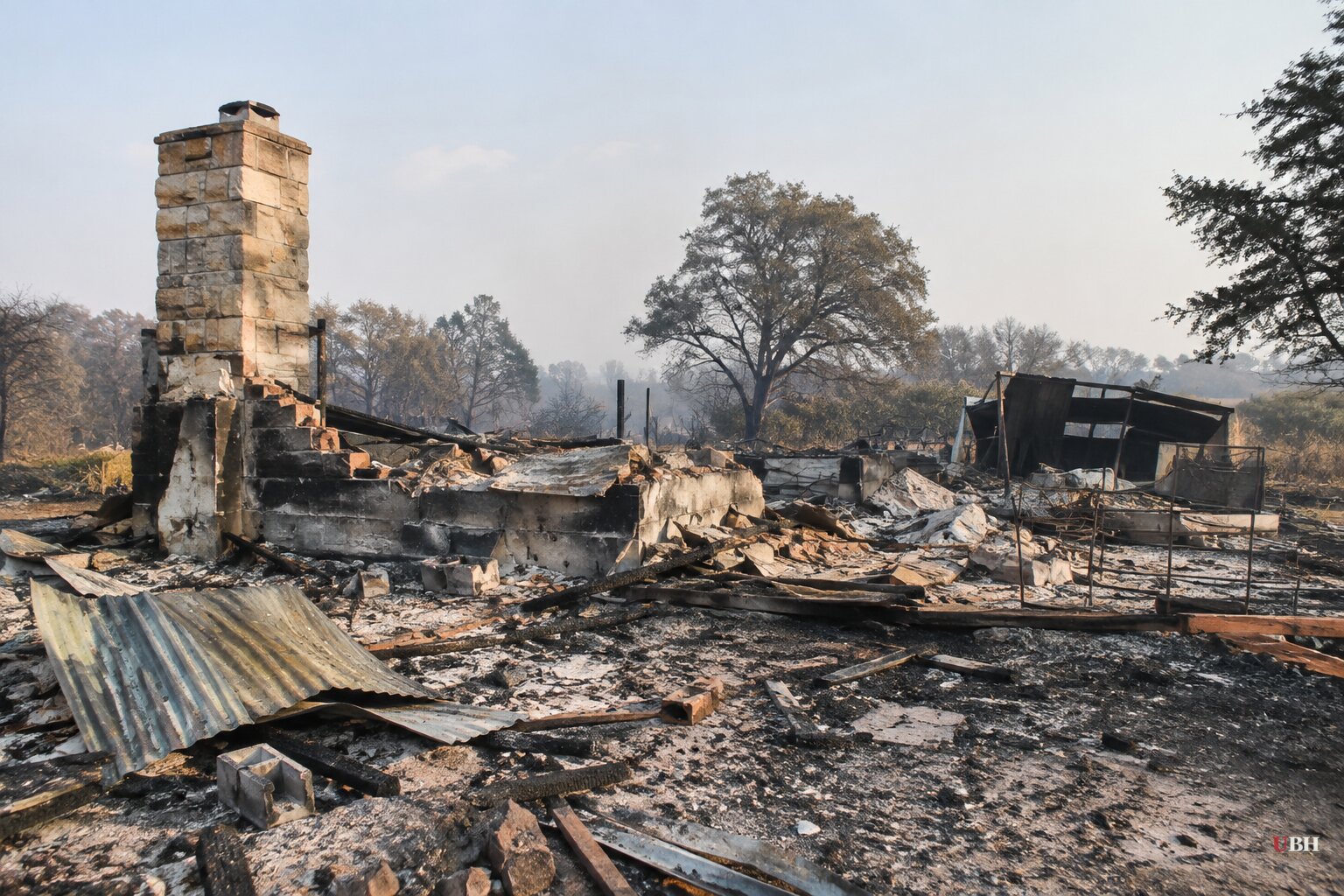
Since the fire ignited near the town of Ross in Palo Pinto County on Aug. 24, it has grown into the largest summertime wildfire recorded in Texas since statewide record-keeping began in 2005, according to the Texas A&M Forest Service. More than two weeks later, crews are still fighting it.
As of Sept. 9, the Ross Fire had burned roughly 90,400 acres across Palo Pinto and Jack counties, according to the Texas A&M Forest Service, cited by CBS News, the Texas Tribune and Insurance Journal. That makes it the second-largest wildfire in North Texas recorded history, trailing only the 2011 Possum Kingdom Complex Fire, according to the National Weather Service.
Containment figures vary slightly depending on the exact hour of reporting. CBS News, citing the Forest Service, put containment at 65% as of Wednesday evening, Sept. 9. The Texas Tribune and Insurance Journal, citing the same agency, reported containment at about 57% that same day. Either way, the number has climbed sharply from just 38% a week earlier, and from a mere 8% containment in the fire's first days, according to the Epoch Times' reporting on conditions Aug. 26.
That jump traces directly to weather, not just firefighting. Tropical Storm Edouard pushed through the region last week, dropping temperatures into the 90s and raising humidity, which helped crews increase containment from 38% to 57% in a matter of days, according to the Texas Tribune. "The fire is estimated at 90,000 acres so there are going to be portions that may see rain, portions that may not see rain," said Laura Stevens, a public information officer with the Texas A&M Forest Service. "It is an ongoing operation, very dynamic, very changing as the weather comes in."
Structure damage counts differ by source and by date. CBS News reported 157 structures destroyed, 140 damaged and 453 saved as of Sept. 9. Spectrum News reported a higher, more recent tally of 167 structures destroyed—including 18 occupied homes—and 95 damaged. KERA News, reporting slightly earlier, put destroyed structures at 157, including 25 homes, with 43 suffering major damage and 97 minor damage. The counts move because damage assessment is ongoing across a fire zone covering more than 140 square miles.
The fire's cause still hasn't been pinned down precisely. The Texas A&M Forest Service and local law enforcement determined it started along a road and was likely sparked by equipment or a vehicle, according to the Texas Tribune and Insurance Journal, but the exact source was never identified.
Human cost has been limited so far but real. Two firefighters have been injured, according to Forest Service public information officer Adam Turner. Palo Pinto County rancher Dr. Glenn Rogers evacuated his family in the middle of the night as flames crossed the river toward his home; the house survived, but one of his ranches burned completely, he lost a bull to smoke inhalation, and neighboring ranchers lost cattle, horses and hay, he told the Texas Farm Bureau Radio Network. Fencing damage across the ranching area will take considerable time and money to repair, Rogers said.
On the resource question, there's a legitimate concern. In the fire's earliest, most chaotic hours, Palo Pinto County Fire Chief Danny Watkins said crews had "thrown everything at this, and we're still having minimal effect," according to the Epoch Times, when containment sat at just 8%. That's a fair reason to ask whether the state's firefighting capacity was overmatched.
The response since suggests scale, not funding, was the initial obstacle. Texas lawmakers approved roughly $630 million for the Texas A&M Forest Service in the last legislative session, covering suppression aircraft, equipment and volunteer department support, according to Spectrum News. Gov. Greg Abbott secured FEMA assistance for the fire, hundreds of firefighters and Texas Intrastate Fire Mutual Aid System strike teams with dozers and aircraft have been deployed, and containment has since climbed past 50%. The early struggle looks more like a fire that outran any department's initial capacity than a starved budget.
Drought remains the underlying driver. North Texas has gone more than 53 days without measurable rain, the seventh-longest such stretch on record, according to the National Weather Service, cited by the Texas Tribune and Insurance Journal. "Texas often has a dry, hot, windy weather like this summer, the dry grass and vegetation provide a lot of fuel for wildfires, and the strong wind helps the fire propagate very fast," said Yunyao Li, an assistant professor at the University of Texas at Arlington, quoted by Spectrum News. The Forest Service says it has responded to more than 1,000 wildfires statewide this year, burning over 300,000 acres combined.
Texas Division of Emergency Management Chief Nim Kidd said at a Sept. 3 press conference that full extinguishment could take up to two more weeks. Reburn potential from scorched timber, combined with strong southeasterly winds, remains an active concern, according to a Sept. 8 Forest Service update. Abbott has urged residents not to return to evacuated areas prematurely: "Don't drive into (the fire). Don't drive near it," he said, promising state help to rebuild once conditions are safe.
All area school districts have resumed normal operations, and U.S. Highway 180 has reopened. The historic Worth Ranch Boy Scout camp, however, sustained what its owner, Scouting America's Longhorn Council, called catastrophic damage, and some camp debris was still smoldering as of the most recent Forest Service update, with full extinguishment of the burned terrain expected to take additional weeks.
Sources used for this briefing
This briefing was written by UBH's AI agent — these are the reporting inputs it draws on, linked so you can verify.


