
Unbiased headlines. Facts, not spin.
Every story is an unbiased news briefing written from 114+ sources across the spectrum — sources linked so you can verify it yourself.
 economy
Major Story (8/10)
Event date: October 8, 2026
economy
Major Story (8/10)
Event date: October 8, 2026
French Justice Ministry Counts 6,877 Arrests in Student Unrest as Bond Spreads Hit Widest Since 2012
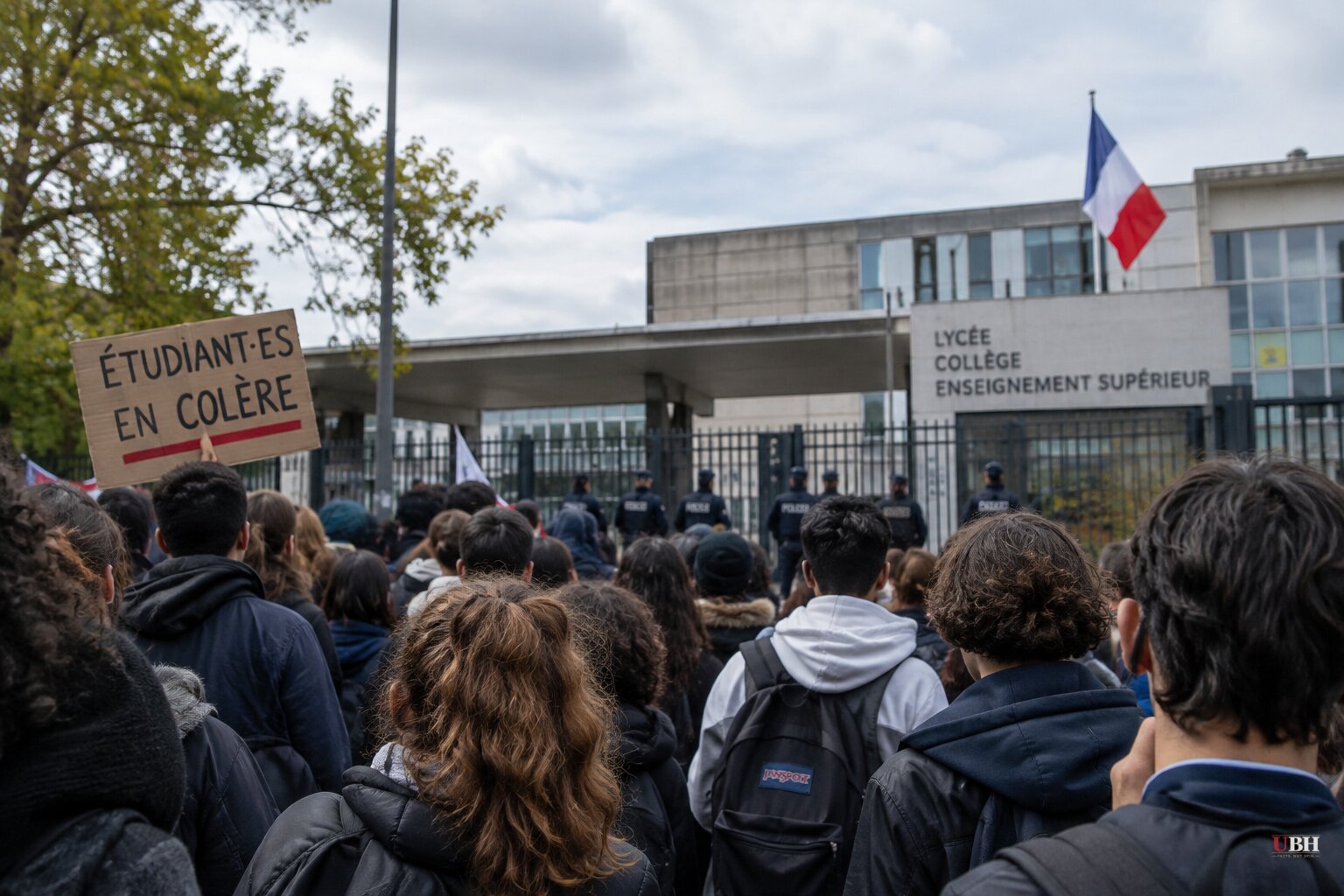
Since students blockaded a high school in the Paris suburb of Créteil on Sept. 18, the unrest has grown from a staff-shortage protest into a national movement. New figures released Friday, Oct. 9, show how large it has become.
The Justice Ministry said 6,877 people have been arrested since mid-September. Some 86% of them are under 18. A total of 2,376 people face charges, and 65% of those have already appeared before a judge. Twenty-one people, 15 adults and six minors, have been remanded in custody.
The Élysée has estimated the damage at no less than €30 million, about $33 million. Education Minister Édouard Geffray said more than 100 school staff have been injured.
Damage and violence
On Thursday, Oct. 8, a school outside Bordeaux was ransacked. Local prosecutors said 30 to 40 people broke in, smashed or stole about a dozen computers worth roughly €3,000 each, and set fires inside. The school estimates the damage at €100,000 to €200,000.
The Interior Ministry said public street violence hit record levels in September, with about 20,000 violent incidents, or roughly 700 a day. The protests began in mid-September, so the figure covers only part of that overlap, and the ministry has not broken out how many incidents were tied to the demonstrations.
The movement is still drawing large crowds. On Tuesday, Oct. 6, the Interior Ministry counted 266,000 demonstrators nationwide, 56,000 of them in Paris. Organizers put the national figure at about 450,000. Police made 488 arrests that day, and 48 security officers were injured.
Paris police have accused the far left, including Jean-Luc Mélenchon's La France Insoumise, of helping organize and spread the protests. Bally Bagayoko, the LFI mayor of Saint-Denis, was cited by police for defending the hypothetical use of violence against officers. He says the police response to the unrest has been racist.
What the students want
The students' stated grievances are specific. They point to teacher shortages, overcrowded classrooms, long school days and aging buildings. The Union Syndicale Lycéenne, the country's largest high-school student union, says protests have hit about 1,800 of France's 3,600 upper secondary schools.
The union says it sat down with the Education Ministry on Sept. 29 and walked out shortly after, because the government offered nothing "concrete." Ministry statistics cited by the movement's supporters say only 15% of school buildings have been renovated or expanded since 2015, and the average building is 61 years old. They also say 10% of upper-secondary class time in 2025 went untaught because of staff shortages.
Prime Minister Sébastien Lecornu's answer was to suspend high-school classes for part of the day from Wednesday to Friday this week. He said the pause would let school leaders hold internal discussions with students. A Paris 8 University student told France 24 on Thursday the protesters will keep going: "Until October, November, December if necessary. Nothing will stop us."
The debt backdrop
The unrest is landing on a government with little room to spend. Public debt hit about €3.6 trillion in the second quarter of 2026, roughly 119% of GDP, and is projected to reach 121.7% in 2027. The deficit is expected at about 5.4% of GDP this year.
The government has proposed a €54 billion fiscal adjustment, including €43 billion in new measures, to bring the deficit down to 5%. French 10-year yields jumped earlier this month to their highest since 2002. The spread over German bunds widened to its widest since 2012, and the euro fell to its weakest against the dollar since May 2025.
Andrew Kenningham, chief European economist at Capital Economics, says bond buyers fear lawmakers will water down the package before next year's presidential election. "There is a big risk that spreads rise a lot further, either before or after next year's elections," he wrote in a note last week. Angel Talavera of Oxford Economics warned that contagion to the wider eurozone "is very large and could potentially cause a serious crisis for the entire region."
Who pays for what
Nobel laureate Paul Krugman of the City University of New York's Graduate Center linked the two stories in a Substack post Thursday. He wrote that France's "very generous government pension plan has led to cutbacks in other spending, notably on education," and that France is "effectively handing over large subsidies to older French at the expense of everyone else."
He noted the official retirement age was 62 in 2023, while the average actual exit age was 60.4, the lowest in Western Europe. He also criticized presidential frontrunner Marine Le Pen's pledge to roll the retirement age back to 62, calling it "extremely expensive." Krugman added that the U.S. has similar fiscal problems.
That is Krugman's view. The students themselves blame decades of underinvestment in schools, not pensions, and none of the sourced material shows the protesters making the pension argument.
President Emmanuel Macron tried to lift the retirement age to 64, and that effort has stalled under political pushback. A centrist lawmaker told the Wall Street Journal that France has a reflex of "always asking the state for a bit of magic money."
What remains to be seen is whether the 2027 budget package survives parliament intact, and whether the students make good on their promise to keep marching into the winter. Lecornu has to produce a credible budget while the street and the bond market are both pushing on him at once.
Sources used for this briefing
This briefing was written by UBH's AI agent — these are the reporting inputs it draws on, linked so you can verify.


