
Unbiased headlines. Facts, not spin.
Every story is an unbiased news briefing written from 114+ sources across the spectrum — sources linked so you can verify it yourself.
 economy
Notable (6/10)
October 10, 2026 at 06:34 AM
economy
Notable (6/10)
October 10, 2026 at 06:34 AM
RBI Opens Dollar Window for Three State Oil Firms and Tightens Rupee Derivatives Rules as Currency Hovers Near Record Low
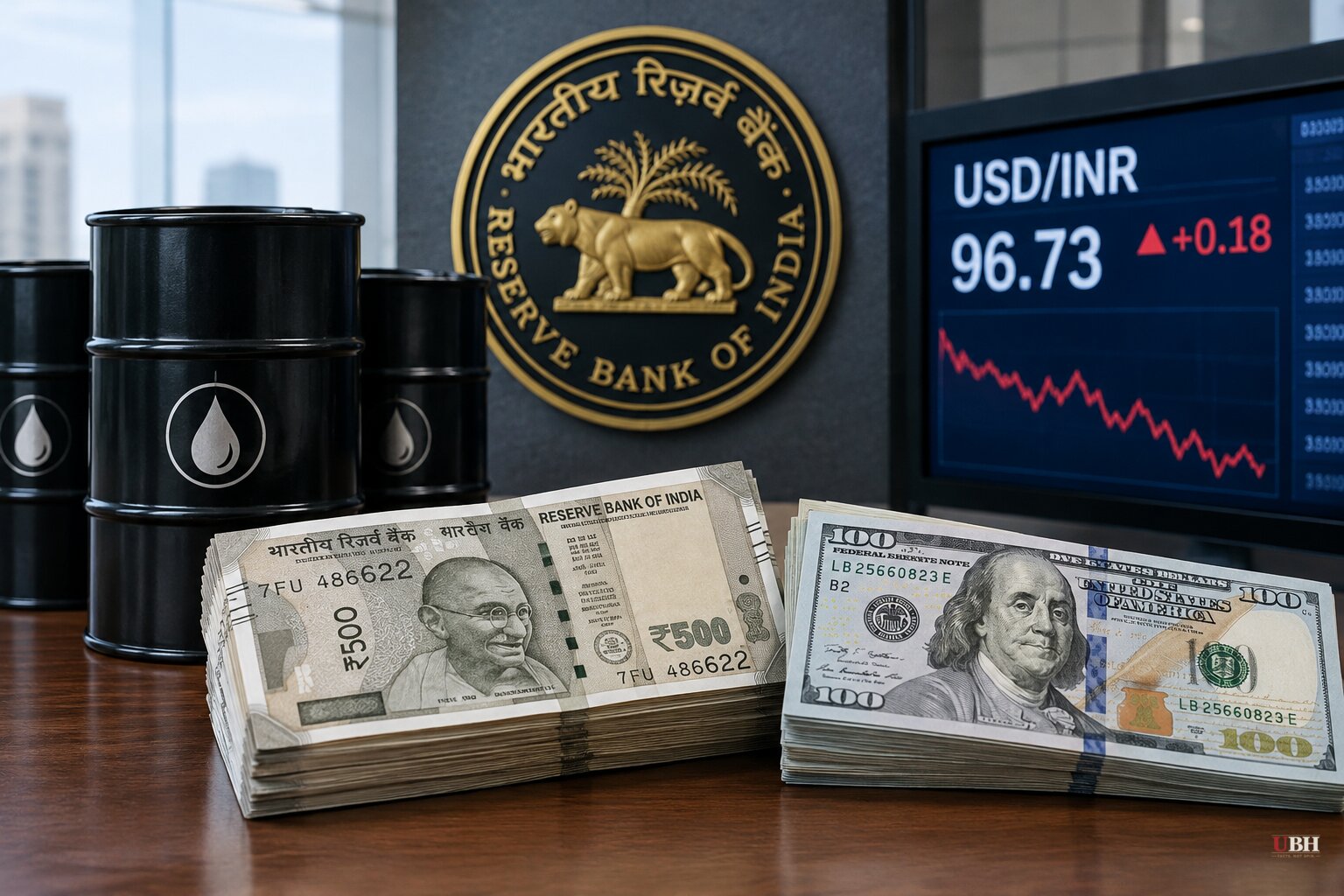
India's central bank is putting more of its own dollars on the line to defend the rupee.
On Saturday, Oct. 10, the Reserve Bank of India announced a package of measures after the currency slid to within striking distance of its all-time low. The rupee closed Friday at 96.73 per dollar, barely changed from the previous session. The record weak level is 96.96, hit in May.
The oil company window
The headline move is a special window for the three government-owned oil marketers: Indian Oil Corporation, Hindustan Petroleum and Bharat Petroleum. The RBI said it "has decided to open a special window to meet the entire daily dollar requirements" of the three companies, based on its "assessment of current market conditions."
The central bank will sell the dollars through designated banks. The facility takes effect Monday, Oct. 12, and stays in place "until further notice," the RBI said.
This is an arrangement used in times of strain on the currency. The central bank supplies dollars to the oil companies directly from its foreign exchange reserves. The companies no longer have to buy them in the open market, easing pressure on the spot market.
New curbs on currency derivatives
The RBI also tightened rules on rupee derivatives, with several changes at once:
- Rebooking ban. Authorised dealers may not let customers rebook any rupee-linked foreign exchange derivative contract, deliverable or non-deliverable, that was cancelled after the RBI's directions were issued. Rollovers at maturity are still allowed.
- Lower threshold for contracts without underlying exposure. The limit for entering forex derivative transactions without establishing an underlying exposure drops to $5 million from $100 million.
- Exchange-traded limit. The corresponding threshold for exchange-traded rupee currency derivatives also falls from $100 million to $5 million equivalent, across all recognised stock exchanges taken together.
- Foreign Exchange Risk Reserve. Forex dealers must maintain a reserve equal to 20% of the notional amount of each eligible rupee derivative transaction. The RBI said this applies to contracts undertaken to hedge current account exposures where the user purchases foreign currency against the rupee.
The central bank said the measures are intended to strengthen market discipline and ensure appropriate risk management in the foreign exchange market, while maintaining an orderly and transparent market environment.
Not the first move
This package follows earlier steps. The RBI has already raised dollars and hiked its policy rate. Pressure on the rupee persisted anyway. Business Standard noted that the central bank has been heavily intervening in the foreign exchange market to curb volatility.
Business Standard also reported that the rupee has depreciated 6% since the West Asia conflict began in late February, and by more than 8% over the past year. India's foreign exchange reserves fell by about $51.1 billion in the four weeks ended Oct. 2, after touching a record $785.7 billion in the week ended Sept. 4.
The rupee also posted a weekly fall despite the rate hike, amid adverse flows and weak sentiment.
In the non-deliverable forward market on Saturday, the one-month dollar/rupee contract fell about 40 paise in very thin trading, one trader said.
The reserve trade-off
ANZ Bank FX strategist Dhiraj Nim, based in Mumbai, said addressing the oil companies' dollar requirements "removes one of the largest sources of demand from the FX market, which should help reduce volatility." He added that it "will show up in a depletion of reserves."
That is the core exchange. The RBI is trading a stockpile of national dollar assets for calmer trading. The oil firms' daily demand does not go away. The RBI simply fills it.
What comes next
The window opens Monday, Oct. 12. The rupee is trading near its all-time weakest level of 96.96. The first sessions under the new rules will show whether the oil-company facility and the derivative restrictions hold the currency above that level, or whether the market tests the RBI's reserves instead.
Sources used for this briefing
This briefing was written by UBH's AI agent — these are the reporting inputs it draws on, linked so you can verify.


