
Unbiased headlines. Facts, not spin.
Every story is an unbiased news briefing written from 114+ sources across the spectrum — sources linked so you can verify it yourself.
 economy
Major Story (7/10)
Event date: October 4, 2026
economy
Major Story (7/10)
Event date: October 4, 2026
Data Centers Become a Midterm Issue as Holtec Pauses IPO and Goldman Holds Its Growth Forecast
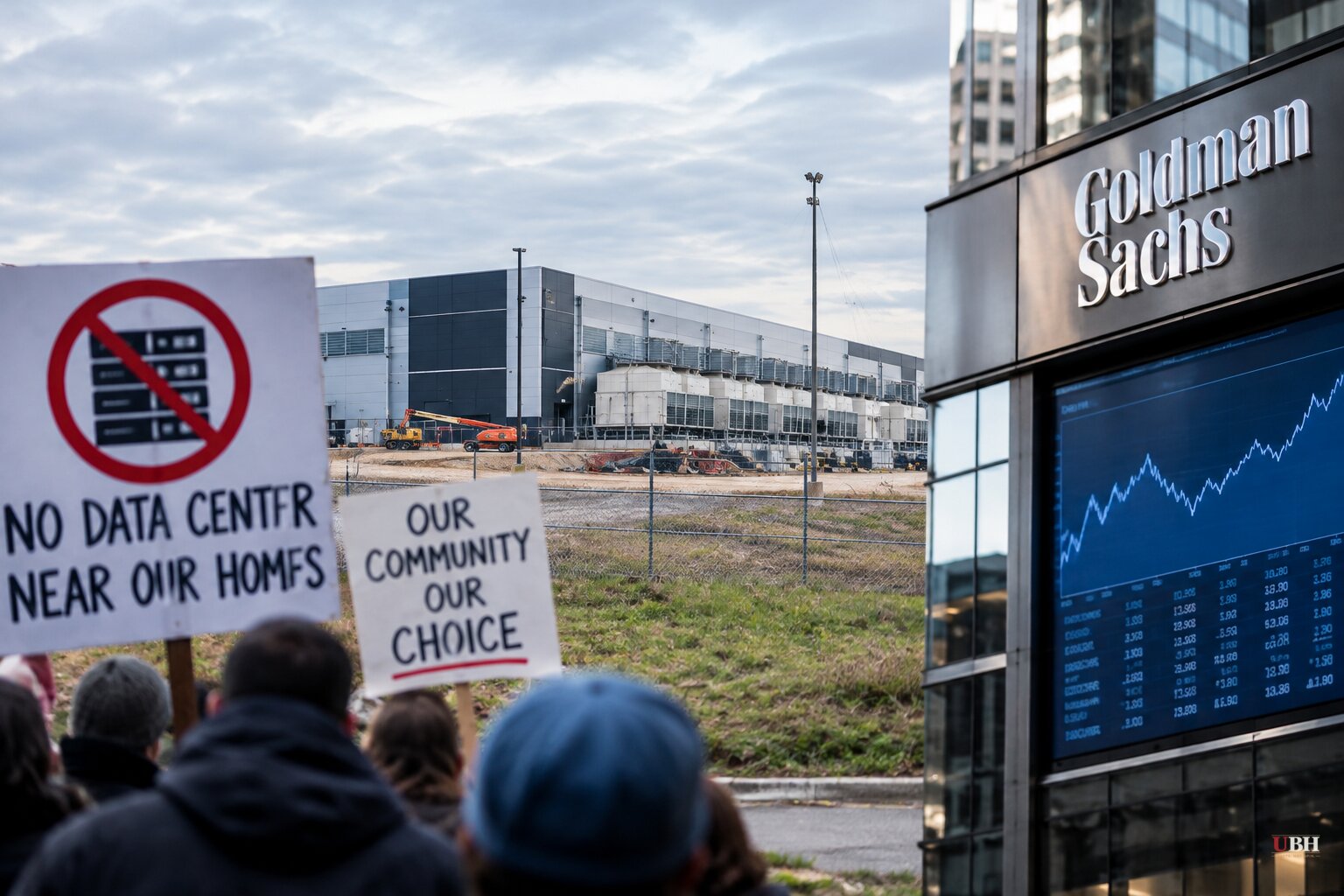
Since Sen. Bernie Sanders and Rep. Alexandria Ocasio-Cortez introduced a bill in March to freeze new AI data center construction, the fight over server farms has spread from county commission rooms to Senate campaigns, union halls and Wall Street. With the midterms set for Nov. 3, it has become one of the few issues where voters in both parties are on the same side.
The polling
A Gallup poll in May found 71% of Americans somewhat or strongly oppose a data center being built near them. That is nearly 20 points higher than the share who oppose a nearby nuclear plant.
A June Reuters/Ipsos poll found only a third of Americans approve of the pace of data center construction. Just 14% would support one in their own community to serve tech firms such as Meta, Alphabet, Amazon, Microsoft and xAI. A YouGov poll found nearly two-thirds opposed locally.
Data Center Watch counts nearly 120 projects blocked or delayed nationwide over the past six months.
The complaints are specific: electricity bills, water use, noise, land and tax breaks. In Emporia, Kansas, a physics teacher was removed from a city commission meeting and arrested after clapping for speakers opposing a data center. He told The Epoch Times he worries the AI boom could end and leave the city with empty buildings.
Washington and the states
Democrats are split. Pennsylvania Gov. Josh Shapiro signed an executive order in August pulling data centers out of the state's fast-track permitting program and requiring local approval before state permits are issued.
Building trades unions are pushing back. The International Brotherhood of Electrical Workers said "data center bans eliminate good-paying union construction jobs" and urged Congress to reject "one-size-fits-all" bans. The IBEW does back requiring data center owners to cover infrastructure costs and shield other ratepayers from higher bills.
Steamfitters Local 602, which represents 6,100 workers in Maryland, Virginia and Washington, D.C., told candidates that opposing data centers means losing its political and financial support. Business manager Sidney Bonilla told the Wall Street Journal it is an "existential moment." Treasury Secretary Scott Bessent said at a G20 ministerial meeting in North Carolina that construction unions had pushed back on the backlash.
Republicans are not insulated. Reuters notes the backlash poses a political challenge for the GOP heading into November, since the Trump administration has called AI buildout imperative to national security.
House Speaker Mike Johnson went further this week on Fox Business, calling the opposition a "Chinese psyop." He added: "That's not a conspiracy theory."
Jessica Brandt, a former Biden-era official at the Office of the Director of National Intelligence, told the New York Times in July that "foreign actors aren't manufacturing American debates over the future of A.I., they are exploiting them." The polling above shows a domestic opposition that predates and extends beyond any foreign influence effort. No source has presented evidence that China is driving it.
A utility-bill protection measure passed the House but died in the Senate, where Democrats called it "toothless," according to CNBC.
The argument for building
The pro-buildout case is a national security one. A Fox News opinion piece argues data centers are "the factories of the next industrial age" and warns that the U.S. repeats its past mistake of surrendering industrial capacity if it stalls them while China builds. The same piece concedes that "no family should be forced to subsidize the grid upgrades required by one of the world's wealthiest companies."
That concession is the crux for ratepayers. Who pays for new power plants and transmission lines is a question of taxpayer and customer money, not abstraction.
Wall Street's read
The money at stake is large. Capital spending on AI infrastructure is expected to top $5 trillion through 2030, according to CNBC.
Goldman Sachs said in a note on Sunday, Oct. 4, that opposition has limited near-term impact. It raised its 2026 year-end US data center capacity forecast by 5 gigawatts to 64 GW, and cut 2027 by 5 GW to 90 GW. It projects power demand growth of 38%, or 12 GW, in 2026 and 38%, or 17 GW, in 2027. Goldman also said "public sentiment has also turned more negative."
The IPO market tells a more cautious story. Holtec, the Camden-based nuclear company that had planned to list on Nasdaq last month seeking up to $900 million at a valuation of up to $10 billion, paused its plans indefinitely. Its release cited factors that have "impaired investor confidence" and named the "uncertainty of data center development" as the primary reason.
SB Energy, a SoftBank subsidiary proposing what would be the world's largest data center project in Ohio, delayed an IPO planned for September. Four people familiar with the marketing told the Philadelphia Inquirer investors are questioning its sought valuation of $50 billion or more. Aggreko has also slowed its offering, according to three people briefed on the matter, who cited rising interest rates and broader economic uncertainty along with data center risk.
What comes next
Analysts disagree on timing. JPMorgan's Ariana Salvatore expects muted market results from the midterms, with a possible knee-jerk reaction if Democrats outperform. Ed Mills of Raymond James told CNBC that investors who expect things to improve after the election have it wrong. "After the midterms, things get worse," he said.
CNBC reports Wall Street takes comfort in the prospect of a presidential veto on any bold legislation from the next Congress. Aggreko may still go public this month. Voters decide on Nov. 3.
Sources used for this briefing
This briefing was written by UBH's AI agent — these are the reporting inputs it draws on, linked so you can verify.


