
Unbiased headlines. Facts, not spin.
Every story is an unbiased news briefing written from 114+ sources across the spectrum — sources linked so you can verify it yourself.
 economy
Major Story (7/10)
October 9, 2026 at 10:21 AM
economy
Major Story (7/10)
October 9, 2026 at 10:21 AM
Most Big Food Banks Report More Demand and Less USDA Food as States Take on 75% of SNAP Administrative Costs
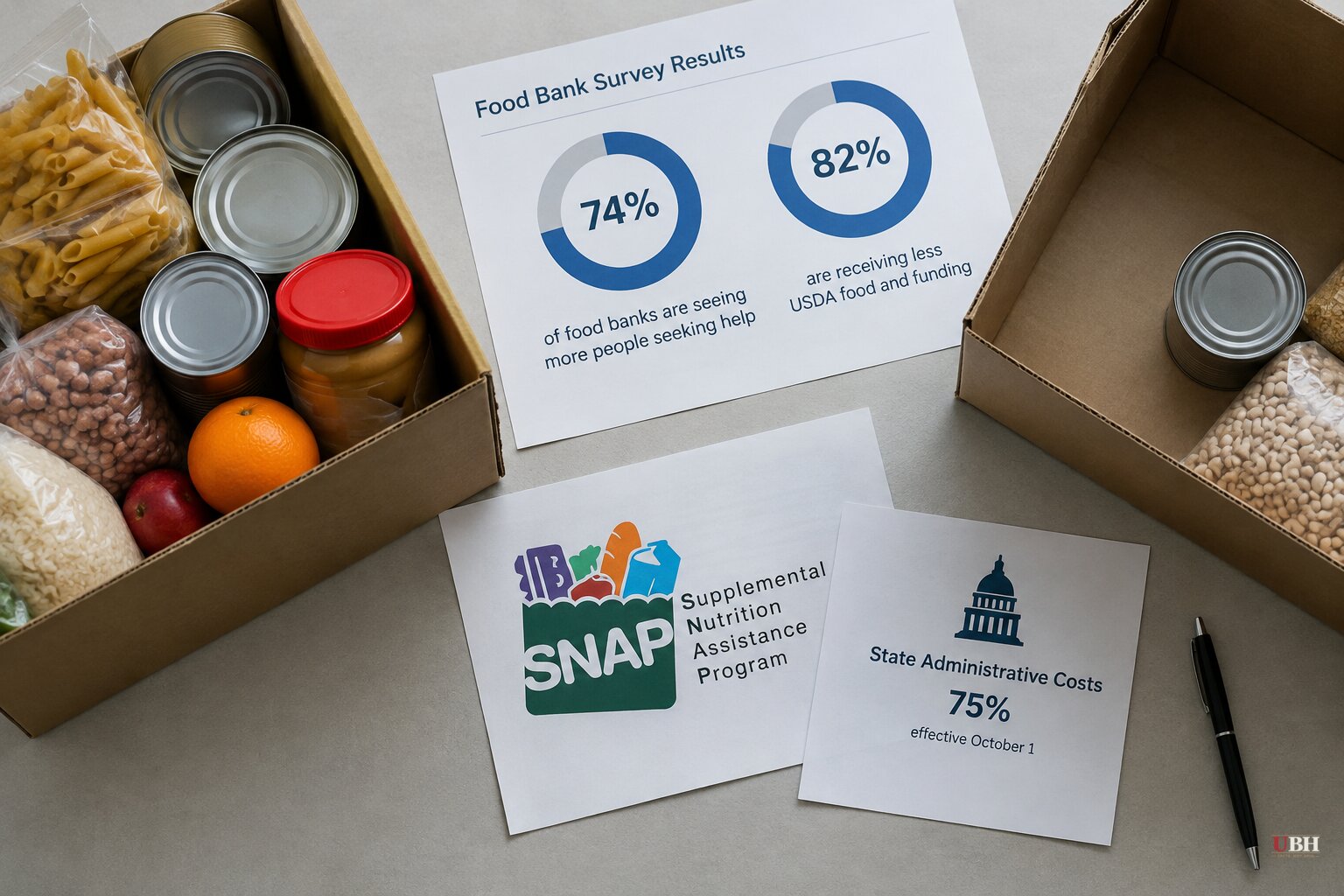
Since President Trump signed the 2025 tax-and-spending law in July of that year, SNAP enrollment has fallen by roughly 5 million people. What is new this week is the pressure on the other end of the line: the people handing out groceries.
An NBC News survey of 48 of the largest food banks across 35 states and Washington, D.C., found that nearly three-quarters said more people are showing up at their doors than a year ago. More than 80% said the food and funding they get through the U.S. Department of Agriculture has dropped. Many also reported higher fuel costs for moving food.
The numbers from the food banks
In Maine, Good Shepherd Food Bank said the USDA cut the amount of food it received from 13 million pounds to 9 million pounds in one year. That is a 31% drop.
Forgotten Harvest in Michigan said it is rationing to stretch what it has: one bag of potatoes instead of two, two tubs of yogurt instead of six.
"People are facing multiple hits to their budgets," said Poonam Gupta, a senior research associate at the Urban Institute. Gas prices tied to the Iran war are one of those hits, and they are squeezing both households and the food banks that truck groceries to them.
A half-mile line in Dunlow
On Sept. 16, a line of cars stretched about a half mile outside the food pantry in Dunlow, W.Va. Some drivers had come more than 30 miles. They sat with engines off in temperatures climbing into the 80s to save gas.
Bill Likens, 51, runs the pantry as director of community outreach for Cabwaylingo Presbyterian Chapel. He counted cartons of eggs and sacks of potatoes to work out how much each car could get. "There's a decent chance we could run out," he said. "I don't have a lot of extra food these days."
What changed on Oct. 1
The latest piece of the 2025 law kicked in at the start of this month. States must now pay 75% of the cost of administering SNAP. The federal government and states previously split that cost 50-50.
Katie Bergh of the Center on Budget and Policy Priorities, a left-leaning think tank, put it this way: every state now gets half as many federal dollars to get SNAP to eligible families on time and in the right amount. She warned that states that don't make up the difference could see staff shortages, backlogs and months-long waits. Others, she said, are weighing property tax increases or cuts to other services.
The Food Research & Action Center estimates the new burden ranges from $3 million in Wyoming to $168 million in New York.
Rep. Shontel Brown (D-Ohio) called the change "a devastating gut punch and it's intentional," arguing that Republicans paired new work requirements with cuts to administrative funding. That motive is her claim. The law's text and the dollar figures are not in dispute.
The bigger bill comes in 2027
A second shift is scheduled for October 2027. Some states may have to cover part of the cost of SNAP benefits themselves, which the federal government has paid in full. The share depends on a state's payment error rate, meaning how often it overpays or underpays recipients.
Louisiana could owe up to $199 million, according to FRAC. Its error rate rose from 6.62% in fiscal 2024 to 8.14% in fiscal 2025, the most recent data available.
That design puts a price on sloppy administration, and sloppy administration is a legitimate problem in a program that spends tens of billions of dollars. But states are responding by demanding more paperwork from applicants more often. Joseph Llobrera, a CBPP research director, said it has been "a race to drive down those error rates."
In Louisiana, Aaranika Macon of LaPlace said her application took two months to approve. "Usually when you fill out, they'll get back with you in, like, two weeks," she said. Louisiana's enrollment is down about 170,000 people, or 21%, since the law was enacted, according to federal data analyzed by CBPP. Llobrera said the national decline is the largest in about three decades.
Prices and the Farm Bill
The USDA reports food prices rose nearly 3% from August 2025 to this August. That is not a spike, but it lands on households already dealing with higher gas prices.
Elected officials, policy analysts and anti-hunger advocates are pushing Congress to delay the cost-shift provisions by attaching a delay to the Farm Bill, which is pending in the Senate. Whether the Senate takes that up before the 2027 benefit-cost change approaches is the open question. States are already budgeting around it.
Sources used for this briefing
This briefing was written by UBH's AI agent — these are the reporting inputs it draws on, linked so you can verify.


