
Unbiased headlines. Facts, not spin.
Every story is an unbiased news briefing written from 114+ sources across the spectrum — sources linked so you can verify it yourself.
 economy
Notable (6/10)
October 9, 2026 at 06:16 AM
economy
Notable (6/10)
October 9, 2026 at 06:16 AM
Collins Says Social Security Tax Cap Must Be Adjusted as Senate Democrats Campaign on Lifting It
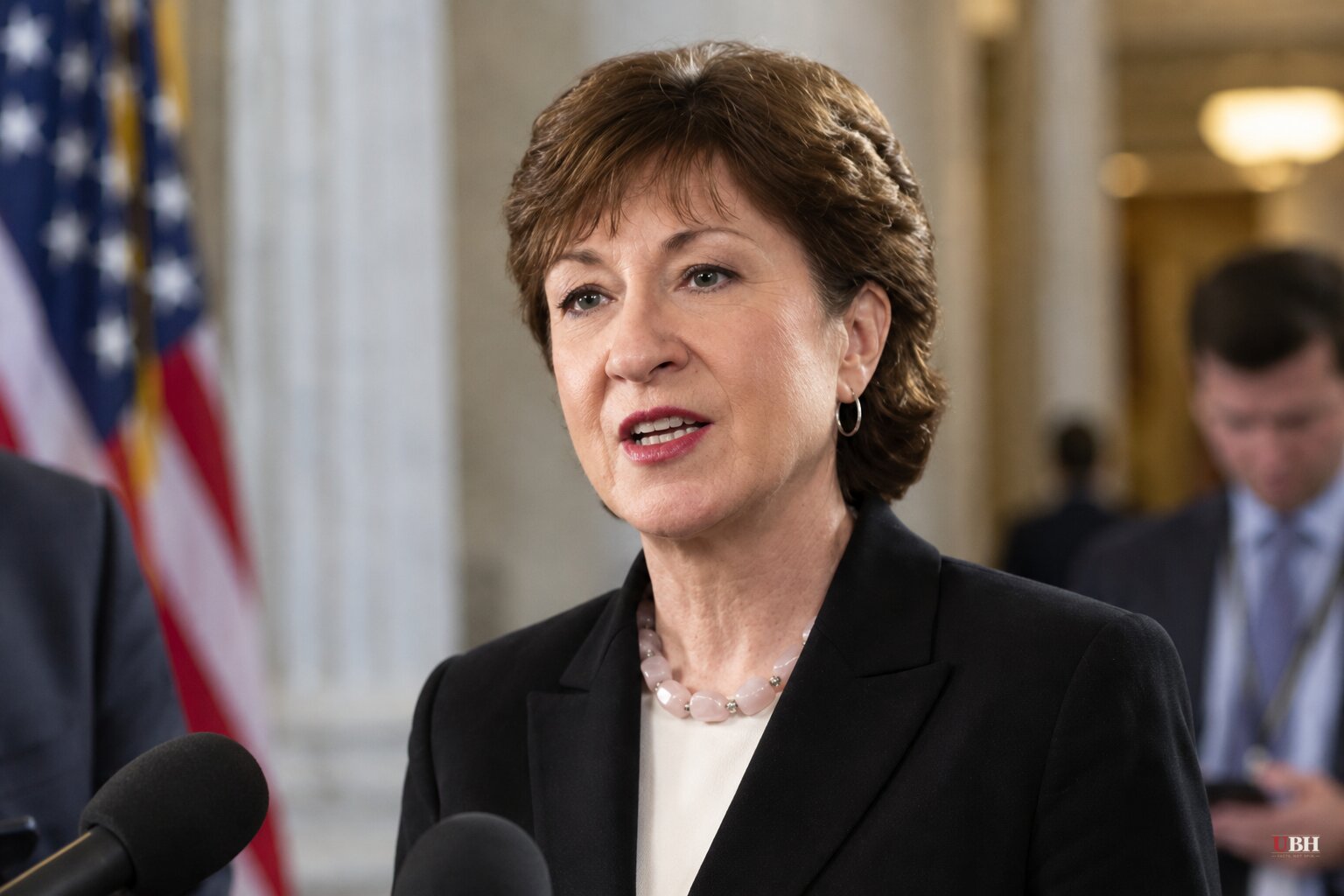
Sen. Susan Collins of Maine said Thursday, Oct. 8, that the Social Security payroll tax cap has to change. It was a position her office had declined to take that same morning.
"I don't think someone who makes $40 million a year as a movie star should pay the same rate of social security taxes as someone who's earning $184,000 a year," Collins said in a debate with Democrat Troy Jackson. "We simply are going to have to adjust the cap."
A Collins spokesperson had told NBC News earlier in the day that she had not taken a position on lifting the cap. The spokesperson pointed only to her call for an independent commission of experts.
Collins did not say whether adjusting the cap means eliminating it, raising it, or taxing income above a higher threshold. Jackson wants to scrap the cap and expand benefits.
The clock
Americans currently pay Social Security tax on earnings up to $184,500. Nothing above that is taxed for the program.
The latest trustees report says Social Security is fully funded through the fourth quarter of 2032. After that, benefits would be cut automatically by 22% unless Congress acts.
The senators elected this fall will serve terms ending in January 2033. That puts the deadline squarely inside the next Senate class's tenure.
Candidates split on how far to go
Collins is not alone in raising the cap, though she is an unusual Republican to do it. A group of Senate candidates in blue and red states is running on it, most of them Democrats.
In Michigan, Democratic nominee Abdul El-Sayed said in a statement: "I will end the cap on Social Security tax to make sure the rich pay their fair share." His campaign platform calls for ending it.
In Iowa, a spokesperson said Democrat Josh Turek supports eliminating the payroll tax cap. Turek says he would lift it to "make billionaires pay their fair share."
In Texas, Democrat James Talarico is running on a different version. His platform would eliminate the cap only on earnings over $400,000 a year.
That difference is already a fault line. Some lawmakers, including plenty of Democrats, have been wary of raising taxes on incomes below $400,000.
A Fox News opinion column lays out what a $400,000 ceiling would mean. A worker earning $400,000 would have another $215,500 of wages exposed to the tax. At the combined 12.4% employee and employer rate, that is $26,722 more a year flowing into the system.
The column estimates that, depending on how Congress wrote it, a change like that could raise "well over $1 trillion" over a decade. That is the columnist's estimate, not a government score.
The same column goes further than most campaign platforms. It proposes raising the employee rate from 6.2% to 7.2% in 0.1-point annual steps over 10 years, with employers matching. For a worker earning $75,000, the first step would cost about $75 a year. By year ten the extra cost would be $750.
That is a tax increase on ordinary workers, which is the part the campaign trail mostly skips.
The argument against the tax-first approach
Not everyone on the right wants more revenue. Matt Walsh of The Daily Wire called the current setup "morally abhorrent and economically insane," describing it as taking "huge chunks out of the paychecks of young working Americans in order to pay for the retirements of older Americans who have a net worth several times higher."
A Daily Wire opinion piece built on Walsh's argument points to George W. Bush's 2004 plan for personal retirement accounts. Bush told Congress that "younger workers should have the opportunity to build a nest egg by saving part of their Social Security taxes in a personal retirement account."
The piece notes Bush won re-election after making that pitch. Its argument is that reform proposals are not automatically fatal at the ballot box.
The two positions are distinct. One side wants more money from high earners. The other wants to change what younger workers get for what they pay in.
Not an empty-trust-fund cliff
The Fox column also corrects a common line. Social Security will not hit zero dollars one morning. Payroll taxes keep coming in, but eventually they will not cover 100% of scheduled benefits. That is the gap behind the 22% figure.
Collins pitched an independent commission before she backed adjusting the cap. Jackson has already called for scrapping it entirely.
What remains open is the number. Whether the cap goes away completely, as El-Sayed and Turek propose, moves to $400,000 as Talarico proposes, or lands somewhere Collins has not named will have to be settled before the fourth quarter of 2032.
Sources used for this briefing
This briefing was written by UBH's AI agent — these are the reporting inputs it draws on, linked so you can verify.


