
Unbiased headlines. Facts, not spin.
Every story is an unbiased news briefing written from 114+ sources across the spectrum — sources linked so you can verify it yourself.
 economy
Notable (6/10)
Event date: October 6, 2026
economy
Notable (6/10)
Event date: October 6, 2026
Think Tank Estimates Up to $521 Billion a Year Lost to Federal Fraud and Improper Payments
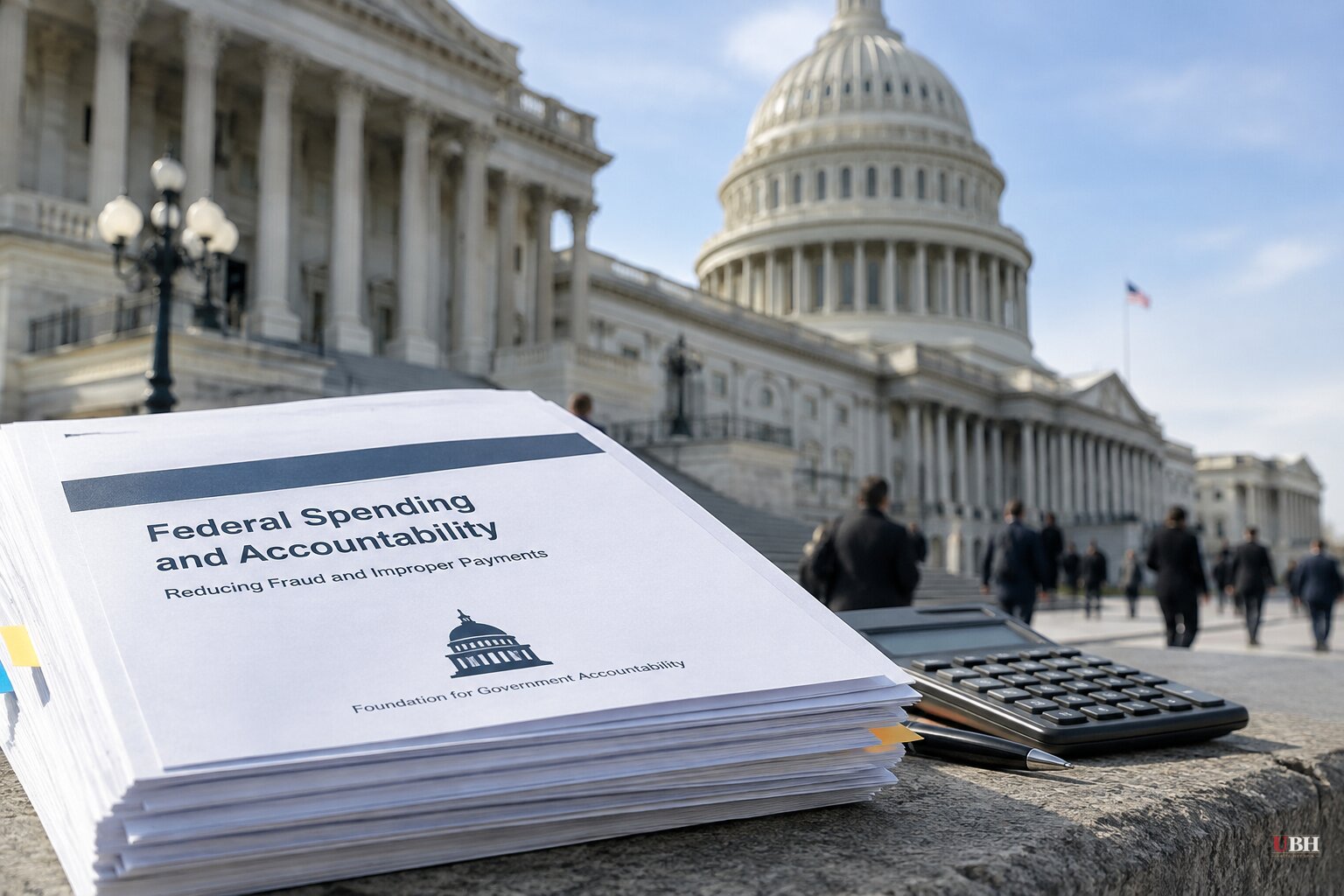
A new report from the Foundation for Government Accountability (FGA) says federal taxpayers lose as much as $521 billion a year to fraud and improper payments. The think tank cites a federal estimate for the figure and puts the cumulative total at about $3 trillion since 2003.
The FGA promoted the research on Sept. 21. The Center Square published an interview with the report's author, FGA senior research fellow Liesel Crocker, on Oct. 6.
What the number does and does not measure
The $521 billion is not a count of stolen money. It covers improper payments, which the FGA says the federal government defines as payments in the wrong amount, payments to the wrong person or someone ineligible, and payments that lack documentation confirming they were correct.
That definition sweeps in clerical errors and missing paperwork alongside criminal fraud. The report's headline framing treats the whole figure as fraud-adjacent. The definition itself shows the total is broader than theft.
Crocker doesn't dodge the scale. "Fraud against federal programs now runs about $521 billion a year, or seven percent of everything Washington spends," she told The Center Square. "Only five federal agencies have bigger budgets than that."
Almost nobody is checking
The more troubling detail is about measurement. Of more than 2,200 federal payment programs, only 64 are reviewed for improper payments each year, according to Crocker.
"And that's just the fraud we know about," she said.
If that's accurate, the $521 billion is an estimate built on a sliver of the programs. Roughly 97% of them go unreviewed.
Crocker named the programs where she says the money leaks most: Medicaid, food stamps, Medicare, the Earned Income Tax Credit, and a pandemic grant for concert venues. "They have a lot in common," she said. "Each one frequently fails to double-check applicant information, hands the paperwork to state and county offices, and pushes huge volumes of money out fast. Fraud shows up where the checks are easiest to get."
The state-by-state fight
The report puts much of the blame on state administration. It says state welfare agencies often resist federal oversight or fail to share the enrollment and eligibility data needed to catch fraud early.
The sharpest example is food stamps. According to the FGA, 21 states refused to cooperate with federal efforts to vet their programs for fraud. The report names California, Illinois, Colorado, Maine and New York among them, and Crocker singled out Minnesota as a particular concern.
In the 29 states that did cooperate, the U.S. Department of Agriculture found 186,000 dead enrollees and half a million people collecting benefits in two states at once, the report says.
Crocker also cited an estimate that food stamp trafficking costs as much as $4.7 billion a year. "Every dollar that goes to someone abusing the system is a dollar taken from the truly needy," she said.
The sources do not include a response from any of the named states explaining why they declined to participate.
Prosecutions are a fraction
Attorneys general across the country are prosecuting more than 8,000 fraud cases, the FGA says. The report calls that a "small fraction" of the fraud being committed.
The FGA, which The Center Square describes as nonpartisan, praised President Donald Trump's "War on Fraud" and other anti-fraud efforts. It also said more is needed from Congress and the states. "Congress and states should build on President Trump's efforts to crack down on fraud and corruption and save taxpayers billions," the report says.
Crocker was more pointed in her interview. "For 20 years, Washington never had a meaningful answer to rampant fraud. President Trump is finally treating stealing from the taxpayer like the crime it is," she said.
The 20-year span she cites runs across administrations of both parties. The report does not say how much of the roughly $3 trillion in cumulative improper payments is outright fraud versus error, and no independent audit of its estimate is cited.
What comes next
Crocker argues the cooperative states offer a preview. "If this much turned up in the states that cooperated, we can only imagine what's hiding in the states that refuse," she said.
The report urges the holdout states to work with federal officials on ending "widespread fraud." It also makes recommendations to Congress. No state has announced a change of position, and the open question is how much of the $521 billion is actually theft. With 64 of 2,200 programs under review, no one in Washington can currently answer it.
Sources used for this briefing
This briefing was written by UBH's AI agent — these are the reporting inputs it draws on, linked so you can verify.


