
Unbiased headlines. Facts, not spin.
Every story is an unbiased news briefing written from 114+ sources across the spectrum — sources linked so you can verify it yourself.
 economy
Major Story (7/10)
October 9, 2026 at 12:21 PM
economy
Major Story (7/10)
October 9, 2026 at 12:21 PM
Delta Cuts 2026 Profit Forecast by Nearly a Quarter as Fuel Bill Climbs $6 Billion
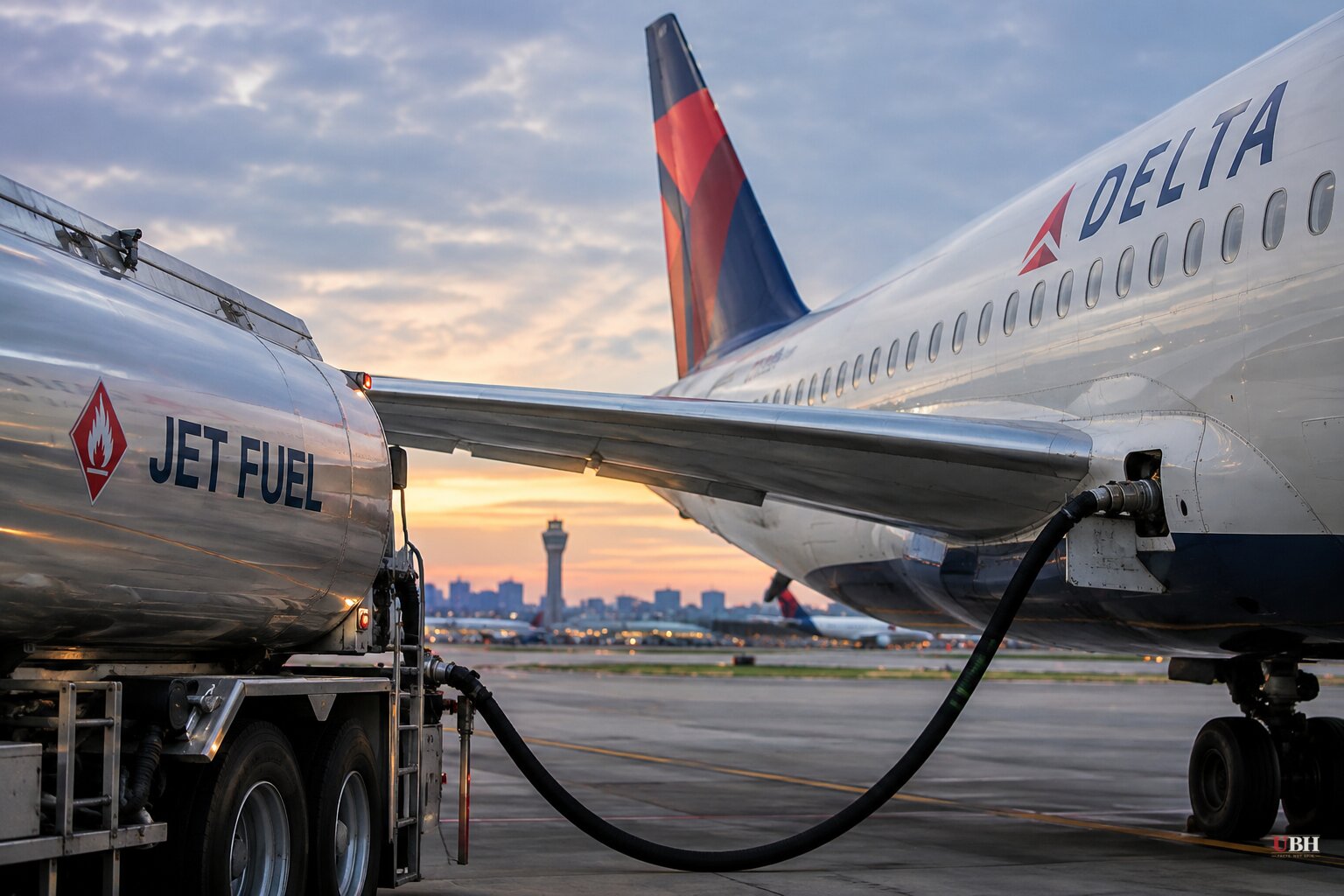
Delta Air Lines cut its 2026 profit outlook on Friday, Oct. 9, and the carrier's own chief financial officer put the blame in three words: "All of it's fuel."
Delta now expects adjusted earnings of $5.10 to $5.60 a share for the year. In July it guided to $6.50 to $7.50. The new midpoint of $5.35 is also below the $5.46 analyst average compiled by LSEG. Delta shares were down about 3.5% in premarket trading, before the 9:30 a.m. ET open.
The fuel math
Delta says its 2026 fuel bill will rise by $6 billion, which is $2 billion more than it projected in July. The Iran war has pushed crude and refined jet fuel prices higher worldwide. CFO Erik Snell told reporters both have climbed since the summer.
In the September quarter, fuel expense rose 62% from a year earlier to about $4.1 billion. That was more than $500 million above Delta's own July forecast. The average adjusted price per gallon rose 60% to $3.61.
For the fourth quarter, Delta is assuming an all-in fuel price of roughly $4.25 per gallon. That figure includes a refinery benefit of about $0.40 per gallon and uses the forward curve as of Oct. 2.
The quarter in numbers
Adjusted revenue hit $17.59 billion, up 16% on flat capacity. Premium ticket revenue rose 18% to $6.82 billion, main cabin revenue rose 12% to $6.8 billion, loyalty revenue rose 18% and cargo rose 29%.
Adjusted earnings of $1.72 a share narrowly missed the LSEG average estimate of $1.76. Adjusted operating margin fell to 9.4% from 11.1% a year ago. Total operating expense rose 25% to $18.73 billion.
On a GAAP basis, net income was $756 million, or $1.15 a share. That is down 47% from $1.42 billion, or $2.17 a share, in the same quarter last year.
Free cash flow guidance for the year fell to about $2.5 billion. In July Delta had pointed to as much as $4 billion. Delta still plans to pay down more than $2 billion of debt this year and expects gross leverage of about 2.2 times at year-end. Its long-term framework targets roughly one times. Adjusted net debt was $13.35 billion at the end of the quarter, down $950 million from the end of 2025.
Delta's case
CEO Ed Bastian argued the numbers show strength, not weakness. "Our resilience reflects the structural durability we've built over many years, enabling us to effectively navigate one of the most elevated fuel environments in recent times," he said. Delta pointed out that its pre-tax profit of $1.5 billion for the quarter matched last year's, and that it expects about $4.5 billion in pre-tax profit for the full year while absorbing the fuel increase.
Bastian also told CNBC that higher fares have not hurt demand. "The consumer response continues to be quite strong," he said, citing business and leisure travelers, all cabins and all regions. Delta expects fourth-quarter revenue to grow about 20% and fourth-quarter earnings of $1.15 to $1.65 a share.
Fares are driving revenue
The revenue growth has come largely from price. U.S. airline fares rose about 25% on average from a year earlier in the five months through August, according to the Bureau of Labor Statistics' consumer price index. Strong demand and limited seat growth have let carriers pass costs along.
The Bureau of Transportation Statistics says U.S. airlines spent $42.9 billion on fuel for scheduled flights in the first eight months of 2026. That is nearly $13.2 billion more than a year earlier, even though they burned slightly less fuel.
Analysts are now watching whether that can continue. Industry capacity growth is set to accelerate in the fourth quarter, and Deutsche Bank analysts expect carriers to recover a smaller share of higher fuel costs through revenue in that period, with full recovery not expected until early 2027.
The pressure is not limited to the U.S. Ryanair Group CEO Michael O'Leary warned Thursday that European airlines could face more than another year of elevated fuel costs because of the war.
Delta is the first major global carrier to report third-quarter results. United Airlines, American Airlines and Southwest Airlines are due to report later this month, and their guidance will show whether Delta's fuel squeeze is typical or whether its premium-heavy mix is cushioning it. Delta's forecast also assumes fuel at the Oct. 2 forward curve, so another move in crude or jet fuel prices before year-end would change the math again.
Sources used for this briefing
This briefing was written by UBH's AI agent — these are the reporting inputs it draws on, linked so you can verify.


