
Unbiased headlines. Facts, not spin.
Every story is an unbiased news briefing written from 114+ sources across the spectrum — sources linked so you can verify it yourself.
 economy
Notable (6/10)
October 10, 2026 at 06:22 PM
economy
Notable (6/10)
October 10, 2026 at 06:22 PM
Ireland Proposes €141bn Cut to Next EU Budget. Sweden Says Talks Are 'Nowhere Near' a Deal
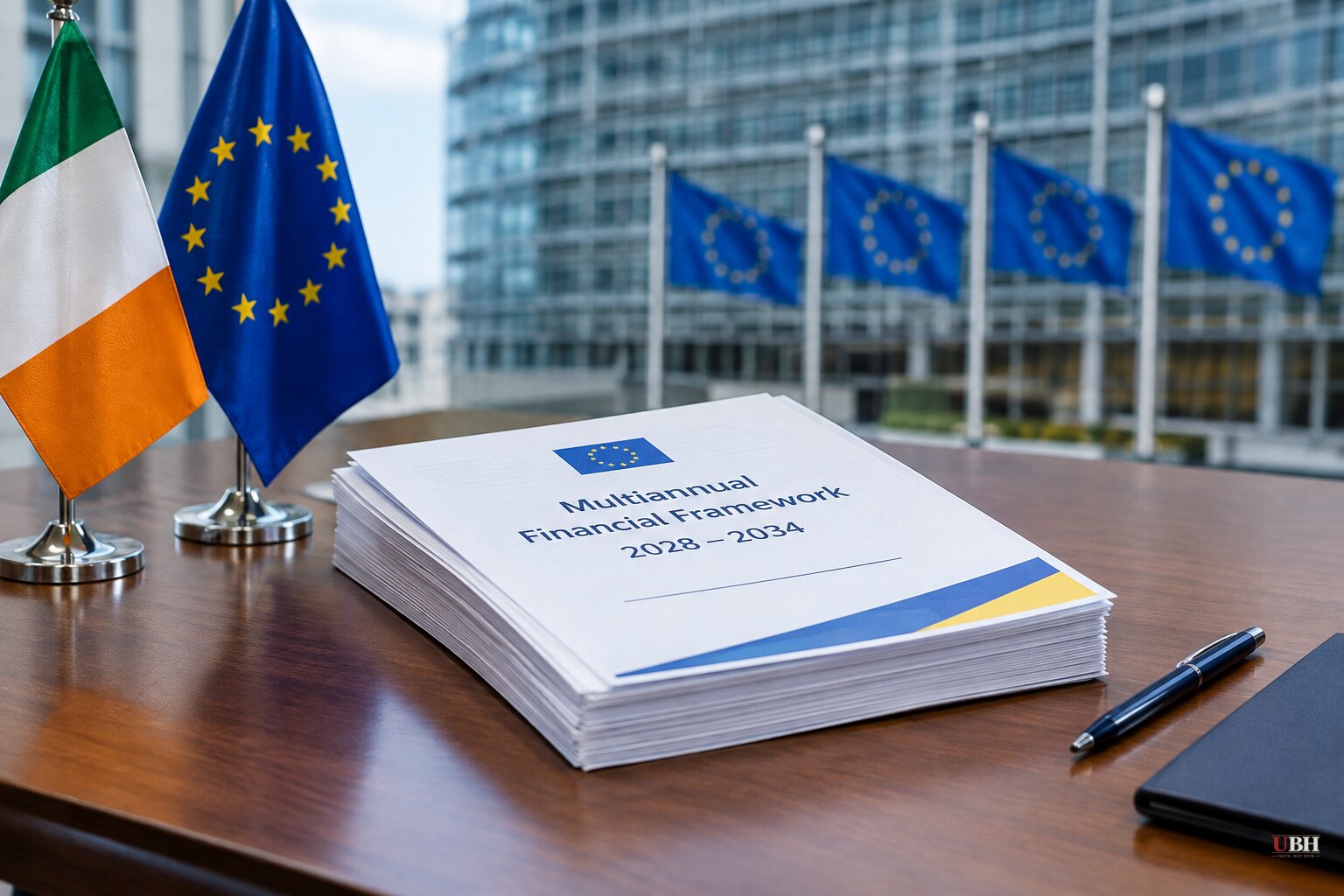
Ireland has put a number on the table for the EU's next seven-year budget, and nobody is celebrating.
The Irish presidency published its compromise text, known in Brussels as a negotiating box, on Saturday, Oct. 10. It cuts the Multiannual Financial Framework (MFF) for 2028-2034 by €141bn from the European Commission's draft. EU leaders are scheduled to discuss it on Oct. 15-16.
The numbers
Dublin proposes a total of €1,622bn in 2025 prices. That is 8% below the Commission's proposal and still 30% above the current MFF. In current prices, the figure comes to roughly €1,825bn.
The cuts are not spread evenly:
- Cohesion, agriculture and fisheries: down 3%, to €914bn. By far the largest spending block, and the most protected.
- Competitiveness, research and defence: down 13%, to €456bn.
- EU administration: down 8.8%, to €95bn. Member states had asked for this cut, as many capitals face limits on their own civil service spending.
- Global Europe (aid and cooperation abroad): down 17%, to €157bn.
The Global Europe reduction is unlikely to dent the EU's network of 145 delegations worldwide.
New EU-wide levies
The compromise also includes a package of own resources, EU-wide levies that flow straight into Brussels' coffers. The package is estimated to raise €55bn a year.
The biggest change from the Commission's version is on the Carbon Border Adjustment Mechanism, a tariff on carbon-intensive imports. Dublin wants the call rate raised from 75% to 90%.
The text also lets the Emissions Trading System resource be phased in for member states supported by the Modernisation Fund. That follows strong opposition over the revenue those capitals would have to give up.
The Commission's proposals for a tobacco excise duty, a corporate resource for Europe and an electronic waste levy stay in. So does the plan for the EU to keep 90% of customs duties. The box leaves out the three own resources the European Parliament proposed.
The frugals say it is not enough
The stated aim is to win over the Germany-led frugal bloc. Early signs are that it falls short.
"The numbers that have been put on the table still present a widely unaffordable increase and we are therefore nowhere near an agreement," said Jessica Rosencrantz, Sweden's minister for European affairs.
The frugal camp, which includes Germany, the Netherlands and the Nordic states, wants a budget several hundred billion euros smaller. An 8% trim of a roughly €1.7 trillion draft does not get there. The EU budget is financed mainly by national contributions, so net contributors, who pay in more than they receive, have a direct stake in the size of the total.
There is an odd wrinkle. The competitiveness fund, which backs industry, tech, defence and research, is one of the few areas where Germany, the Netherlands and the Nordic frugals do not want deep cuts. Ireland's text trims it by 13% anyway.
The other side of the table
Cutting farm and regional money is a harder sell. A larger group led by Italy, Spain and Poland, which includes most southern and eastern member states, has made clear it will fiercely resist reductions to Common Agricultural Policy subsidies and cohesion funds. The Irish text leaves those lines largely intact, a 3% trim against 8.8% to 17% elsewhere.
That protection pushes the pain onto the programmes with the shortest list of defenders, namely aid abroad, administration and the competitiveness fund. Some governments argue the cuts go too far and undercut the EU's ambition to be a serious geopolitical player.
Ireland's defence of the text
Thomas Byrne, Ireland's Minister of State for European Affairs, leads the file. He says the box "acts to bridge the many differences between the member states" and "brings us closer to resolving the so-called budgetary trilemma."
That trilemma is the squeeze between paying for new priorities like competitiveness and defence, protecting core policies like agriculture and cohesion, and respecting the fiscal limits every government faces at home. Byrne says the proposal strikes "a delicate balance."
"I am confident that this revision to the overall volume and the rebalancing of priorities... address the preferences of Member States, and it will open the door to the next stage of negotiations," he said.
The Commission, as the Irish Times notes, always aims high in the knowledge that national governments will pare its plans back. The Irish text is the presidency's attempt to move the other 26 member states toward a final deal.
The clock
Leaders have set themselves a deadline to strike an agreement by the end of this year. The pressure is partly political. The French presidential election is next spring, and Marine Le Pen, the Eurosceptic far-right leader, has a real chance of winning it. A deal before then would remove one variable.
The tension is plain. The text still lands 30% above the current budget, and Sweden has called the increase unaffordable. The southern and eastern bloc is ready to fight any bigger bite out of farm and cohesion money. The leaders' meeting on Oct. 15-16 will show whether either camp will move toward the Irish numbers, or whether the presidency has to redraw the box before the year-end deadline.
Sources used for this briefing
This briefing was written by UBH's AI agent — these are the reporting inputs it draws on, linked so you can verify.


