
Unbiased headlines. Facts, not spin.
Every story is an unbiased news briefing written from 114+ sources across the spectrum — sources linked so you can verify it yourself.
 economy
Major Story (7/10)
October 10, 2026 at 02:00 PM
economy
Major Story (7/10)
October 10, 2026 at 02:00 PM
Ukrainian farmers hold unsold grain as Black Sea attacks cut exports to under half of potential
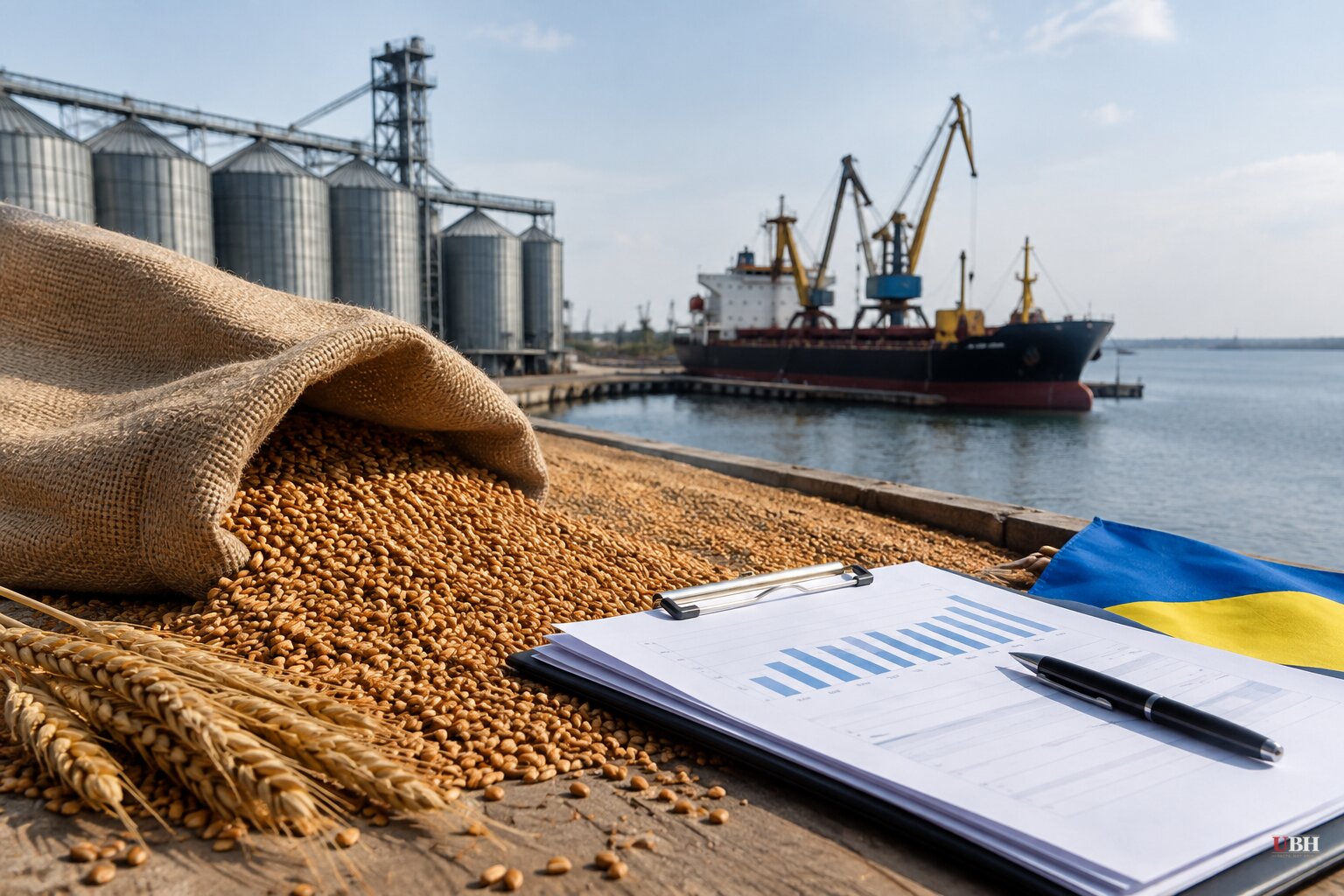
Ukraine's harvest is shifting from wheat and barley to corn, soybeans and sunflower. Yields are strong. The money is not.
Oleksandr Chumak has farmed in the Odesa region for 11 years. He says about 80% of his grain cannot currently be sold at a profit, and he is out of cash.
Exports at under half of capacity
Ukraine normally ships roughly 5 million to 6 million metric tons of agricultural products a month. The numbers have fallen far short of that since summer.
In July, with ports partly working, exports came to about 2.9 million tons. Persistent Russian attacks pushed August down to around 1.4 million tons.
September recovered somewhat, to 2.4 million tons. Agriculture Minister Taras Vysotskyi put that at 46% of the country's estimated export potential.
Grain made up 1.4 million tons of the September total, or 38% of potential volumes. Ukraine also shipped 444,000 tons of oilseeds, 311,000 tons of vegetable oil and 280,000 tons of meal.
Without full access to its deep-water Black Sea ports, Vysotskyi said, Ukraine's export capacity is effectively capped at 45% to 50% of potential.
Danube, rail and road
Danube ports carried 1.3 million tons in September, or 54% of the total. Rail moved another 993,000 tons, or 41%. Trucks hauled 120,000 tons.
That flexibility costs money. Kernel, one of Ukraine's largest agricultural companies, told NV that Russian strikes on port terminals, rail and road transport at once have forced producers to keep several logistics options open. "Such flexibility has a price — from more expensive freight and insurance to downtime and longer routes," the company said.
Grain bags and modular storage can buy time, Kernel said, but they do not fix the underlying problem.
Russia's exports are stuck too
Russian drone and missile strikes on Black Sea targets intensified over the summer and into the fall, making it impossible to insure commercial ships. Ukrainian retaliatory attacks mean Russian exports are also stuck, tightening global supply further.
Storage in both countries is full of millions of tons of produce that would normally go to Europe, the Middle East, Asia and Africa. Fatal Black Sea attacks have continued into October. Turkey is stepping up efforts to broker a deal because of the risk to global food security, though a ceasefire looks unlikely for now.
The cash problem
The unsold grain is already eating into next year's planting. "If an agricultural producer cannot sell its products, it does not receive money for fuel, seeds, fertilizers and the next planting season," Kernel said.
The company warned this could mean a 20% cut in planted area in Ukraine and a 12 million ton drop in the 2027 harvest.
Andrii Dykun, chairman of the Ukrainian Agri Council, described the squeeze. "We need to pay taxes, we need to pay rent for land, and now we are not able to do this because we are not able to sell anything," he said. He added that rapeseed and sunflower seeds are the only crops farmers can sell, and even those volumes are not enough. "Why should we plant if today we have no profits at all?"
Vysotskyi gave a bigger and conditional number on October 6. He said Ukraine could cut planted area by nearly 40% if it fails to expand agricultural exports to the European Union. Kernel's 20% projection and the minister's 40% scenario rest on different assumptions, and neither is a forecast of what farmers will actually sow.
Banks are filling the gap
State-owned PrivatBank, Ukraine's biggest lender, said it disbursed 1.53 billion hryvnia ($34.2 million) in working-capital loans to agribusinesses between June and August. That is more than double the 718 million hryvnia it lent in the same period last year. Small and medium-sized producers make up 70% of its agricultural loan book.
"Funds effectively remain tied up in grain inventories, while farms still need to cover their ongoing operating expenses," said Yevhen Zaihraiev, the bank's chief corporate and SME business officer.
He said clients are splitting into two camps. Some sell early at worse prices to keep cash on hand. Others with storage are holding out for better prices.
Production of grains and oilseeds is forecast to rise to 85 million tonnes from 80 million this year. Zaihraiev said carry-over stocks from the previous season are already straining storage and logistics.
The EU question
Vysotskyi sees wider EU market access as one of the main ways to relieve the pressure. More shipments to Europe could shrink domestic surpluses and restore farm cash flow.
Ukrainian farm exports are politically sensitive in the EU because of concerns about competition with local farmers. No agreement on expanded access has been announced.
The next test comes with spring sowing. If storage stays full and prices stay low, farmers like Chumak will decide whether to plant at all. Dykun put it bluntly: with full stocks, spring farm operations are "a waste of time and money."
Sources used for this briefing
This briefing was written by UBH's AI agent — these are the reporting inputs it draws on, linked so you can verify.


